Categories
Faculty Awards McEniry Awards

2020 William Hugh McEniry Award for Excellence in Teaching

Congratulations to the recipient of the 2020 William Hugh McEniry Award for Excellence in Teaching

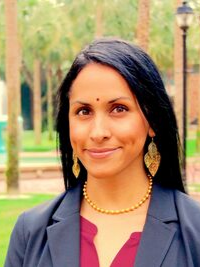
Dr. Rajni Shankar-Brown, Associate Professor of Education

Categories
Faculty Awards Fulbright Scholars

Stetson Top Producer of Fulbright Scholars

https://www.stetson.edu/today/2020/02/stetson-university-named-a-top-producer-of-fulbright-scholars/
Categories
Faculty Awards Fulbright Scholars

Fulbright Award Sends Associate Professor to Ukraine

https://www.stetson.edu/today/2019/09/fulbright-award-sends-associate-professor-to-ukraine/
Categories
Faculty Awards Fulbright Scholars

Law Professor Luz Nagle Receives Fulbright Award

https://www.stetson.edu/today/2019/09/law-professor-luz-nagle-receives-fulbright-award/
Categories
Faculty Awards Fulbright Scholars

From Fulbright to Uzbekistan

https://www.stetson.edu/today/2019/07/from-fulbright-to-uzbekistan/
Categories
Faculty Awards Summer Grants

2019 Summer Grants for Faculty Research & Creative Inquiry

The Office of the Provost and Academic Affairs is pleased to congratulate our Stetson teacher-scholar faculty on the submission of proposals for innovative scholarship, research and creative inquiry. The following Summer Grants Program projects were recommended by the Professional Development Committee to the Provost for their outstanding potential and dedication to Stetson’s mission of teaching, research, and artistic development:

Fazal Abbas, Mathematical Modeling of Blood Flow in Human Artery thorough Bifurcation

Isabel Botero, When non-family firms use a family language as part of their brand: Exploring the family business brand effect

Teresa Carmody, Archive: A Novel-Essay

John Carrick, The Stetson Unicorn List

Su Young Choi, Gifting Food/Money as Movement Media

Rachel Core, “Tuberculosis Patients’ Experiences in Shanghai before and after Socialist Health Reform”

Roslyn Crowder, How Does the Plant-based Compound Genistein Kill Lung Cancer Cells?

Joel Davis, Shakespeare’s Muse of Fire: The life and works of Sir Philip Sidney

Michael Eskenazi, Intentional and Incidental Word Learning: The Importance of Context

Sarah Garcia, tDCS for the Treatment of Anxiety in Young Adults

Sharmaine Jackson, The Unmaking of a Gangbanger

Christopher Jimenez, Pinpointing ‘Global’ Discourse through Large-scale Computational Analysis of Global Anglophone Literature

Asal Johnson, Social Epidemiology of Bladder Cancer in Florida, 2000-2014

Lynn Kee, Shaping the iridescent green structural color of marine bacteria biofilms

Sean Kennard, CD Recording published by Delos: Sonatas for Cello and Piano by Samuel Barber and Sergei Rachmaninoff

Eric Kurlander, Shanghai as East Asian “Solution” to the Nazi “Jewish Question”

John Lychner, Achieving “Flow” in Musical Experiences— Employing the concepts and approaches of Mihaly Csikszentmihalyi in Music Rehearsals and Performances

Karen Merritt, Recording project: Songs of Occitania

Daniel Plante, ShakeDown: A New Ultra Efficient Distributed Denial of Service Attack

Yohann Ripert, “Transatlantic Diplomacy Between Senegal and the United States: 1960-81”

Kelly Smith, Laboratories of Bureaucracy: How Bureaucrats Learn Across States

Charles Underriner, Moving

Categories
Faculty Awards Willa Dean Lowery Grant

Willa Dean Lowery Awards 2019

We congratulate our winners of the 2019 Willa Dean Lowery Fund to Support Research in the Natural Sciences:

Heather Evans Anderson

Heather Evans Anderson, Assistant Professor of the Department of Health Sciences

Categories
Faculty Awards Hand Awards

2019 Hand Awards for Distinguished Faculty Achievement

Congratulations to the following recipients of the 2019 Hand Awards for Distinguished Faculty Achievement.

Ana Eire

Ana Eire, Ph.D., Professor of World Languages and Cultures
Hand Award for Research, Creative and Professional Activity

This image has an empty alt attribute; its file name is s200_isabel_c..botero.jpg

Isabel Botero, Ph.D., Assistant Professor of Family Enterprise and Entrepreneurship
Hand Award for Research, Creative and Professional Activity

The Hand Award for Distinguished Faculty Achievements are made possible through the continued generosity of trustee emeritus and alumna Dolly Hand and her husband, Homer Hand. Through their support of excellence in higher education, we are honored to recognize outstanding faculty.  The awards have been presented to faculty since 1988, with recipients whose names many in the audience will recognize as faculty who have been transformative to this institution—Michael Rickman, Karen Kaivola, and Leonard Nance to name a few. 

Faculty over the years have been presented with Hand Awards in two primary areas:  Community Impact, and also Research, Creative and Professional Activity.  This year, we recognize the professional achievements of two outstanding faculty members in the category of Research, Creative, and Professional Activity.  Both of these faculty members have significantly contributed to the knowledge of their fields, the vibrancy of Stetson University’s pedagogy and academic culture, and the world beyond this campus.

————–

The first 2019 Hand award honors a faculty member who joined the Stetson University almost three decades ago.  Since then, she has published multiple books that have garnered national attention in her home country, leading her to be considered, as one nominator writes, “the foremost scholar of Spanish poetry in Spain.”  Because of her established renowned reputation as a Spanish poetry critic, she is currently working on another commission preparing an introduction to the 25th anniversary edition of an anthology of poetry entitled El sindicato del crimen. For her professional commitment, and in recognition and celebration of her substantial scholarly contributions, it gives me great pleasure to present the first of two 2019 Hand Awards for Research, Creative, and Professional Activity to Professor Ana Eire.

————–

Historically, there have been Hand awards that recognized the stellar work of faculty who have been at Stetson for a short period of time, and then go on to do great things at Stetson.  Some examples include then-Assistant Professors Terri Witek, Stephen Robinson, and Sue Ryan, who all won the Hand recognition just a few years after they joined Stetson.  This year’s 2nd 2019 Hand award recipient is a prolific scholar with 46 publications, a frequent invited review for prestigious journals, and an internationally known expert in her field.  She has presented her research in the U.S., Europe and Latin America, and last year was awarded second place in the Adalberto Viesca Sada Family Business in Latin America’s Award.  In only her fourth year at Stetson, this faculty member is using her extensive research as the academic foundation for reviving the family business curriculum in the School of Business Administration. For her professional commitment, and in recognition and celebration of her substantial scholarly contributions, it gives me great pleasure to present the second of two 2019 Hand Awards for Research, Creative, and Professional Activity to Assistant Professor Isabel Botero.

Presented by Provost Noel Painter on May 11, 2019 at the 133rd annual Undergraduate Commencement

Categories
Faculty Accomplishments Faculty Awards

Stetson Economics Professor Awarded Virtual Reality Grant

VR-goggles-color corrected-590-copy

Walk into Alan Green’s International Economics class this fall and students will be geeked out in goggle-like, headset contraptions, looking as if they stepped out of some sci-fi film.

But Green’s students actually will be stepping into the world of virtual reality, thanks to a grant awarded to the Stetson Chair of Economics.

Alan Green, Ph.D., chair of Stetson's Department of Economics
Alan Green, assistant professor of economics, receives VR Grant from Nearpod.

Green, Ph.D., assistant professor and chair of Stetson’s Economics Department, is one of just 50 instructors at elementary, secondary and post-secondary schools around the world to be awarded as part of the inaugural Virtual Reality Grant Program founded by Nearpod. The education technology company develops digital learning tools, virtual reality and interactive content for use in classrooms.

Green, who also is director of Africana Studies at Stetson, will have access to Nearpod VR headsets and more than 25 VR-based lesson plans. The grant also includes professional development, one-on-one support services and a Nearpod license for the university.

As a teacher and research economist, Green focuses on international development, trade and poverty, but he also conducts research on effective pedagogy. That research led him to use a Nearpod teaching app this past year.

“I can use their app and put questions in it and build in presentations, quizzes, activities, all sorts of things,” Green said. “During class I’ll be lecturing, but then I’ll mix in questions that students answer on their phones, laptops or whatever. Rather than them passively sitting there, they’re being forced to hear something and answer a question about it. So they have to think about it, process it and hopefully understand it.”

When Nearpod announced it was accepting applications for its new virtual reality grant program, Green readily saw the potential for use in his International Economics and Essentials of Economics II classes.

“Nearpod is pushing what they call virtual reality field trips,” Green said. The goggle-like VR headsets use video, audio and even interactive capabilities so that “you can take a virtual trip somewhere. My field research is in economic development, studying poor countries around the world and how they can grow. So we can take a trip to a country in sub-Saharan Africa and get a really strong visual of a village, what people live like, what their houses are like. That makes a lot stronger impression than me just giving students numbers on GDP per capita.”

Along with the benefits of virtual reality field trips, Green’s grant application also proposed that VR technology could vastly enhance online teaching.

“I’ve done some online teaching and didn’t particularly enjoy it because there’s a separation,” Green said. “You’re not interacting with students in real time. With virtual reality, we could have a class and physically be anywhere in the world, but then we all put on our headsets and we come into a virtual classroom and we can teach and learn that way.

“One of the valuable things Stetson offers is small classes and interaction with professors. Virtual reality online learning could be a lot closer to the classroom experience.”

Green said he will “get to play around with the headsets this summer and see what we can do. This fall it’s not going to be in every class, it’s not going to be full time.” But he plans to “find instances where students can take a virtual trip during class.”

More than 300 schools applied for the Nearpod grants, which were awarded to schools across the United States as well as in Nigeria, Japan and Spain.

by Rick de Yampert

See original post

Categories
Faculty Accomplishments Faculty Awards

Stetson Receives $210,000 Grant For Prison Education Project

The Stetson Community Education Project was awarded a $210,000 grant and will expand classes for incarcerated men in Tomoka Correctional Institution, as well as begin offering college credit for courses this fall.

Stetson Professor Pamela Cappas-Toro in classroom in Tomoka state prison.
Assistant Professor Pamela Cappas-Toro is a co-founder of Stetson’s Community Education Project at Tomoka Correctional Institution in Daytona Beach.

The Laughing Gull Foundation approved a grant for $70,000 a year for three years for the Community Education Project (CEP), which has offered classes in the Daytona Beach prison since 2015, said Pamela Cappas-Toro, Ph.D., assistant professor of World Languages and Cultures (Spanish) at Stetson.

Beginning this fall, the project will offer one course each semester for non-degree-bearing college credit. Twenty students are expected to enroll this fall and that number will grow to 30 men next fall.

The grant will pay to hire a project coordinator, who will tutor incarcerated students and serve as a liaison with the state Department of Corrections, Cappas-Toro said. The grant also will provide textbooks and school supplies, support students’ emerging scholarship and creative course projects, and add a computer lab for the men, who currently do the coursework by hand.

Andrew Eisen stands in front of the class with a powerpoint slide.
Andrew Eisen, adjunct professor of history at Stetson, teaches a class on the Cuban Missile Crisis in Tomoka Correctional Institution.

“This is going to mean an expansion of our program at Tomoka,” said Andrew Eisen, Ph.D., adjunct professor of history at Stetson and one of the founders of the program. “It will be small, incremental growth to ensure the quality of our program.”

Eisen and Cappas-Toro were involved in a similar prison-education program at the University of Illinois when they were graduate students there. After the married couple arrived at Stetson, they started the program at Tomoka Correctional Institution with Jelena Petrovic, Ph.D., Stetson assistant professor of Communication and Media Studies. The following year, Melinda Hall, Ph.D., assistant professor of Philosophy at Stetson, joined the effort. Currently, the four professors co-direct the project.

Since then, more than 25 Stetson professors have taught classes, led workshops and provided guest lectures to the students in the prison. Subjects have included history, Spanish, philosophy, mathematics, communication, computer sciences and English. They have been supported in part by the Nina B. Hollis Institute for Educational Reform and its Research Impact Award.

The program received its original seed funding through the Hollis Renaissance Fund, which supports new programs in hopes that their success would then be further supported with grants from outside organizations. This is exactly what happened with CEP, said Stetson President Wendy B. Libby, Ph.D.

Wendy Libby smiles and laughs while standing in the front of the class of incarcerated students.
Stetson President Wendy B. Libby has given a guest lecture at Tomoka Correctional Institution.

“Teaching at the Tomoka Correctional Institution fits squarely into our mission,” said Libby, who has been a guest lecturer at the prison.  “That our faculty have been so enormously supportive underscores how clearly this work aligns with Stetson’s values.”

Stetson’s undergraduate students do not visit the prison but have been involved in the program, interning in the CEP office on the DeLand campus and designing proposed logos for the project. Students in a Digital Arts class, taught by Brown Visiting Teacher Scholar Madison Creech, M.F.A., came up with the logos and sent videos of their presentations to the incarcerated students, who then provided feedback on the designs.

portrait
Assistant Professor Jelena Petrovic

“It is wonderful to see the academic efforts of Stetson students align with the work and community of our students at Tomoka. Stetson students in Creech’s class emphasized that the incarcerated men are part of the Stetson community, and this is precisely what we hope for,” said Hall.

“These programs are very much needed, especially in a state like Florida that has one of the highest prison populations in the country,” said Petrovic.

The Laughing Gull Foundation provides grants to increase access to credit-bearing college courses for incarcerated students, primarily in the South, according to its website. The Foundation awarded the grant to Stetson’s Community Education Project this month after visiting the DeLand campus and the prison classroom in February.

portrait
Assistant Professor Melinda Hall

“We are very excited to partner with Stetson University and we appreciate the inspiring work of the Community Education Program!” wrote Hez Norton, interim executive director of the Laughing Gull Foundation, in an email announcing the grant on June 12.

The Stetson organizers hope other faculty members continue to join the project. Already, Joshua Eckroth, Ph.D., assistant professor of Computer Science, has expressed interest in helping with setting up the prison computer lab.

“We’re able to draw on the expertise and the willingness and dedication of faculty members who have from day 1 helped us build this program, all as volunteers,” Eisen said.

– Cory Lancaster

See original post