Categories
Awards Faculty Accomplishments

Faculty Forward- John Rust, PhD

Faculty Forward feature banner

FACULTY FORWARD: Josh Rust, PhD

Michael Candelaria · October 8, 2026
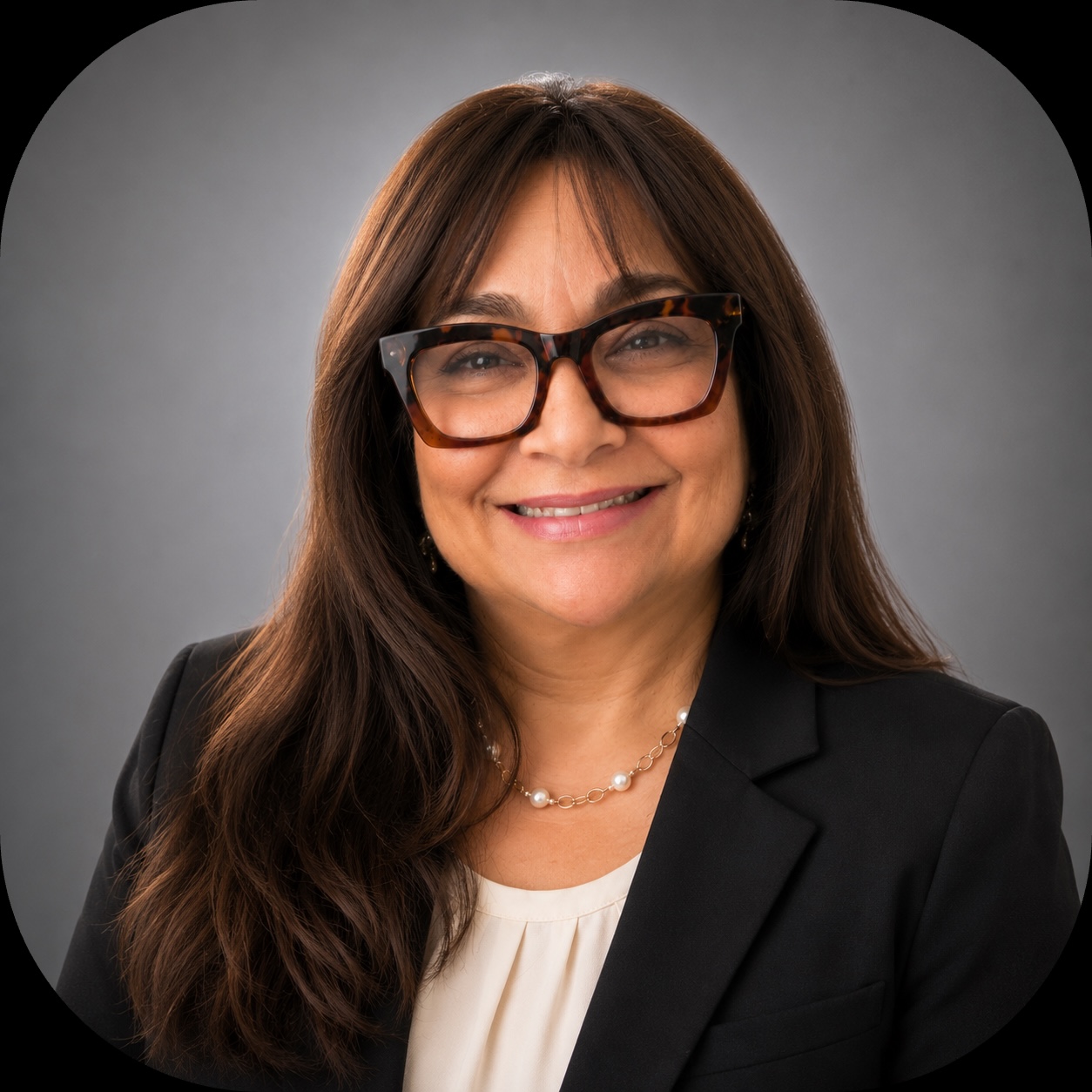
Lila Jaber

As a proud Double Hatter, I remain deeply grateful to the Stetson faculty who invested in me, challenged me, encouraged me and believed in my potential. I often reflect on the professors who took the time to pour into my dreams, helping me complete my education, become an attorney and ultimately serve my alma mater.

To recognize that lasting impact, I have launched Faculty Forward, a spotlight recognizing faculty members who continue this important work every day by preparing and inspiring the next generation of leaders.

–Lila Jaber ’88, JD ’90, Chair, Stetson University Board of Trustees
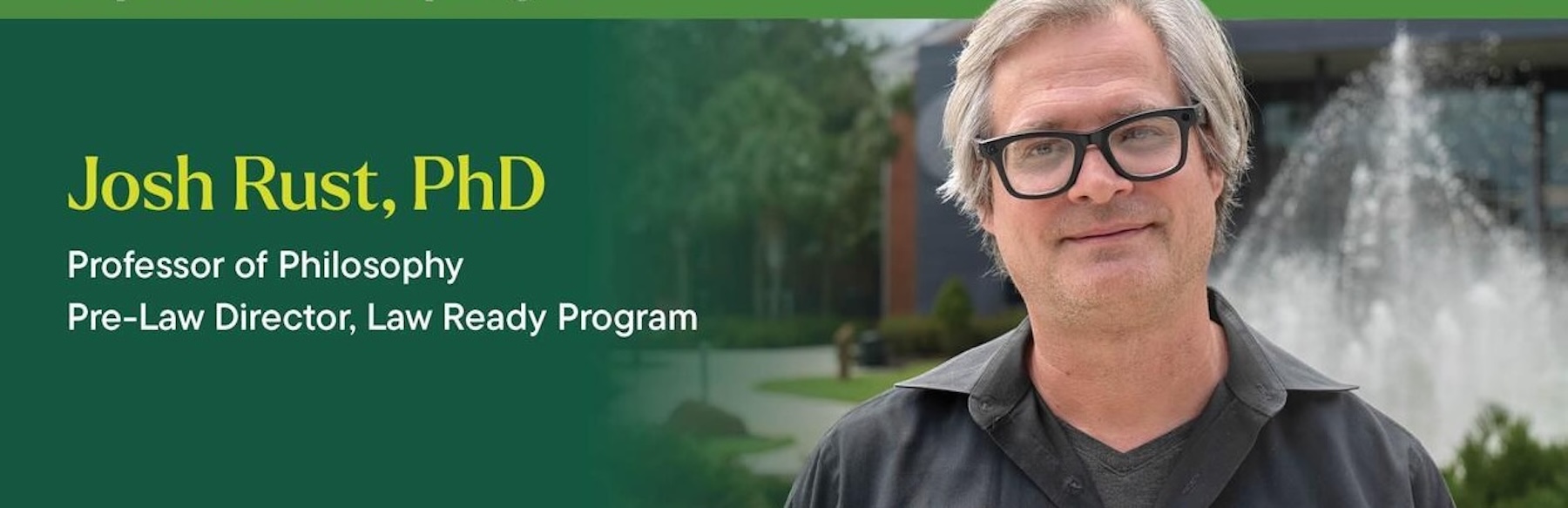
Josh Rust

Q: As you support and teach law-related courses in Stetson’s Law Ready program, how do you help our students hone their analytical thinking skills?

I think the key to analytical thinking is historical thinking. Analytical thinking attempts to identify the component parts of a concept or definition as it exists today. At its best, a liberal arts education cultivates not only analytical thinking but historical thinking—or what political scientist Hugh Heclo calls “institutional thinking.” It involves seeing words as carrying the weight of history.

Definitional shorthand is useful, but you cannot fully understand a word until you grasp the history it condenses. It is to see language in its historical and dynamic context.

The United States works within a common-law tradition, which takes history incredibly seriously. A legally recognized word such as “malice” is a kind of shorthand for a history of decisions that have progressively specified the concept. An older, moralistic sense of the word means wickedness; in the legal sense, however, the word has come to mean something more specific: harm caused either intentionally or recklessly.

Over time, such legal definitions can come to depart from our ordinary understanding of the same terms.
Josh Rust with students
Rust: “Mock Trial and Moot Court [programs] are extraordinary examples of how Stetson, as an institution, has caught up with the talent and ambition our students brought with them.”

Q: Some of your students are pursuing law school. What are the offerings and “bridge to law school” initiatives they’re able to take advantage of?

Stetson’s pre-law programming is experiencing something of a renaissance. It has long been Stetson’s mission to provide students with the core strengths of a liberal arts education: critical thinking, an awareness of the present’s placement in history, intellectual tenacity and a love of learning for its own sake. No matter their major, students who earn their degrees from Stetson University have long enjoyed distinct advantages in law school that peers from more narrowly vocational programs often lack.

Through the faculty-driven Hatter Ready initiative, we took the excellent work already taking place across campus and integrated it into a cohesive framework—what we now call “Law Ready.” To this foundation, we have added several major initiatives, including a new Law, Society and Advocacy minor, which complements our long-standing Business Law minor.
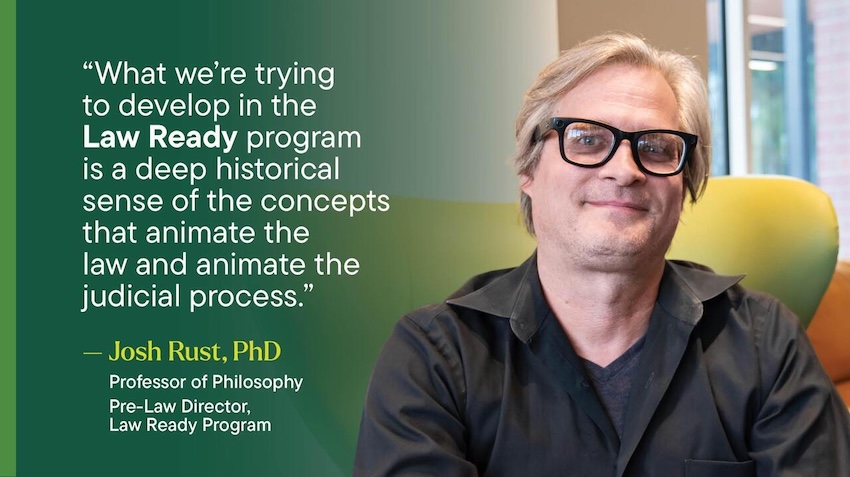
Josh Rust

Faculty and staff have also launched the Law Ready Living and Learning Community (LLC), allowing incoming students interested in legal careers to take foundational courses and live together. I am especially excited about the LLC’s immersive experiential component: students are working alongside local attorney and Double Hatter Brittany Gloersen, BA ’08, JD ’11 to help local seniors draft legally recognized advance directives.

Student-led organizations have expanded in parallel, including our chapters of the National Black Law Students Association (NBLSA) and the National Latinx Law Students Association (NLLSA). Notably, our undergraduate BLSA chapter was recognized as the national Chapter of the Year by its umbrella organization. Many students choose to join our long-established and influential Phi Alpha Delta (PAD) chapter.

I am proud that Stetson University has stepped up to give needed structure and support to what should be an institution-defining, mission-driven commitment. There is a way of conducting pre-professional preparation that remains deeply continuous with our identity as Florida’s first liberal arts university.

Q: Describe Stetson’s pre-law school Mock Trial and Moot Court programs and the recent successes.

Mock Trial and Moot Court are extraordinary examples of how Stetson, as an institution, has caught up with the talent and ambition our students brought with them.

The Mock Trial team grew in fits and starts until, in the spring of 2025, one of our teams qualified for nationals—making Stetson the only university in Florida to reach that level of competition. Stetson Mock Trial did it again last spring, securing a strong national bid and sending a second team to ORCS (the Opening Round Championship Series). Additionally, Temi Adediji earned All-American honors for the second time.

Moot Court is a newer team that has nevertheless qualified for nationals twice in the past few years.

Both teams perfectly complement Stetson Law’s national reputation in trial advocacy. I remain deeply grateful to the sponsors and boosters who have made this growth possible and I am proud to share that Stetson University itself is now directly supporting both teams financially. I am also immensely thankful for Stetson Law’s ongoing financial and training support.

The Law School’s Carson Sadro is one of the best Mock Trial coaches in the country and she has been unwavering in her commitment to our undergraduate advocacy teams.
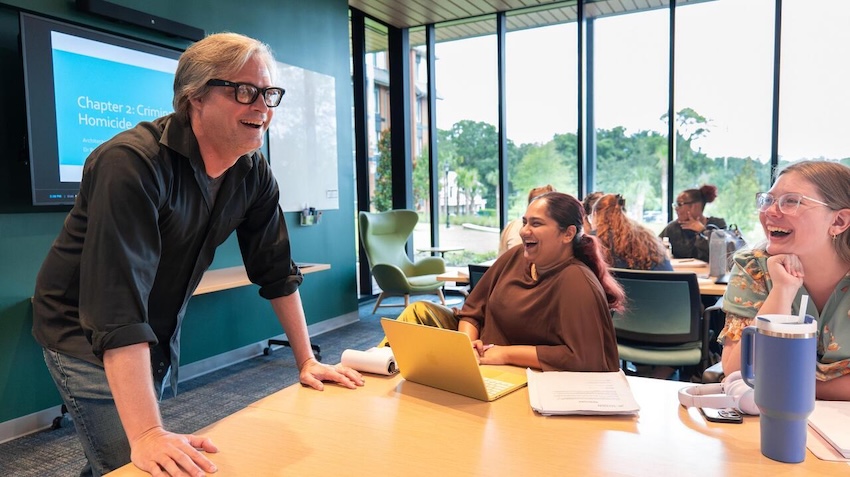
Josh Rust teaching a class
Rust: “I love being a university professor in part because I love working with students who are living in this liminal space, where they begin to take ownership of what may become deeply held projects and commitments.”

Q: Your work has created meaningful opportunities for Stetson students to become career-ready. When you reflect on the impact you’ve had, what continues to motivate and inspire you to do this work?

I’ve long been impressed by Robert Paul Wolff’s The Ideal of the University (1969). Wolff describes the undergraduate as standing at the “threshold of adulthood.” For perhaps the first time, the student confronts the task of deciding not simply what occupation to pursue, but who one is—what values, commitments, style of life and conception of oneself one is going to adopt.

I love being a university professor in part because I love working with students who are living in this liminal space, where they begin to take ownership of what may become deeply held projects and commitments.

In my own classes, I see myself as providing students with some of the materials through which this autonomy can be cultivated. What does it mean to give an argument that is genuinely one’s own, while framing it in such a way that it becomes intelligible to others? In this sense, self-making is grounded in critical thinking. But it is not simply a matter of critical thinking.

Critical thinking presupposes a kind of intellectual tenacity: students must take the arguments and ideas of others seriously enough that their criticisms do not depend on caricaturing another person’s position. To develop one’s own view requires first learning how to encounter another person’s view on its own terms.

What especially intrigues me about Wolff is his suggestion that, because the university is a place where students may come to discover not merely a career but a value system, students (and faculty) should also participate in governing the institution itself. In our student-created and student-led organizations, students do not merely learn about autonomy or leadership in the abstract; they exercise those capacities by building, sustaining and governing institutions of their own.

This is what has happened in student-led pre-law programming; and universities ought to give students meaningful opportunities to discover through that practice what kinds of people they want to become.

Categories
Awards Faculty Accomplishments Willa Dean Lowery Grant

Willa Dean Lowery Awards 2023

We congratulate our winner of the 2023 Willa Dean Lowery Fund to Support Research in the Natural Sciences

Holley Lynch, Associate Professor of Physics

Establishing Vanessa Cardui as a System for Embryo Research

Painted lady butterflies, Vanessa Cardui, are ideal for research with undergraduate students because butterflies are invertebrates with a relatively fast life cycle that lay eggs every day for several weeks at a time. Currently, Dr. Lynn Kee’s lab observations of the effect of genetic changes were all done at the caterpillar stage and beyond. Last year, we successfully collected the first images of embryo development in this species. This project will build on that success by making V. Cardui embryos a flexible system for student and faculty researchers by establishing temperature-based staging charts and developing a protocol to access tissues and cells in a living embryo. Achieving the first aim will allow researchers to schedule experiments to take advantage of peak egg-laying times regardless of the interest stage. Completing the second aim will allow the use of biophysical techniques from

imaging to mechanical manipulation on these embryos. This project has the potential to have a huge impact on the field by taking live images of cell movements at the embryo stage for any butterfly species.

Categories
Faculty Accomplishments Faculty Accomplishments Faculty Awards Hand Awards

2023 Hand Awards for Distinguished Faculty Achievement

Congratulations to the following recipients of the 2023 Hand Awards for Distinguished Faculty Achievement.

Since 1988, the Hand Awards for Distinguished Faculty Achievement are made possible through the continued generosity of trustee emeritus and alumna Dolly Hand and her late husband, Homer Hand. Through their support of excellence in higher education, Stetson University is honored this year to recognize one outstanding faculty member for the Hand Award for Research, Creative, and Professional Activity.

————–

This teacher-scholar was invited to join the faculty corps at Stetson University six years ago and has engaged in an expansive scope of high-quality research and professional activity with penetrable national and international implications. As a recognized expert in development economics, their work has easily transcended academic boundaries by making practical global impact, particularly on women in agriculture in rural regions and in developing countries.This expertise is sought after by global organizations such as the World Bank, the UN Development Programme, and USAID. This work significantly contributes to Stetson’s vibrancy and vitality, especially on students in upper-level economics courses. 

This faculty member has acquired a prolific record in their short time here. One nominator wrote, this faculty member “has developed an impressive scholarly record during their time at Stetson. Their expertise in development economics has been recognized and sought after on campus, nationally, and internationally, and they have published their work in high-impact venues.”  

Therefore, it gives me great pleasure on behalf of the faculty and staff at Stetson University to present the 2023 Hand Award for Research, Creative, and Professional Activity to Associate Professor Dr. Khushbu Mishra for her stellar, established, and sustained record of scholarly achievement.

Presented by Dr. Rosalie Richards, Associate Provost for Faculty Development and Professor of Chemistry and Education on May 10, 2023 at the 2023 Academic Awards and Recognition Ceremony

Categories
Faculty Accomplishments Faculty Accomplishments Faculty Awards McEniry Awards

2022 William Hugh McEniry Award for Excellence in Teaching

Congratulations to the recipient of the 2022 William Hugh McEniry Award for Excellence in Teaching

Established in 1974, the McEniry Award for Excellence in Teaching is considered to be Stetson University’s most prestigious award based on the highest attainment of teaching excellence as personified by the former Dean of the University, William Hugh McEniry. Exceptional teaching in the classroom is at the heartbeat of this award, along with intellectual growth, professional competency, academic activities outside of the classroom, and meaningful service to students and the University as a whole.

This year’s McEniry selection committee had an incredibly challenging job. Stetson is a community full of highly deserving teacher-scholars. This year’s awardee stood out as an exceptionally impactful educator at Stetson and within their field. There is a clear record demonstrating that this faculty member is a phenomenal teacher. Thoughtfully written nominations demonstrated a deep commitment to high-quality teaching.

A nomination by a fellow faculty member notes: “This professor is a star at everything he does. He is electric in the classroom. A superb intellect. A fine writer. His scholarship is set to do groundbreaking work in broad cultural fields”.

A student nomination states: “This professor really pushed all his students to achieve academic excellence. He maintained a very high standard in class and promoted a higher level of thinking. This professor was always very accessible and open to help students outside of class hours.”

A second student nomination states: “This professor effortlessly explains all of the information. I personally look up to him as an ACADEMIC GIANT.”

Yet, a third student nomination states: “This professor has found a way to make his students enjoy taking his classes while also keeping us on our toes.”

I am delighted and honored to announce this year’s award winner! For the first time in the history of Stetson University, the McEniry Award for Excellence in Teaching will be presented to the winner of the Hand Award for Research, Creative, and Professional Activity. Please join me in wishing heartfelt congratulations to the recipient of the 2022 William Hugh McEniry Award for Excellence in Teaching.

Professor of Music.

Dr. Daniil Zavlunov!

Presented by Dr. Hala El Arag, Professor of Computer Science, on May 6, 2022 at the 2022Academic Awards and Recognition Ceremony

Categories
Faculty Accomplishments Faculty Accomplishments Faculty Awards Hand Awards

2022 Hand Awards for Distinguished Faculty Achievement

Congratulations to the following recipients of the 2022 Hand Awards for Distinguished Faculty Achievement.

The Hand Award for Distinguished Faculty Achievements are made possible through the continued generosity of trustee emeritus and alumna Dolly Hand and her husband, Homer Hand. Through their support of excellence in higher education, we are honored to recognize outstanding faculty.  The awards have been presented to faculty since 1988, with recipients whose names many in the audience will recognize as faculty who have been transformative to this institution—Michael Rickman, Karen Kaivola, and Leonard Nance to name a few. 

This year, we recognize the professional achievements of two outstanding faculty members in two primary areas:  Research, Creative, and Professional Activity and Community Impact.  Historically, there have been Hand awards that recognized the stellar work of faculty who have been at Stetson for a short period of time, and then go on to do great things at Stetson.  Some examples include then-Assistant Professors Terri Witek, Stephen Robinson, Sue Ryan, and Isabel Botero, who all received the Hand recognition just a few years after they joined the University. Both recipients of this prestigious recognition were invited to join the faculty in 2014. In sum, during their short tenure at Stetson University, they have made significant contributions to their fields, to Stetson’s vibrancy and vitality, to our academic culture, and to the world beyond this campus.

————–

The first 2022 Hand Award honors a faculty member whose quality of research and writing has had a transformative impact on the School of Music and on Stetson University. As a musicologist, he is a scholar of Music History with many interests including Russian, French and Italian opera of the 19th century, Russian and Soviet music, music and politics and theories of musical form. His research into music censorship in 19th century Imperial Russia, specifically during the reign of Tsar Nicholas II, is groundbreaking and of significant interest to students of opera worldwide. His command of both musicology and theory demonstrates a latitude of expertise comprising individual composers, genres, and time periods.

Furthermore, he maintains an impressive publication record in high impact academic readership sources including the Journal of Music Theory, the Journal of Musicology, and in the Cambridge and Oxford University presses. The variety, breadth, scope, cross-disciplinarity, and international appeal of his repertoire has positioned his body of work as important and valuable beyond the world of music. To that end, this scholar ranks among the top music historians in the nation and abroad.

One nominator wrote, “Twelve publications (and others already underway) are many for any discipline at Stetson where research and publications are a measure of contribution.” Another wrote, “My career in all facets – including performance, teaching, and administration – has well prepared me to understand and appreciate exceptional individuals such as [this professor]”.

Therefore, it gives me great pleasure on behalf of the faculty and staff at Stetson University to present the 2022 Hand Award for Research, Creative, and Professional Activity to Associate Professor Daniil Zavulov for his professional commitment, and in recognition and celebration of his substantial scholarly contributions.

————–

This year’s second 2022 Hand award honors a faculty member who has accomplished an extraordinarily impactful breadth and scope of timely work within the eight years of her tenure at Stetson University. A scholar, teacher, and practitioner, she rapidly compiled a distinguished record of community service, becoming a key force in Stetson’s relationship with the broader community. Her special focus has been on the health needs of underserved communities including the Spring Hill community of southwestern DeLand. In collaboration with various community partners, she has initiated or supported multiple studies and programs. This work included comprehensive needs assessments of all African American communities to demonstrate the need for improved public health and nutritional resources and an Oral History of the James W. Wright building in DeLand, research that resulted in grant funding awarded and the building being placed on the National Register of Historic Places.

In 2016, she received an Exceptional Community Partner Award from the Spring Hill Neighborhood Association for her exemplary work. And with the onset of the COVID-19 pandemic in 2020, she provided vital community support by serving as staff epidemiologist with the Florida Department of Health.

One nominator wrote, “In my entire time directing community engagement efforts for the university, [this professor] stands out for being the most consistent and effective faculty collaborator with our non-profit partners in the greater Spring Hill community. Truly, I believe that no faculty member epitomizes the connection of our institution’s academic and civic missions as strongly as [this professor]”.

For her professional commitment and in recognition and celebration of her substantial contributions to the Stetson community and the greater DeLand and Volusia communities, it gives me great pleasure on behalf of the faculty and staff at Stetson University to present the second 2022 Hand Award for Community Impact to Associate Professor Asal Mohammadi Johnson.

Presented by Dr. Rosalie Richards, Associate Provost for Faculty Development on May 6, 2022 at the 2022 Academic Awards and Recognition Ceremony

Categories
Faculty Accomplishments Faculty Awards

Professor Lynn Kee Receives $300K NSF Grant To Teach Gene Editing

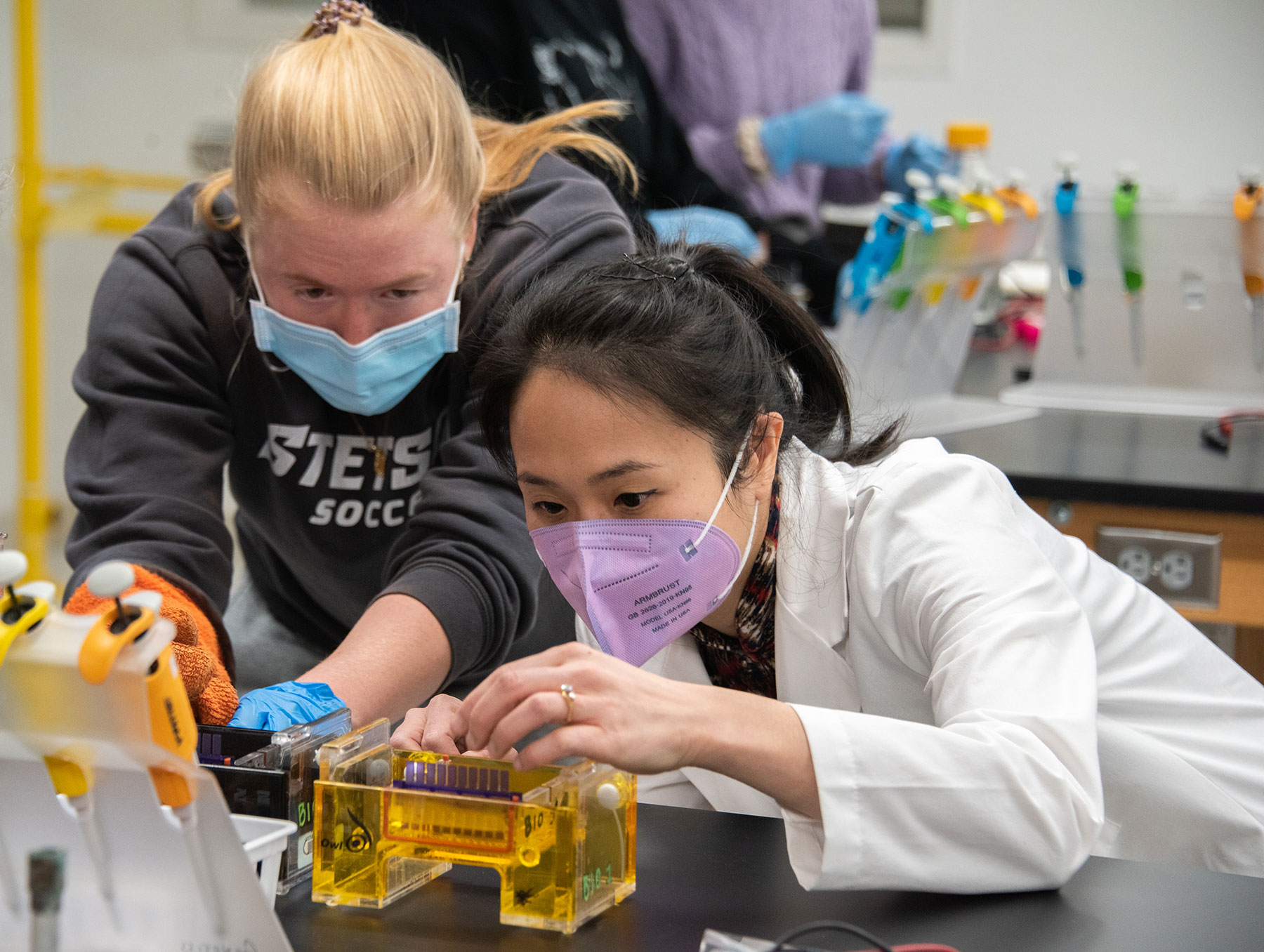
Dr. Lynn Kee works with a student and a DNA sample in Sage Hall in a class that will teach gene editing.
Assistant Professor of Biology Lynn Kee, PhD, right, works with junior Maggie Struble on a DNA sample inside a Sage Hall Science Center lab on Feb. 1, 2022. Photos: Stetson University / Izais Ocasio

Inside the Sage Hall Science Center, students soon will work in a lab with microscopes and needles to alter a strand of DNA in butterfly eggs.

The students will use CRISPR gene-editing technology this semester to change the color of butterfly wings from orange and brown scales to black scales — with one simple cut.

Stetson Assistant Biology Professor Lynn Kee, PhD, received a $299,996 grant from the National Science Foundation to teach students about this technique. Associate Philosophy Professor Melinda Hall, PhD, will teach them about the bioethics surrounding its use.

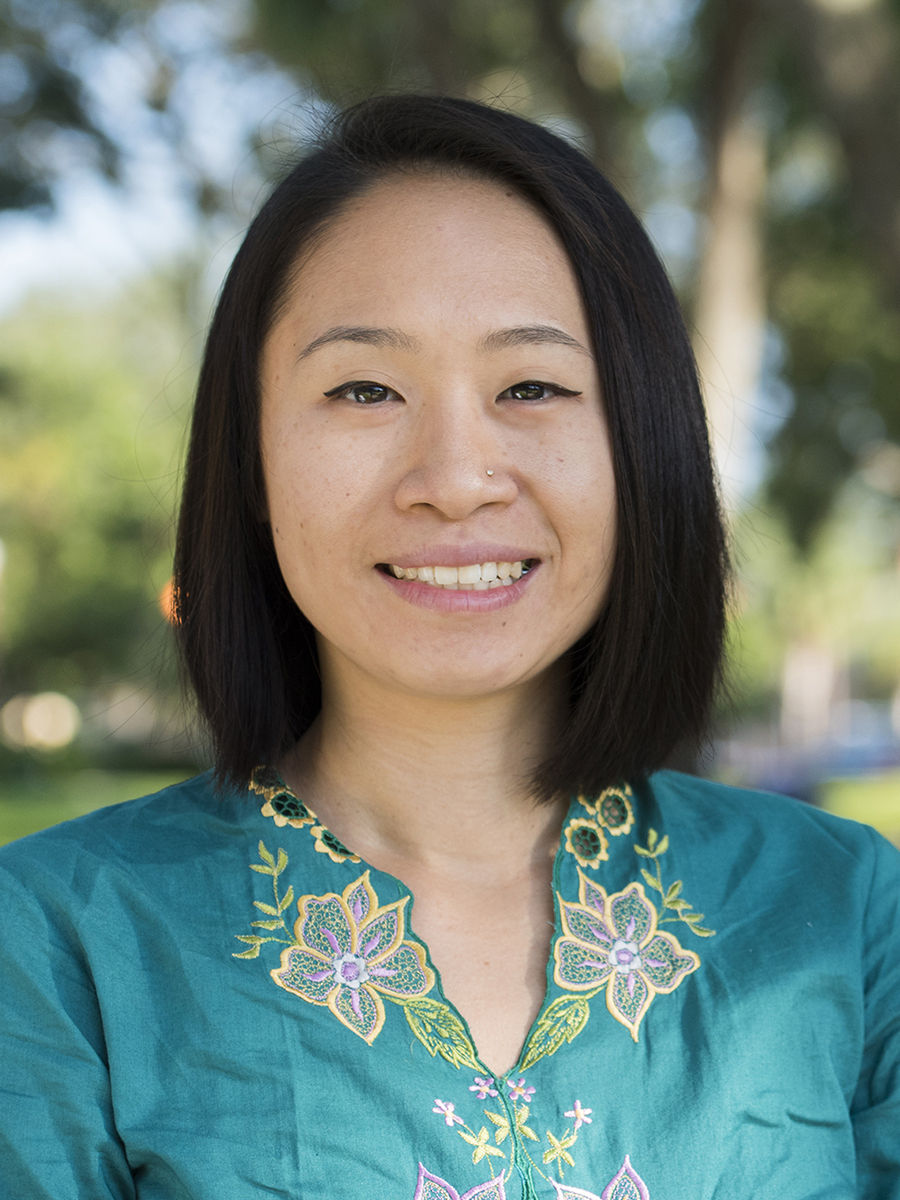
portrait
Lynn Kee, PhD

“The point of the grant was to bring CRISPR into the classroom in the sense that I want students to learn about this technique because it’s so new,” Kee said. “It’s not even really in textbooks. My genetic textbook has literally two, three paragraphs about it. And so what I want them to learn is about what’s currently happening in society, what’s happening in science, what’s happening in medicine.”

portrait
Melinda Hall, PhD

The discovery of CRISPR technology was awarded a Nobel Prize in 2020 and now is used in medicine, agriculture and food production. “Given the broad reach of CRISPR, there is an increased need and urgency for undergraduate students to learn about and consider how to use the technology appropriately,” according to her grant.

CRISPR is actually a molecule that acts like a pair of scissors to cut a strand of DNA at a very precise location. Scientists are using the technology to try to treat a variety of diseases and medical conditions, such as sickle cell disease, by correcting the mutation in the gene that causes the disorder. Earlier this month, doctors transplanted a genetically modified pig heart into a male patient after using CRISPR gene editing to make the organ less likely to be attacked by the patient’s immune system.

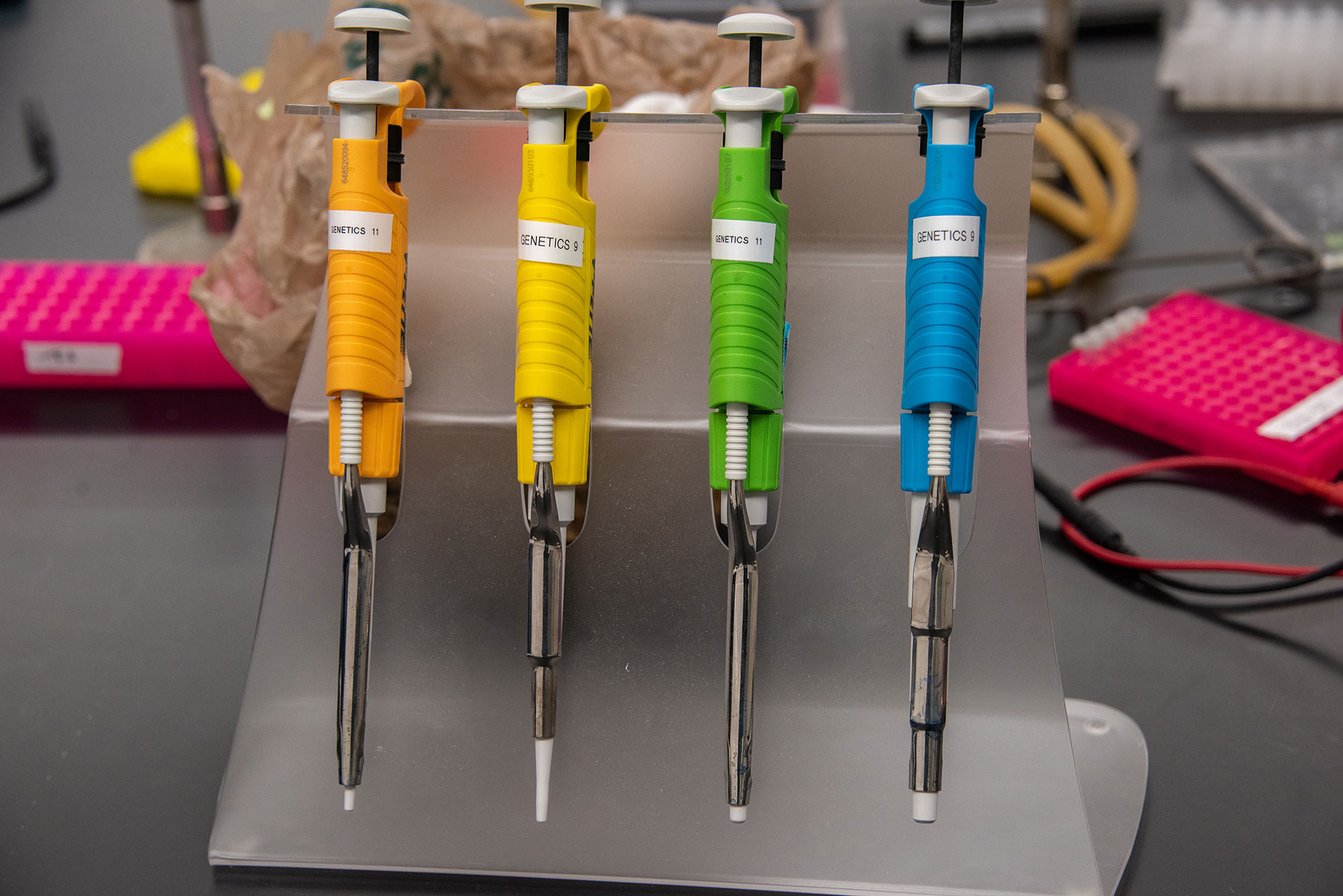
Colorful pipettes sit waiting in the lab in a class that will teach gene editing.
Pipettes are an indispensable tool when working with DNA and analyzing genes.

At Stetson, Kee introduced the technology in a 2019 pilot project, teaching students how to disable a gene that makes a certain bacteria glow green.

For the NSF grant, she will use butterflies, raising them in Sage Hall from caterpillar to chrysalis, a process that takes about a month. Once the butterfly emerges, it will live for about three weeks and, if provided certain leaves, will lay eggs there. These blue eggs will be collected and used for the CRISPR gene-editing technique.

“Butterflies are beautiful. We can learn a lot from studying them. We actually deliver CRISPR into these butterfly eggs to basically target a specific gene that’s involved in butterfly wing color and patterning,” Kee said. “Because what I want for them (students) to understand is how CRISPR works and for them to be able to see it with their own eyes.”

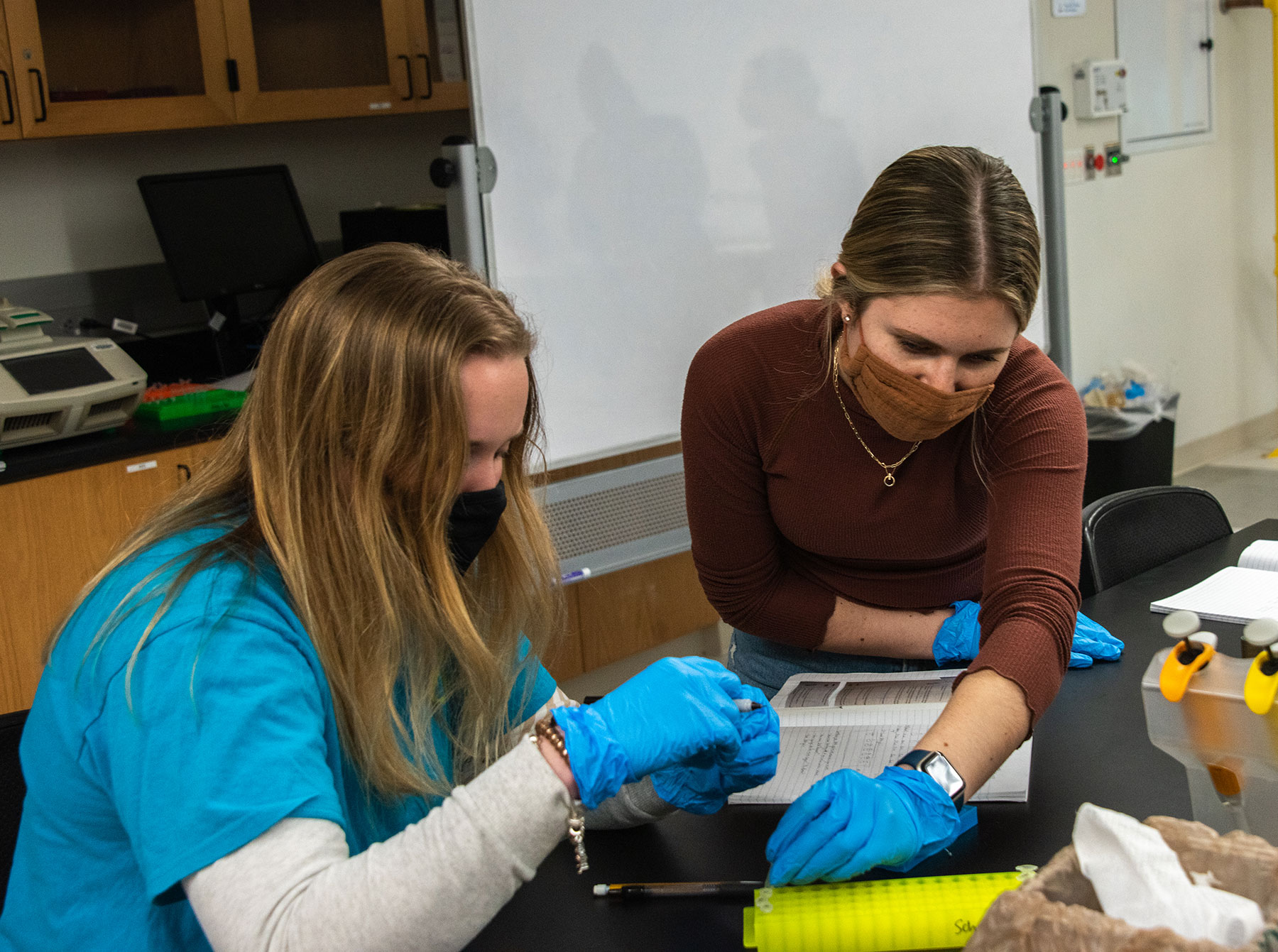
Two students work in a Sage Hall science lab.
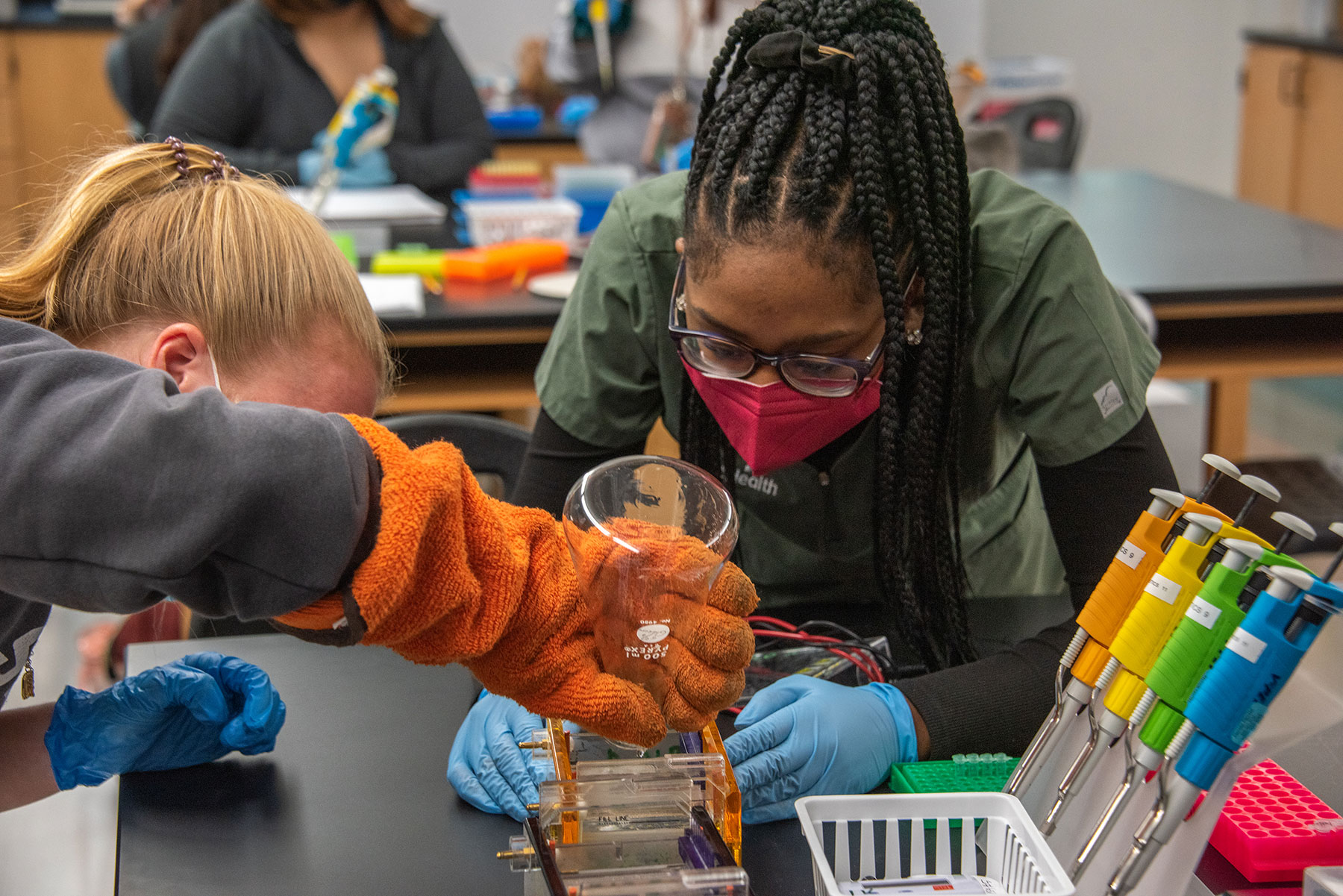
Junior Chloe DeYoung, left, and sophomore Hannah Swartz perform DNA gel electrophoresis in an experiment looking at their own DNA sequence. Both students plan to attend medical school.

Once the DNA is altered, the butterflies will not be released into the wild. “We’re very careful with what we do,” she added.

Kee has used the NSF grant to purchase microscopes and microinjection systems for the lab and other specialized equipment and supplies to analyze and sequence the DNA. The three-year grant will fund two research assistants each year in the lab, beginning this semester. A post-doctoral faculty fellow will be hired starting this fall to help teach classes. The grant will also provide funds for Kee to train faculty from other colleges in implementing CRISPR technology in the classroom.

This week, inside the Sage Hall lab, students were busy making copies of DNA taken from their cheeks. Next, they will sequence it and analyze it before moving on to the CRISPR gene-editing technique with butterfly eggs.

Student Briana Hall works with a DNA sample in Sage Hall.
Junior Briana Hall, right, works with a DNA sample in the Sage Hall lab.

Senior Adrianna Strozak is a laboratory research assistant in the class and was helping students with the various laboratory techniques needed to copy their DNA. She took this class a year ago and hopes to one day earn a PhD and conduct medical research.

“That’s partially what made my senior research possible was the experience that I got taking this class,” said Strozak, whose senior project is entitled, “Testing amplification of the butterfly gene optix by polymerase chain reaction (PCR) and recombinase polymerase amplification (RPA).”

Junior Briana Hall plans to attend dental school and was enjoying working with DNA for the first time in the class.

“You feel like you’re a scientist,” said Hall, a biology major. “It’s not like we’re just sitting in a lecture, writing down notes. We’re actually doing what she’s teaching us, which is awesome.”

-Cory Lancaster

See original post