Categories
Grady Ballenger Series

Undergraduate Invents Time Travel: New Research in the Fourth Dimension

Grady Ballenger Lecture Series

Speaker:
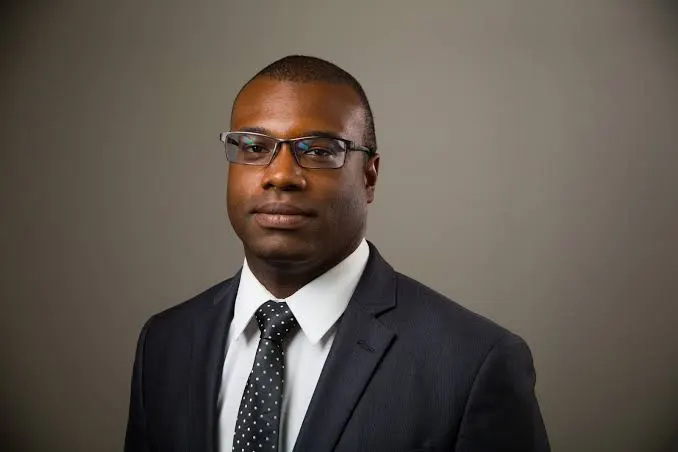
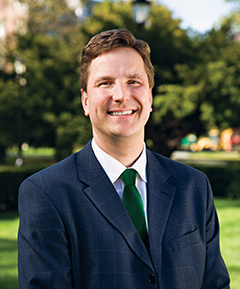
Dr. Graeme Harper
Dean, The Honors College

Topic:
Undergraduate Invents Time Travel: New Research in the Fourth Dimension

Lecture Description

They reported it briefly, but it was quickly hushed up. Time travel. Not the basic kind you find in a movie or a book. Not that kind with a wizened inventor or that happens in a dark alley in Victorian London with a guy who you sometimes confuse with Tom Cruise. Not time travel in a DeLorean, or through a portal you find in an ordinary wooden doorway in Nepal. No, this was the kind of time travel Einstein could only dream about. Movement, not just in space, but across another dimension. We all know the basic dimensional three: breadth, width, and height. Try on new shoes, and you experience a few of those; lose your way in the dark of night and you realize the importance of those. But time – that fourth dimension – it took an open mind to crack that one. No wonder they wanted to hush it up. The fourth dimension is like the fourth estate:
sometimes you need to shut it down or it’ll reveal something. Let’s face it, you can’t go changing the world for the better and expect everyone to be happy about it.

About the Speaker

In 2012, Dr. Graeme Harper became the inaugural Dean of The Honors College at Oakland University in Michigan. Previously, he led academic schools at the University of Wales and the University of Portsmouth before serving as Director of Research and later a research fellow at the University of Texas Medical Branch in Galveston.

Dr. Harper has served as a research panelist for the European Commission’s Education and Culture Directorate in Brussels and spent twelve years as a panelist for Britain’s Arts and Humanities Research Council. He also served on the Research Committee of the Joint Information Systems Committee, supporting the UK’s national academic technology network.

A prolific writer, Dr. Harper has published around fifty books. Reflecting both his passion for writing and his dedication to universities, he holds doctorates from the University of East Anglia in the United Kingdom and the University of Technology Sydney in Australia.

From July 2021 to July 2024, he served as Chair of the At Large Division of the Council on Undergraduate Research.

Categories
Grady Ballenger Series

Human Curiosity: An Unstoppable Force

2024 Grady Ballenger Lecture Series — Judith Bense

Date: April 16

Speaker:
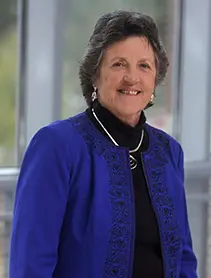
Dr. Judith Bense
President Emeritus and Professor of Anthropology
University of West Florida

Topic:
Human Curiosity: An Unstoppable Force

Lecture Description

Curiosity is the result of human intelligence that has and continues to drive research of all kinds. Our curiosity and problem-solving ability have resulted in remarkable advances in all areas of human endeavor such as technology, science, engineering, art, and music. This illustrated lecture will highlight the development of human intelligence and some remarkable problem-solving episodes that propelled human culture to what it is today and the challenges facing us in the near future.

About the Speaker

Dr. Judith Bense is President Emeritus and Professor of Anthropology/Archaeology at the University of West Florida. She joined UWF in 1980 and built an Anthropology/Archaeology program from the ground up. Today the program is recognized as one of the leading programs in Florida and the United States, known for its active research in Florida archaeology and its public outreach efforts.

Bense has held numerous leadership roles in archaeology and helped guide the program toward historical archaeology and shipwreck research. In 2004, she helped pass legislation and secure funding for the Florida Public Archaeology Network (FPAN), which operates eight regional public archaeology centers throughout Florida.

She served as interim president of UWF in 2008, was appointed president in 2010, and served through 2016. During her presidency, enrollment increased by 30%, six new buildings were constructed, university visibility expanded significantly, athletic teams won four national championships, and the football program was established.

As the first female president of the University of West Florida, she continues to inspire women in leadership and academia.

Bense was inducted into the Florida Women’s Hall of Fame in 2019, becoming the first woman from Northwest Florida to receive the honor. She has received numerous awards including the Evelyn Fortune Bartlett Award, the J.C. Harrington Medal, and the Senator Bob Williams Award for Outstanding Achievement in Public Archaeology. She was also inducted into the Order of Isabella the Catholic by the King of Spain for advancing understanding of Spain’s contribution to the Americas.

Her most recent book, On the Edge of the Spanish Empire: The West Florida Presidio Era 1698–1763 (2021), synthesizes nearly forty years of research on Spanish presidios in West Florida.

She currently serves as Vice Chair of the Florida Historical Commission, Chair of the Board of Directors for the Florida Public Archaeology Network, and a founding board member of the Center for Excellence in Local Government. She is also active in several civic and service organizations and helps manage her family’s hay farm in Bay County.

Categories
Grady Ballenger Series

Research For All

Susan Rundell Singer, Ph.D., Vice President for Academic Affairs and Provost, Rollins College; President-elect of St. Olaf Colleg


Engaging undergraduates in research in the U.S. dates back 200 years, influenced by the German university model that brought students and faculty together as research collaborators. Rensselaer Polytechnic Institute was one of the early adopters. Founded in 1834, lecturing at RPI was eschewed in favor of students engaging in experimental work as the core pedagogy. Key breakthroughs in genetics were made by undergraduates at Columbia in the 1920s. The launch of Sputnik led to federal funding for undergraduate research in the late 1950s. For decades after, the traditional apprenticeship model of summer research or engagement during the academic year defined undergraduate research. The model expanded to the broader range of disciplines. Across many institutions these opportunities are now open to all students, regardless of major. 

By the mid-2000s, there was growing research documenting that undergraduate research was key in the retention, graduation, and pursuit of graduate studies. The impact of research experiences has a particularly strong and positive impact on members of traditionally marginalized groups. Concurrent with the recognition of impact was the recognition that the traditional apprenticeship model doesn’t scale and most students did not benefit from this vital learning opportunity. New approaches to scaling impact have emerged through course-based research afford more equitable and inclusive access to this high impact practice. Embedding research in courses makes it possible for students with extensive employment commitments to benefit. The approach has effectively created opportunity in both 2-year and 4-year institutions. As the research on undergraduate research advances, more is emerging about the specific benefits to different approaches and a clearer articulation of value of learning through research experiences. 

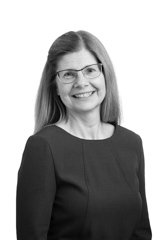
Susan Rundell Singer, Ph.D, is an experienced national and institutional leader in higher education, uplifting the value of a liberal arts education. Currently, she serves as Vice President for Academic Affairs and Provost at Rollins College and is President-elect of St. Olaf College. Previously, she led the Division of Undergraduate Education at the National Science Foundation (NSF) and was the Laurence McKinley Gould Professor of Biology at Carleton College, where she directed the Perlman Center for Learning and Teaching. Recruited to NSF by the White House, she was charged with implementing holistic, evidence-informed approaches to increase persistence and success of all undergraduates. She led 14 federal agencies in achieving the undergraduate goals of the first Federal STEM Education 5-year Strategic Plan, including producing one million more STEM graduates by 2018.  She pursues a career integrating higher education and science aimed at improving undergraduate education at scale. Her scholarship focuses on partnerships and networks of organizations collaboratively advancing undergraduate STEM education, with an emphasis on diversity, equity, inclusion, and belonging. Equitable and excellent undergraduate education is a signature element of her successes at Carleton, NSF, national organizations, and Rollins, enhanced by a strong track record with partnerships and fundraising. Susan is an American Association for the Advancement of Science (AAAS) Fellow, and recipient of the American Society of Plant Biology teaching award and Botanical Society of America Charles Bessey award. She is a past-chair of AAAS’ Education Section. Currently, Susan is an Association of American Universities Senior Scholar, chairs the National Academies of Science, Engineering, and Medicine (NASEM) Board on Science Education, and serves on the Board on Life Sciences and the Roundtable on Systematic Change in Undergraduate STEM Education. She chaired several NASEM studies, including Discipline-based Education Research. Her Ph.D. is in Biology, from Rensselaer Polytechnic Institute. 

April 11, 2023

Categories
Grady Ballenger Series

Higher Education at the Crossroads

Dr. Christopher Roellke, President, Stetson University, Professor of American Studies and Education

As the global COVID 19 pandemic penetrated the United States in early 2020, colleges and universities found themselves scrambling to address this ongoing public health crisis.  In the Spring 2020 semester, emergency task forces were established, campuses were shut down, faculty moved their instruction to virtual formats, and the entire higher education industry braced itself for the financial fallout.  In addition to having to invest additional resources in classroom technology, ventilation, and personal protective equipment, colleges and universities continue to respond to revenue shortfalls, including reductions in both tuition and room and board revenue.  

In some cases, investments in technology, internet access, and innovations in teaching and learning have led to new ways of delivering high-quality instruction to students in hybrid and virtual learning environments.  In other cases, students and families have turned to litigation to demand tuition refunds, arguing that colleges and universities have engaged in “breach of contract” by not providing a fully in-person instructional environment and have failed to provide the quality of education promised.   

Unemployment and underemployment and the “great resignation” have made it exceptionally difficult, particularly for lower income families and students, to sustain their investments in post-secondary education.  The Coronavirus Aid, Relief, and Economic Security Act (CARES) has provided trillions in economic stimulus support, including billions in aid for K-12 education and for higher education.  Nonetheless, enrollment uncertainty, coupled with a lingering pandemic, presents ongoing and complex challenges for higher education.  In many ways, higher education is at a crossroads. Some institutions are hanging on to long-standing traditions and curricular pathways, while others have emphasized advances in remote learning, hybrid pathways for degree completion, and a broader set of innovative practices.  In this keynote address, President Roellke will address these challenges and will outline emerging strategic priorities for Stetson University as our institution charts a course for its future.

Christopher F. Roellke, PhD, is the 10th president of Stetson University, accepting the university’s leadership on July 1, 2020.  Dr. Roellke joined Stetson from Vassar College, where he was Dean of the College and Professor of Education.  As Dean of the College, he was on the President’s Senior Leadership Team and oversaw most aspects of Vassar’s day-to-day life.  Upon his departure, he was named Dean of the College Emeritus.  Dr. Roellke did his undergraduate work at Wesleyan University in Connecticut and his graduate studies and PhD at Cornell University.  A Fulbright Scholar, Dr. Roellke also served as a visiting scholar at Yale University Law School. Dr. Roellke’s wife, Kim, is a veterinarian and they have three daughters, Emma, Julia and Olivia. Emma is currently a medical school student at the New York University Long Island School of Medicine.  Julia is a science educator and sustainability coordinator at the Dwight School in New York City.  Liv is a senior at Poughkeepsie Day School and is an avid equestrian who competes in the jumper division in regional and national horse shows.

Categories
Grady Ballenger Series

Epistemologies of Ignorance in Law

Dr. Lonn Lanza Kaduce

Professor of Criminology and Law, University of Florida

Lonn Lanza Kaduce is Dr. Lonn Lanza-Kaduce is Professor of Criminology and Law at the University of Florida, holding both a Ph.D in Sociology and a JD.  His general interest area is in law and society with more specialized areas including Social Learning Theory, Substance Abuse Behavior, Deliquency and Deviant Behavior.  He has published extensively on juvenile and college-age crime and on court justice.  In 2016 he was Veritas Forum Lecturer on the Practice of Justice.  He is the recipient of mentoring and teaching awards.

Categories
Grady Ballenger Series

Reflections on graduate school: work hard, sleep later

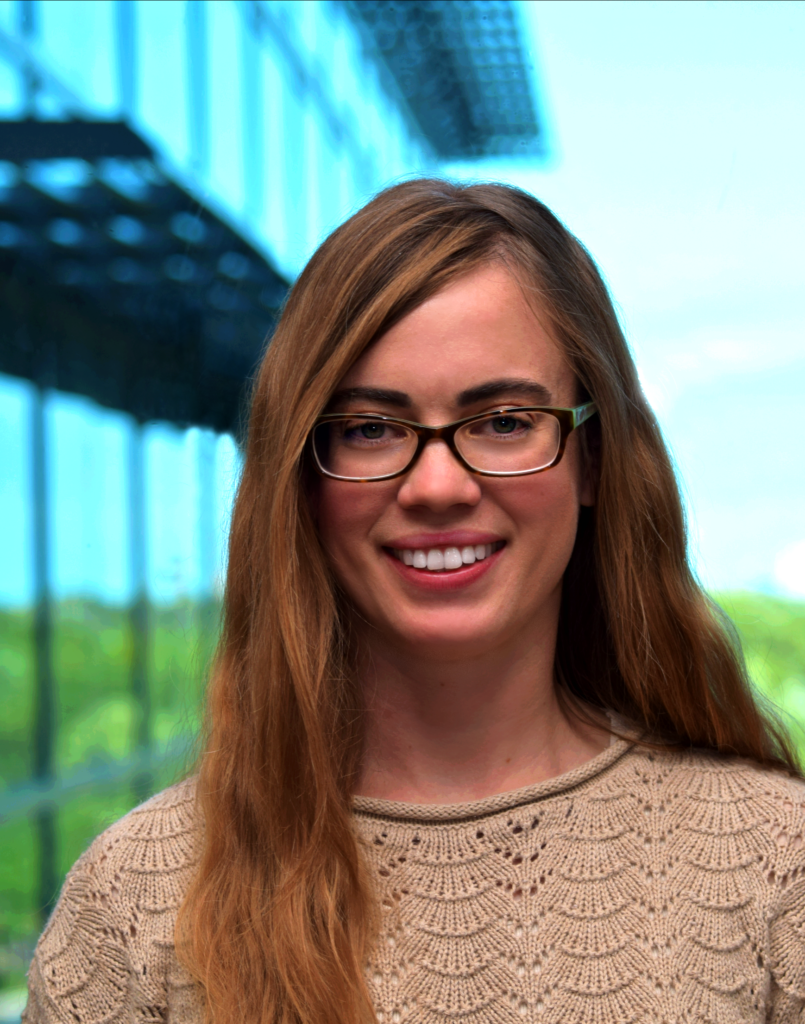
Dr. Sarah Caudill, Nikhef, the Dutch National Institute for Subatomic Physics/VIRGO/LIGO

As an undergraduate student excited about physics, graduate school seemed like the natural next step for me. I was eager to enter the fast-paced field of gravitational-wave astrophysics, to learn from top researchers, to travel the world, and to investigate difficult-to-solve problems. In this talk, I will reflect on my expectations upon entering graduate school and how those expectations evolved as I passed my qualification exam, defended my PhD, obtained my first postdoctoral research position, and finally played a role in the first detection of gravitational waves. I will highlight the ups and downs encountered along the way and how these influenced my path forward. Finally, I will summarize key questions that students considering graduate, medical, or law school should consider when deciding whether this is the path for them.

Sarah Caudill is currently a gravitational-wave scientist at Nikhef, the Dutch National Institute for Subatomic Physics, where she analyzes data from the Laser Interferometer Gravitational-wave Observatory

(LIGO) and the Virgo detector. She is currently a Research & Development lead for searches for gravitational waves from compact binary coalescences, the hallmark search for Advanced LIGO and Advanced Virgo. Sarah guided detection pipeline development that led to the 2017 Nobel Prize for Physics-winning discoveries of gravitational waves from binary black hole mergers.

Sarah has been a member of the gravitational-wave community for 12 years. While earning a bachelor’s degree in Physics from Stetson University in 2006, Sarah worked as a research assistant at the California Institute of Technology’s LIGO laboratory. She earned a PhD in Physics from Louisiana State University under the guidance of Dr.

Gabriela Gonzalez for her work on detection pipelines for ringdown gravitational waves using machine learning classification. For the last five years, she was a postdoctoral researcher at the Center for Gravitation, Cosmology, and Astrophysics at the University of Wisconsin-Milwaukee where she joined the GstLAL search team, the first matched-filter-based pipeline to discover a gravitational wave in low-latency. She has co-authored dozens of publications as a member of the LIGO and Virgo Scientific Collaborations.

For her role in the detection of gravitational waves, Sarah has been interviewed by Discover, Wired, Vox, and Popular Mechanics as well as being awarded the 2017 Council on Undergraduate Research Fellows Award. With her collaborators, she shared the 2016 Special Breakthrough Prize in Fundamental Physics for the detection of gravitational waves 100 years after Albert Einstein predicted their existence.

Categories
Grady Ballenger Series

How I tripped and stumbled through research: lessons and reflections

Dr. Michael Jackson, Dean, College of Science and Technology, Millersville University of Pennsylvania

My faculty-mentored research experience was the most transformative, influential, and memorable element of my undergraduate education.  The knowledge I gained and the skills I began developing during that period enhanced my education, assisted in my growth as a scientist, and in no small part helped shaped my career.  In this presentation, I will provide a cursory summary of my research experiences related to the investigation of stable molecules and free radicals using a variety of infrared and far-infrared lasers.  I will also discuss the agony surrounding my doubts and failures along with highlighting what my students and I did to turn those stumbles into successes.

Dr. Michael Jackson is presently founding Dean for the College of Science and Technology at Millersville University of Pennsylvania.  Previously, Dr. Jackson was a member of the physics faculty at Central Washington University, the University of Wisconsin-La Crosse, and the State University of West Georgia.  He was Chairperson of the Department of Physics at Central Washington University from 2007 – 2013 and at the University of Wisconsin-La Crosse from 2006 – 2007.  He earned a Ph.D. in Physics from New Mexico State University and a B.Sc. from the State University of New York, College at Oswego in Physics and Mathematics.

 Dr. Jackson’s service includes four elected terms as Councilor for the Physics and Astronomy Division at the Council on Undergraduate Research, where he has served in several capacities including as member of the Executive Board, Chair of the Physics and Astronomy Division, co-Chair of the Posters on the Hill committee, and co-Chair of the CUR Fellows committee.  He served two elected terms as President of the Washington Section of the American Association of Physics Teachers and an elected term as Chair of the Academic Department Chairs Organization at Central Washington University.  During Dr. Jackson’s term as Department Chairperson at Central Washington University, the physics program grew significantly, approximately quadrupling the number of physics majors and repeatedly producing double-digit graduating physics classes.  The success of the program has been recognized on the national level as a ‘rising’ thriving physics program.

Dr. Jackson’s research interests include the discovery of far-infrared laser emissions, the measurement of their frequencies, and their use in conducting high-resolution spectroscopic investigations of stable molecules and short-lived free radicals.  His research has been funded by the National Science Foundation, NASA’s Space Grant program, Research Corporation, and the American Chemical Society.  He has co-authored over 40 publications, many of which included undergraduate student co-authors.  Awards that he has received include the Outstanding Undergraduate Science Teacher Award from the Society for College Science Teachers and the David Halliday and Robert Resnick Award for Excellence in Undergraduate Physics Teaching from the American Association of Physics Teachers.  He is also a Fellow of the American Association of Physics Teachers.

Categories
Grady Ballenger Series

All the World’s a Laboratory: What the Sciences and Humanities Can Learn from the Performing Arts

Jennifer Blackmer, Associate Professor of Theatre, Director of Immersive Learning, Virginia B. Ball Center for Creative Inquiry at Ball State University

Students today are suffering from an advanced case of “hardening of the categories.” As the world evolves, forging interconnectedness, web-based learning and the idea economy, our educational systems clamp further down, forcing knowledge into standardized tests, FTE hours, state rankings and government funding.  As institutions across the country accumulate mountains of data on student successes, our undergraduates find themselves learning how to learn in the most rigid of environments. Their experience of the world, however, is anything but rigid. Can the undergraduate experience, in four short years, accurately respond to the world these students are about to enter? Should it? Is there a way to merge fundamental, systematic learning with practical, meaning-making experiences?

In this talk, award-winning playwright and Professor of Theatre Jennifer Blackmer discusses her work in collaborative playwriting with undergraduates, resulting in such science and history-based plays as The Human Faustus Project, Daughters of Trinity, and If You Don’t Outdie Me, and explores the deep connections between the scientific method, research in the humanities, and the process of making of art. 

Jennifer Blackmer is the 2015 PEN/Laura Pels International Foundation for Theatre Emerging American playwright. Based in the Midwest, she is an Associate Professor of Theatre and Director of Immersive Learning at Ball State University. Her plays have been seen in New York, Los Angeles, Minneapolis, Indianapolis, Berkeley and St. Louis, and include Human Terrain (The Lark, Mustard Seed Theatre, 5th Wall Theatre, IAMA Theatre Company), Unraveled (Theatre Unbound, Nashville Repertory Theatre), Alias Grace (Illinois Shakespeare Festival) and Delicate Particle Logic (Indra’s Net, The Playwrights’ Center, Break-a-Leg Productions at CUNY Graduate Center, NYC). Unraveled was named one of the ten best productions in the Twin Cities by Lavender Magazine, and Jennifer was lauded for superior achievement in playwriting. Her work has been a finalist for the David Charles Horn Prize for Emerging Playwrights (Yale Drama Competition), the Fratti-Newman Political Play Contest, the Firehouse Festival of New American Theatre, the O’Neill National Playwrights’ Conference and a semi-finalist for the Princess Grace Award and the Shakespeare’s Sister Fellowship. She is currently developing Human Terrain as a motion picture with B Powered Productions in Los Angeles. Recent directing credits include the American premiere of Lost: A Memoir at Indiana Repertory Theatre, and numerous productions at Ball State University.

Categories
Grady Ballenger Series

What’s Next? Envisioning Your Future After Your Research

Dr. Julio Rivera Professor of Marketing, Carthage College

Dr. Julio Rivera is Professor of Management, Marketing and Geography at Carthage College in Kenosha, Wisconsin.  He is the immediate Past President of the Council on Undergraduate Research (CUR).   At Carthage he served as provost, dean of students, chair of the Geography department, and the director of the geographic information science (GIS) laboratory.  He has been a continual advocate for the advancement of undergraduate research in the Social Sciences, Humanities and Fine Arts.  His research has focused on the application of GIS to problems in business, and urban planning.  He has worked at the Global Institute for Sustainability at Arizona State University examining trends in the development of the urban fringe in the Phoenix metropolitan area.

Rivera has directed over 100 undergraduate student senior thesis projects, many of which were presented at regional and national conferences. He continues to serve as a consultant to both government and business including Snap-on Tools, Racine County Convention and Visitors Bureau, the Racine Harbor Commission, and the Center for Advanced Technology and Innovation. Rivera is a member of the Association of American Geographers, National Council on Geographic Education, and the Council on Undergraduate Research. He is the recipient of the 2002 Carthage College Distinguished Teaching Award. Rivera earned his Ph.D. in Geography from the University of Wisconsin-Milwaukee, his B.A. in Journalism and Theology at Marquette University, and M.A. in Higher Education and Student Affairs at The Ohio State University.  He can be reached at [email protected]

Categories
Grady Ballenger Series

How Do We Create a Building?: Interdisciplinary Undergraduate Research

Dr. Herb Childress, Boston Architectural College

Herb Childress is the Dean of Research and Assessment at the Boston Architectural College, a professional school with undergraduate and master’s degrees in several spatial design disciplines.  He came to the BAC in 2006 as their Director of Liberal Education, and was made Dean in 2009, where he has helped to coordinate a whole-College curricular reform and developed important educational assessment tools that make use of existing data to provide significant pedagogical direction. Prior to the BAC, he was a Mellon Postdoctoral Fellow in the University Writing Program at Duke University, where he taught first-year writing and led two major assessment projects of the effectiveness of the writing curriculum.  He has also worked in professional design practice, and as a researcher in K-12 school reform with the Bay Area Coalition for Equitable Schools.

Since 2003, he has been a leader with the Council on Undergraduate Research.  He was a member of the Executive Board for four years, helped to organize the 2008, 2010, and 2012 national conferences, was part of the negotiating and planning team for the merger of CUR and NCUR (the National Conferences on Undergraduate Research, a student conference of 2500 undergraduate researchers), and has facilitated at eight CUR professional development workshops. He has worked as a consultant to colleges on educational assessment, on research and proposal writing for early-career faculty, on using the local environment as a curricular focus, and on facilities master planning and capital-campaign fundraising.  He and his wife Nora Rubinstein, an environmental psychologist, operate a consulting company called Place/Space Associates, which focuses on community development, qualitative research, and local-learning curricula.

He is committed to an interdisciplinary scholarship, and has published in architecture, adolescence, cultural geography, education, and qualitative research ethics.  His first book, Landscapes of Betrayal, Landscapes of Joy, shows the ways in which American suburban physical environments of home, school and community hinder the social, emotional and educational growth of teenagers.  His second book, The House of Ennui, is a particular examination of one 22-year old and the ways in which he was attempting to craft a satisfying adult life without models of adult living that he found appealing and trustworthy.  Through that examination, he raised important and difficult questions about whether contemporary adult life is worth emulation at all