International Student Know-How

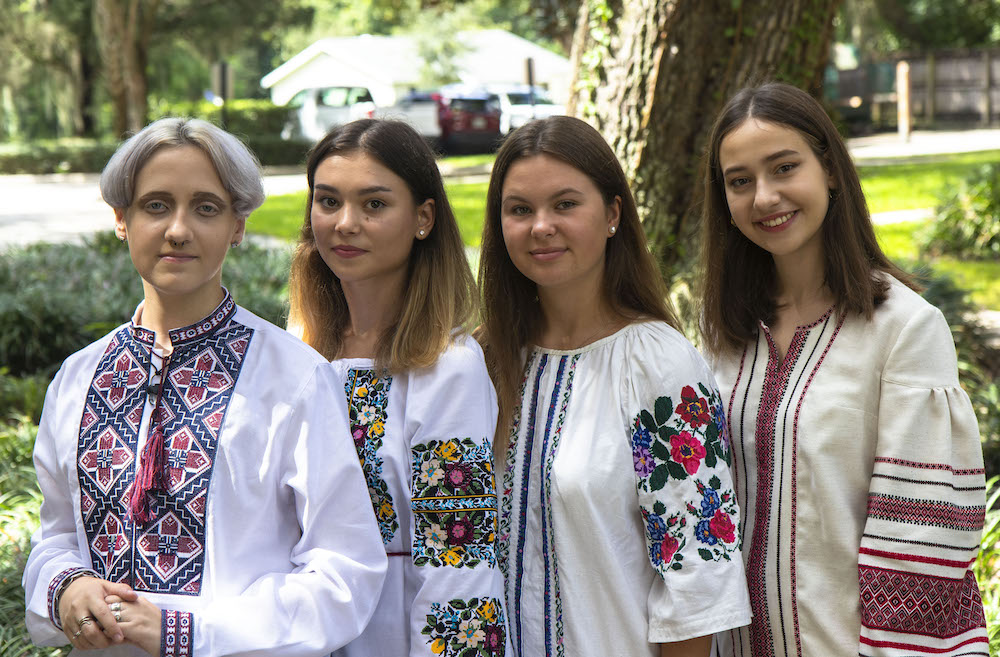
Two international students won Maris awards this year for their outstanding oral presentations. Congratulations to Shadia Muñoz-Najar ’23 from Peru and Evans Asuboah ’24 from Ghana!

Black Home Schoolers of Central Florida provides support for families who chose to home-school their children. They depend on donations to provide these essential services. Evans reviewed their website and realized they needed a modern, streamlined look, more intuitive navigation and increased speed. Many parents were complaining about how difficult it was to find information.

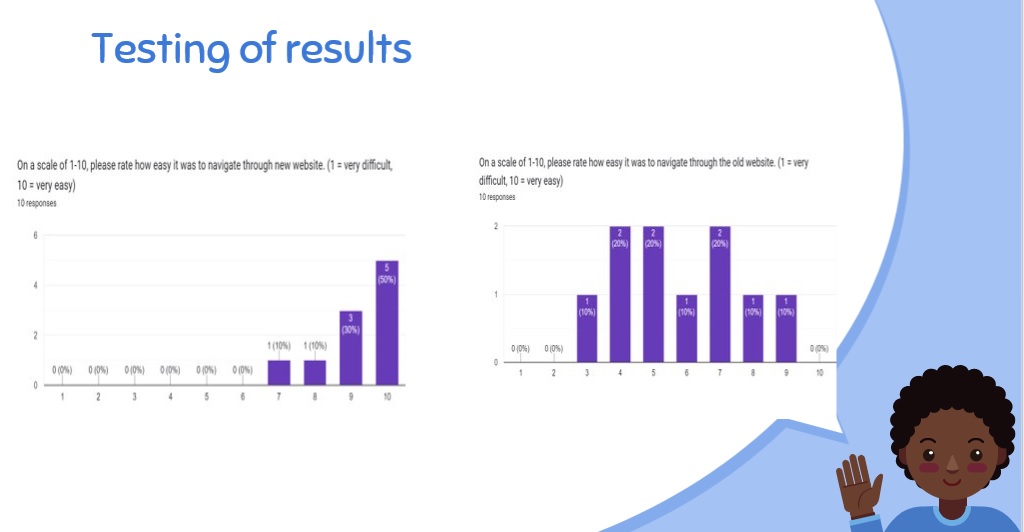
After much research, Evans used the insights to address the pain points and meet the evolving needs of the community. After 100 hours of writing over 5,000 lines of code, a new, refreshing website emerged. Evans tested his new website among users and it was clear by the feedback that he made drastic improvements.

Last but not least, everyone who tested the new website said they would donate to the organization! Check out the new website here: https://www.blackhomeschoolerscfl.com/

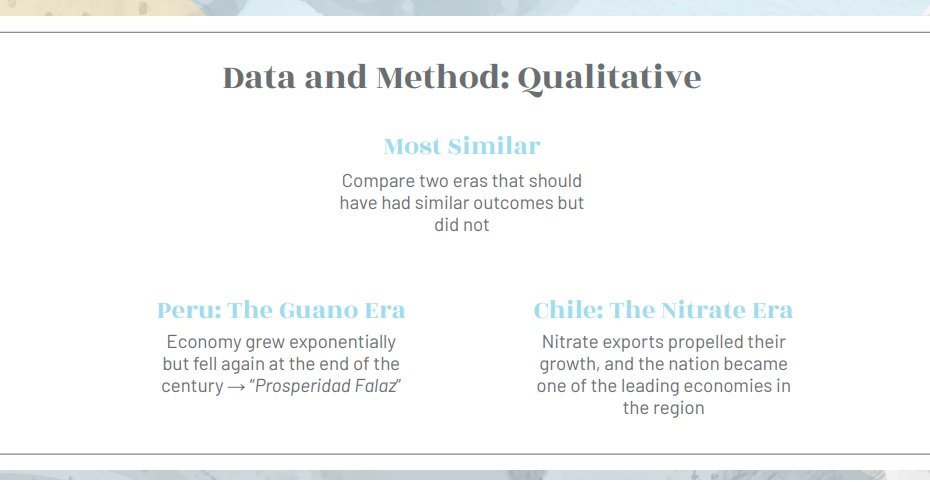
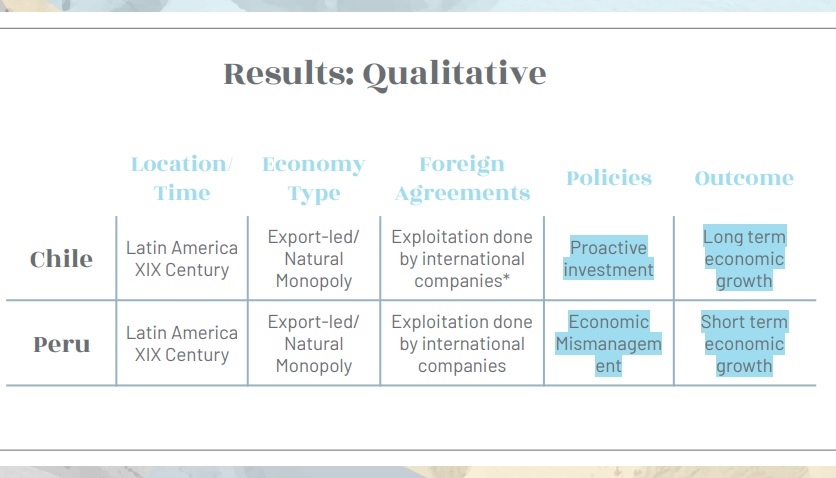
Meanwhile, Shadia tackled a perplexing Latin America resource “curse”: why do some countries with plenty of resources struggle with long-term economic growth? She examined several variables, such as resource dependence, economic inequality and political instability and their effects on different countries. Country policies and political management seemed to be a significant determinant.

Congratulations Shadia and Evans for winning a Maris Award for this excellent work. For those of you who don’t know, this award recognizes quality scholarship at the University’s Undergraduate Scholarship Day.

Fifth-Year Peace Corps Prep Program Report

In December 2016, Stetson University entered a five-year agreement with the Peace Corps (PC) for the establishment of a Peace Corps Prep Program. The program is designed to advance the goals of the Peace Corps and Stetson University by combining academic course work with practical field experience and enhancing ongoing international initiatives. Peace Corps Prep advances Stetson University’s mission, goals and strategic values by providing professional development, leadership experience and training, intercultural competence, and academic growth.

Placing Care at the Center of Internationalization

The transition between spring, summer, and fall 2020 semesters drew on the unshakable resilience of our international students and deep care by Stetson. The chronology below offers evidence to this end and showcases obstacles and wins experienced by students in order to successfully rejoin Stetson this fall.

March 2020

With the declared need to place health first, students were encouraged to leave campus. Our international population response was different to domestic students. For many, leaving campus to travel outside of the U.S. created fear of not being able to return to complete their studies. Students who could or desired to go left rapidly, but this represented only 21% of the population. Most students stayed on campus while others left to reside off-campus with friends and family.

April 2020

International students overwhelmingly communicated feeling safest at Stetson housing until the end of the term. This was especially true for our graduating seniors, many of whom were applying to participate in Optional Practical Training (OPT), a post-baccalaureate employment training program. Our student-athletes were also interested in completing the season in the event that they could play. Some students were concerned about the impact leaving might have on scholarships and academic progress. A smaller group wanted to simply prolong their time away from home. Several students had to stay because of airports closures worldwide. By the end of April, a growing number of students began requesting financial help for accommodations to reside in the U.S. during the summer or assistance with departure from the U.S. Unfortunately, the federal CARES Act had no provisions for international students.

May/June 2020

U.S. immigration laws prohibit the employment of international students. Without financial recourse, homelessness was certain. Recognizing the dire need, staff at WORLD: Rinker Center for International Learning initiated a collaboration with offices across the Deland campus to seek summer funding to support international students affected by the pandemic. For example, Financial Aid, Development and Alumni Engagement, and Grants, Sponsored Research and Strategic Initiatives worked aggressively with WORLD to offer students $250 mini grants from the Stetson Student Support Foundation to offset the cost of first week of food and housing. Friends of Stetson also stepped up to offer just-in-time financial help.

96.2% students return fall 2020 180 total enrolled

Text Box: “I was scared and did not know what my next step should be. I knew I had to buy extra food in case things got worse, but I could not really do that because of my financial situation. I visited Stetson’s food pantry regularly and hoped for the best.” Ananda Semenescue ‘20, psychology, Romania

Then, a significant win arrived in the form of a $35,000 grant from the Jessie Ball duPont Foundation to assist 19 students with housing, food, toiletries, and travel.

Text Box: “Anonymous donors stepped forward and helped to prevent Ananda Semenescue from being evicted, which allowed her to persist and complete her degree in the summer.” Roxanne Lewis, MPW, international student and scholar service coordinator

By the end of summer, almost $50,000 raised in grants and donations for 2020 summer housing & meal support. As a result, students from Armenia, Bulgaria, Egypt, Kenya, Latvia, Mexico, Pakistan, Taiwan, and Uganda were supported. And, no international student at Stetson fell out of federal compliance for a pandemic-related reason.

Text Box: “I cannot explain how thankful I am for the support. As an international student, this fund helped me a lot because as much as I want, I am not able to work off-campus which makes it very tough.” Naina Ivanova, ‘21, corporate finance major and member of the Women Indoor Volleyball team, Bulgaria

Students communicated deep gratitude for the care they experienced. An International Student Emergency Endowment Fund was created to aid students with emergencies. The fund is in need of additional resources to reach the $25,000 minimum required for endowment status.

July 2020

On July 6, federal regulation changes threw the entire international learning community into upheaval. The ICE guidelines required international students to leave the country if universities offered required courses online. In addition, enrolled students were required to be physically present in the U.S. to complete studies online and maintain international student status. Our students indicated being afraid, angry, confused, uncertain, depressed, losing hope, and downright frantic over the possible loss of traction in continuing their studies. Frequent communication from Stetson to students and parents via webinars, emails and WhatsApp messaging became an imperative, as was translating how the ICE guidelines would impact each unique situation. Fortunately, the guidelines were overturned and returned to previous status quo.

August 2020

Text Box: “I’m taking my online courses in Brazil. They are going pretty well but can vary a lot depending on the teacher. I would categorize most of my teachers as 11 out of 10 while others are good.” Shadia Muñoz ’23, political science, Brazil

Students began arriving on campus early to complete the required 14-day quarantine. Several had to quarantine in another country before arriving at Stetson. Their willingness to self-isolate for as many as 28 days indicates students’ grit and a strong sense of connectedness and belonging to Stetson.

Today, our international students are thriving and taking courses while residing on-campus, off-campus, and abroad (above). In sum, students’ resilience and Stetson’s community of care created brighter futures and a powerful win for our students.

International Student Activities during Lockdown

—International Tax session April 6, 2020 2:30 PM EST. Use the link below to sign up by noon April 3rd to be included in a chat during which Albert Aguirre and Roxanne Lewis will be available to talk you through the process of filing your taxes for 2019. https://docs.google.com/forms/d/e/1FAIpQLSe5GJf7i_mhsPmR7nU-PRlPq3q4QfIFDEurC7fvdN6-rGZwag/viewform

Other University Events

–March 23, 2020  from Travis Potter of Stetson’s Wellness and Recreation office [email protected]. Contact him to express interest in joining. “It goes without saying that we are not scheduling any intramural games for the remainder of the semester, but what if we can explore an alternative for your fun and entertainment. The first step is to gauge your initial interest and hopefully there are some commonalities among everyone. I have brainstormed the following activities:

Madden Tournament (PS4; Xbox)Call of Duty Warzone (top finishes; Xbox, PS4, Computer)
8 Ball Pool Competitions (App on Google Play)
FIFA 2020 Tournament (PS4; Xbox)
Rocket League CompetitionNBA 2K (PS4 & Xbox)
Interested? Let me know, I’m starting new tournaments each Monday between now and the end of April. “

–Looking to get involved in Stetson leadership opportunities? Connect with ULEAD  www.stetson.edu/ulead

Sprouting Growth


Through the Alliance for International Reforestation Inc. and Stetson, students are planting seeds for learning in Central America.

Since the year 2000, the Alliance for International Reforestation Inc. (AIR) has enjoyed a strong partnership with David and Leighan Rinker, longtime ardent Stetson benefactors, in offering transformational service experiences for Stetson students in Central America.

The partnership actually began when in 1999 David Rinker offered to support student trips with Anne Hallum, Ph.D., a Stetson political science professor and founder of AIR, through the Marshall E. Rinker Sr. Foundation. David Rinker had learned of Hallum’s early experiences working in Guatemala — training farmers in sustainable agriculture and other services — and he wanted students to benefit as well.

Through the years, both literally and figuratively, it’s been quite a journey.

Today, selected students — based on grades, a reflective essay and an interview — participate in three primary programs, along with academic assignments, over a period of four to six weeks. The word participate is used loosely.

Students build stoves with Mayan families and the AIR staff; they are actively engage at rural schools; they plant fast-growing trees on deforested slopes; and they maintain a journal of reflections on friendships made and lessons learned.
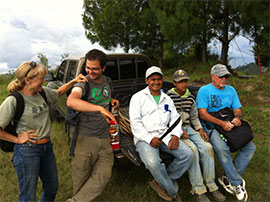

Camaraderie with locals is part of the AIR experience for students.

Over the years, for example, more than 100 stoves have been constructed — involving cement mixing and brick laying — to help prevent lung disease and conserve precious trees. Meanwhile, more than 45,000 fast-growing trees have been planted —up to 4,000 trees each month by hand on mountains — to improve crops and prevent mudslides.

The trips, clearly, aren’t vacations, except for the Saturday “tourist days.”

Last summer, in addition to building and planting, a student with a special interest in marketing shadowed Hallum to learn the nuances of fundraising and donor relations.

The travel expenses for each of those students, as well as for Hallum, are covered by the Marshall E. Rinker Sr. grant (with some funds from Latin American Studies when more students traveled). Those annual grants total approximately $9,000 each June, which cover hotels, food, ground transportation, small stipends and continual supervision by the AIR staff members.

For the students, the payoffs have been significant.

A first-year student was taught the “sheer joy” of an exhausting day of service (especially outdoors). An impressionable 19-year-old who spent six weeks with AIR in Guatemala now is an accomplished alumnus. More generally, AIR has impacted how student view the world.
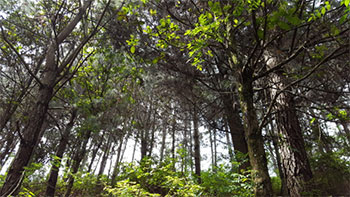

Thanks to charitable funding and Anne Hallum, Ph.D., a former political science professor at Stetson, students continue to participate in uncommon immersion abroad.

Until June 2012, Hallum taught full-time at Stetson and managed AIR’s early growth in Nicaragua and Guatemala. She was able to combine the service work in rural Guatemala and Nicaragua with her own academic research, and to find ways for students to earn academic credits in independent studies such as immersion Spanish, environmental activism, Latin American studies: Mayan Culture, and religion and the environment.

Hallum left Stetson in 2012, moving to Atlanta to work full-time (non-salaried) as president of AIR-Guatemala. Yet, even today, by virtue of her personal ties to the university and the Rinker support, she continues to exclusively host Stetson students for lengthy immersion experiences.
Not coincidentally, in 2017 AIR Guatemala received its second recognition from the United Nations, as a winner of the 2017 Equator Prize, presented by the United Nations Development Programme.

As a result, a reforestation organization founded on the third floor of Elizabeth Hall at Stetson more than 25 years ago now is globally acclaimed. Even greater, it continues to provide uncommon experiences of growth for Stetson students.

-Michael Candelaria

Originally posted at Stetson Today on February 25, 2019