Rinker Global Scholars Program: Madness in Venice

-Written by: Heather Fontaine; Adapted from StetsonToday

During Spring Break in March, 16 Stetson students traveled to Italy for nine days, led by their two course professors, as part of the Rinker Global Scholars Program. All of the students were selected for the study abroad opportunity and given a generous scholarship from Drs. David and Leighan Rinker, which significantly subsidized the program’s cost.
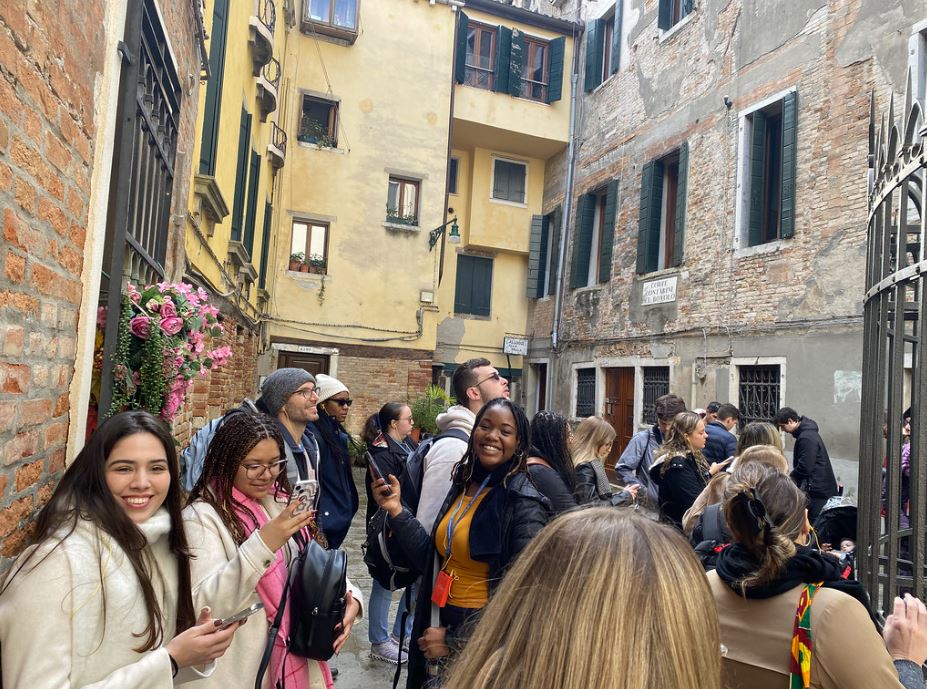
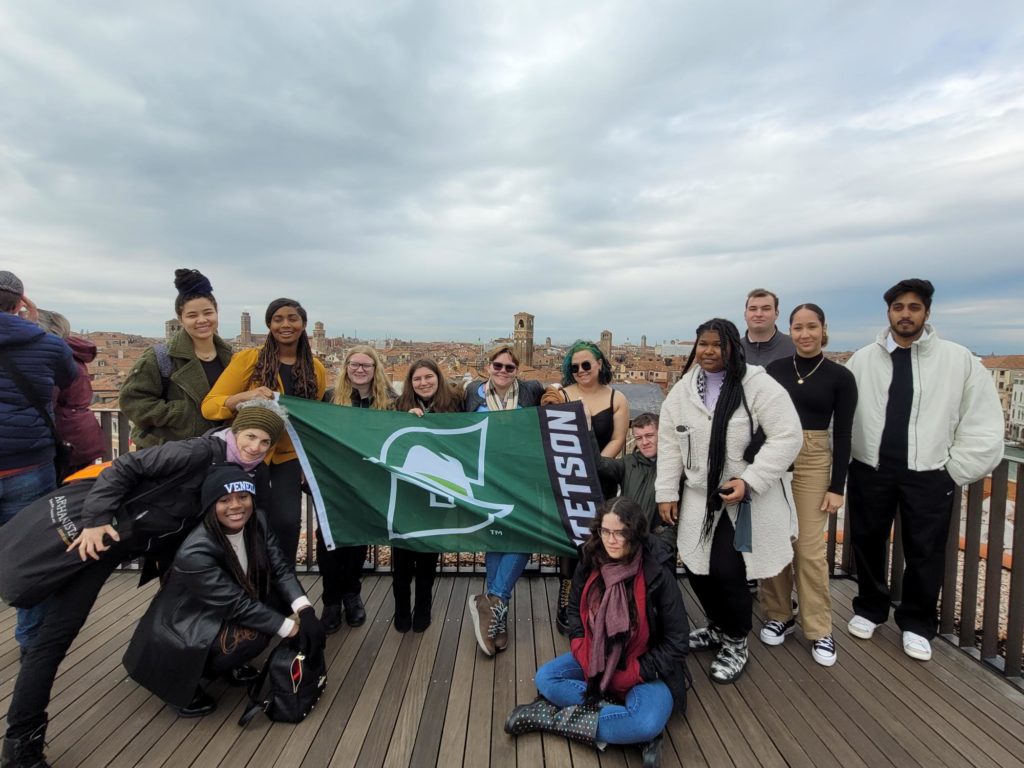
The 2024 Rinker Global Scholars explore Venice as part of their class on mental health reforms in Italy

The new course, Madness in Venice, explores how the conceptualization of mental illness has changed across time –— developed and co-taught by Michael Eskenazi, PhD, associate professor of Psychology, and Melinda Hall, PhD, associate professor of Philosophy and interim associate dean of the College of Arts and Sciences.

“No matter the student’s major, they understand the importance of mental health,” Eskenazi said. “Given the recent trends in college student mental health, this course topic was a timely and worthwhile investment for the Rinker Global Scholars Program.”

On campus during the semester, the students learned about the different approaches that philosophers and psychologists use in understanding history and human behavior, specifically honing in on the history of mental illness treatments over time in Venice. Once abroad, the experiential learning journey started with a short ferry ride to the San Servolo Insane Asylum, where the students were able to understand how people with mental illness were treated before the passage of the Basaglia Law in 1978, which led to more ethical mental health treatment and practices.

The now-museum was full of instruments, equipment and imagery of patients who were held at the asylum. While an eerie energy filled the spaces of this once leading-edge psychiatric hospital, a sense of peace was felt knowing legislative changes had influenced not only better care for people with mental illnesses, but increased awareness of disability justice activism, having a positive ripple effect across the globe.

“Coming out of Venice now, our class is a lot closer, and were able to talk about these issues in a much more important and personal way than we had before,” commented Laura Cheshire, a senior Art Therapy major.

In addition to exploring other clinically relevant locations that coincided with their classroom studies, students enjoyed St. Mark’s Square, including famous landmarks such as St. Mark’s Basilica, Doge’s Palace and the Grand Canal, where continually operating gondola tours begin and end. 
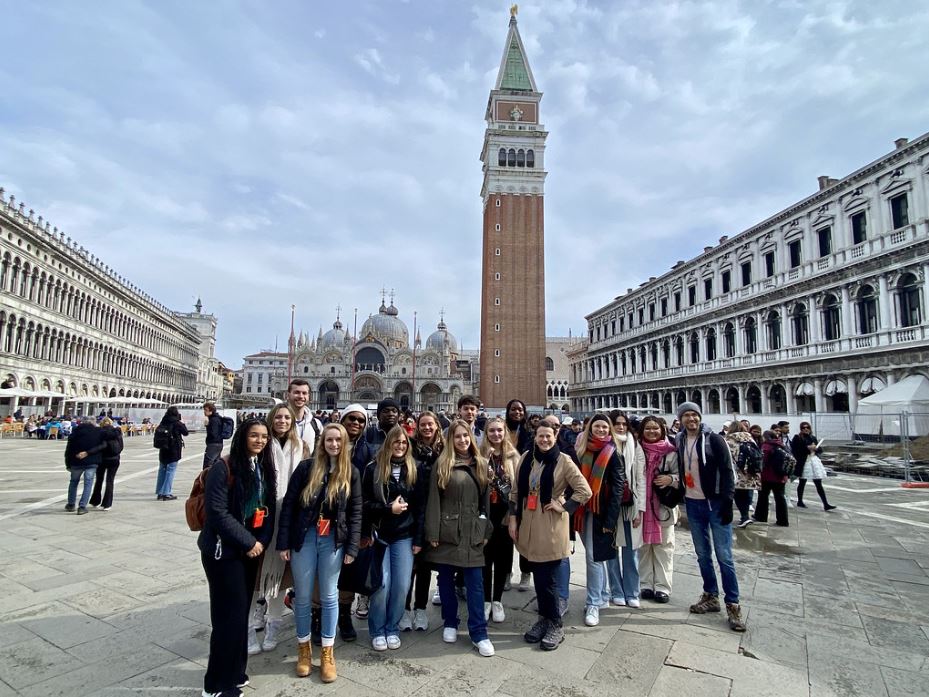
Students explore Piazza San Marco in Venice

Venturing out of Venice to visit Verona, Bologna, and the islands of Murano and Burano, adjacent to the Venetian Lagoon, the group witnessed a private glass-blowing demonstration. Also, they toured a town sprinkled with small brightly painted houses owned by locals who have mastered the craft of lacemaking for hundreds of generations. 

“The excursions allowed students to acquaint themselves with the harmonious aspects of Italy,” Hall noted. “I hope to call students to wonder about our obligations to others and to ourselves, the social structures and systems which impact the ways we understand each other and our own subjectivity, and who belongs in our moral communities and why.” 

Eskenazi believes that as Stetson’s new Strategic Priorities outline the importance of people, culture and inclusive excellence, this study abroad course taught students the power of global citizenship by showing them the implications and improvements one country can have on the world.

“I have seen immense personal and academic transformation in students as they open their minds to new experiences, interact with people from different cultures, and learn how historical events in foreign countries are directly related to their studies and lives today,” Eskenazi concluded.

You can view a short video of the students’ experience on YouTube.

Note: You can learn more about the Rinker Global Scholars Program on WORLD’s website. The 2025 program will take place in Venice again and will focus on Music and Art through History.
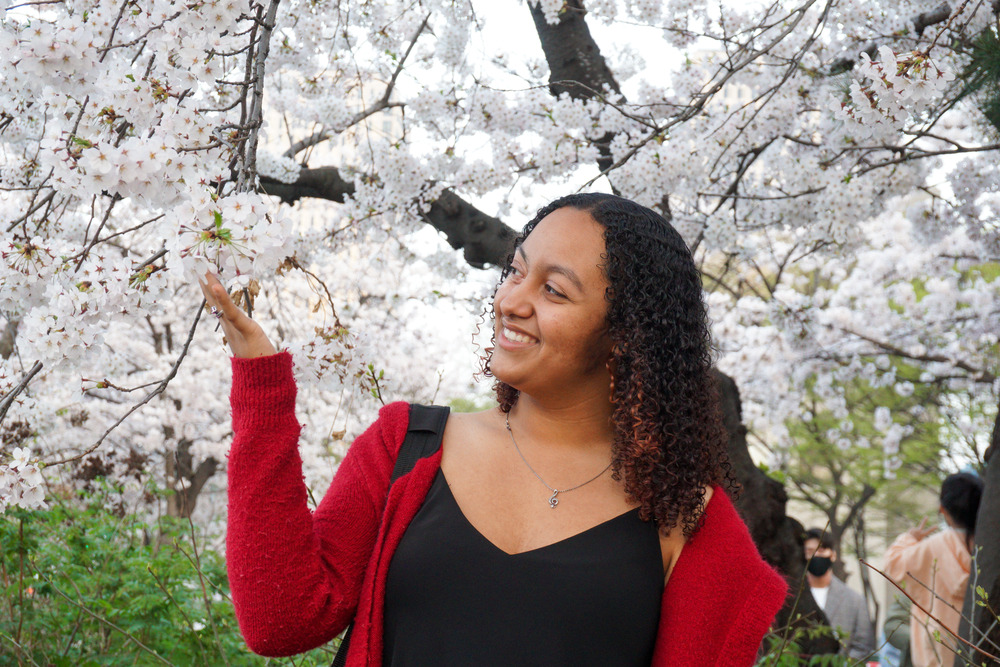

Photo Contest 2023

WORLD was thrilled to receive nearly 200 photo submissions for the 2023 Study Abroad Photo Contest! WORLD staff deliberated and narrowed the choices down to our top 30 finalists. Now we need your help to determine the winner!

Please take a look at the photos below and then cast your vote for your favorite three photos by Monday, May 1!

Cherry Blossoms (Seoul)

Hwaseong Fortress in Suwon (South Korea)

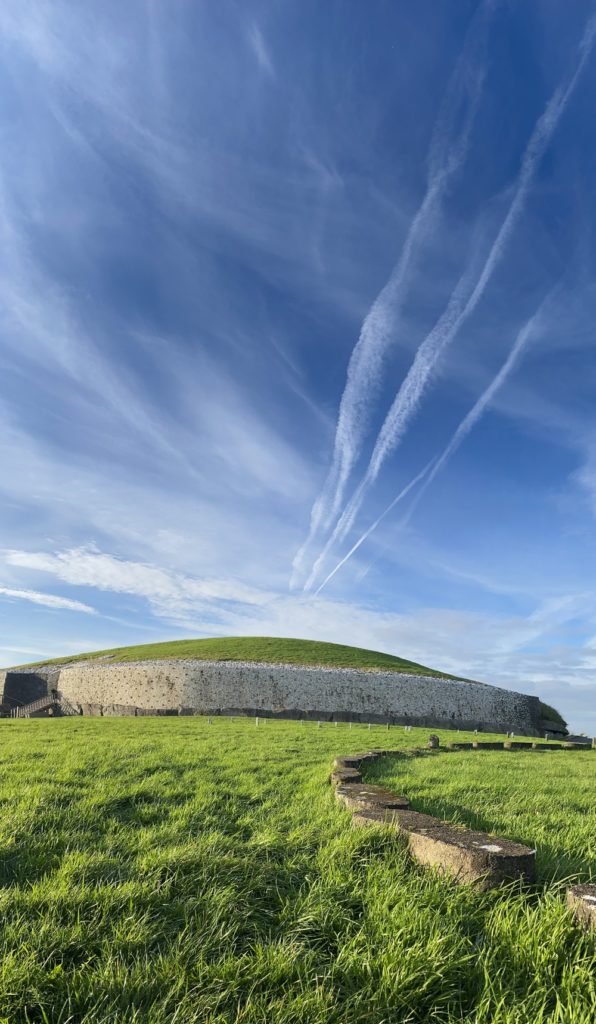
The Entry-place of Fairies (Ireland)

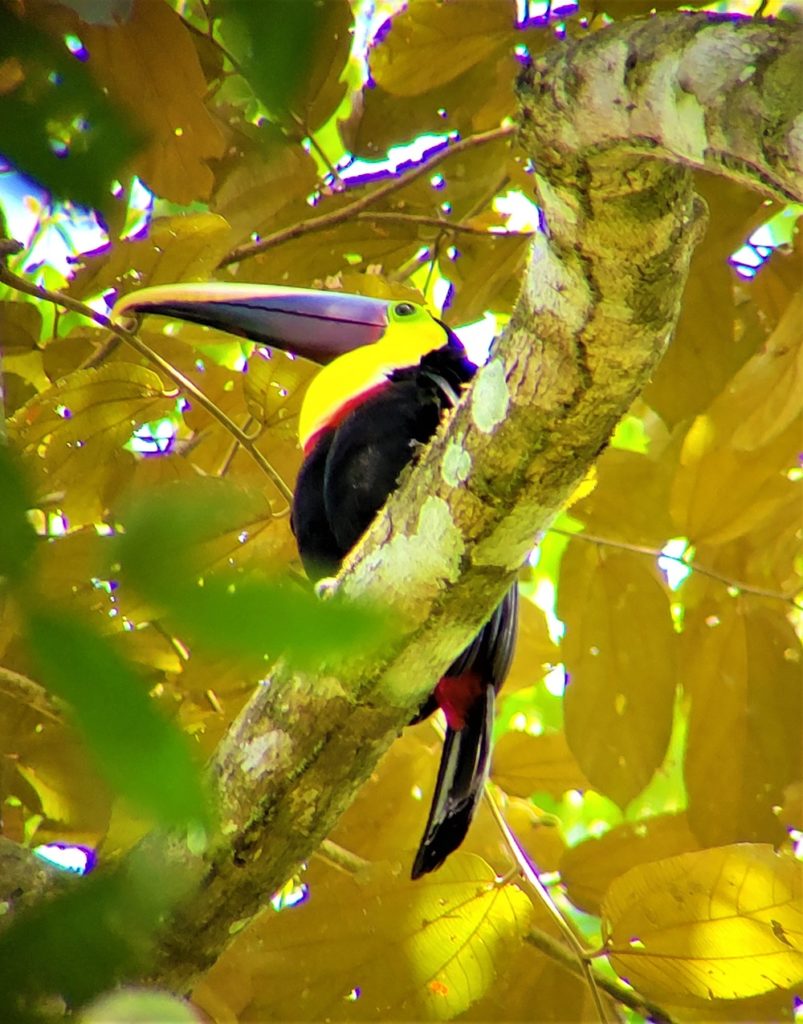
Toucan Go to Costa Rica

Kayla Loves Hiking (Ecuador)

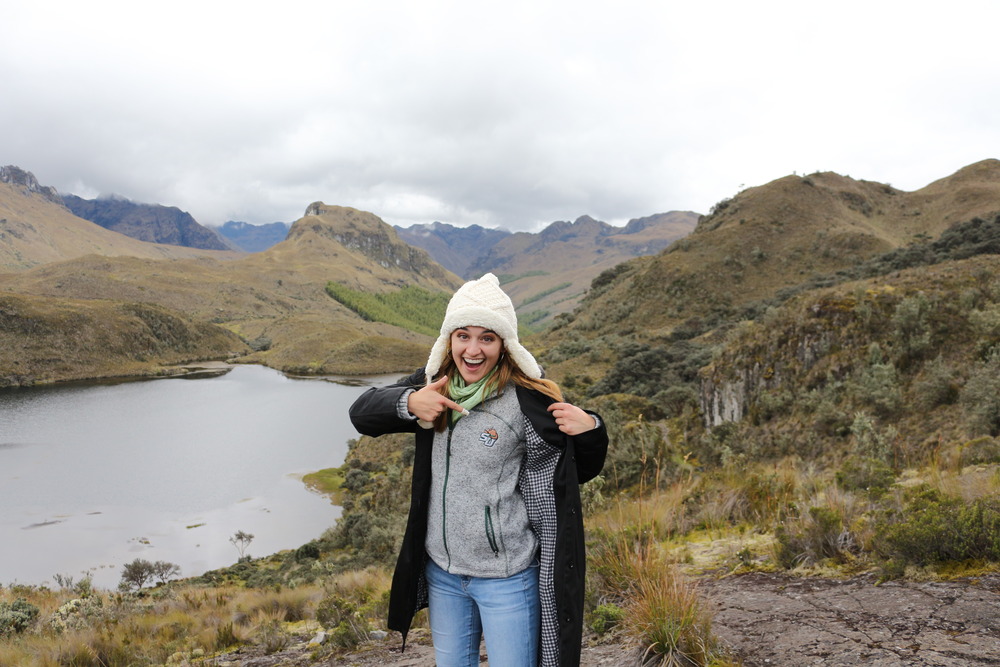
Rocking Stetson Gear in the Andes Mountains (Ecuador)

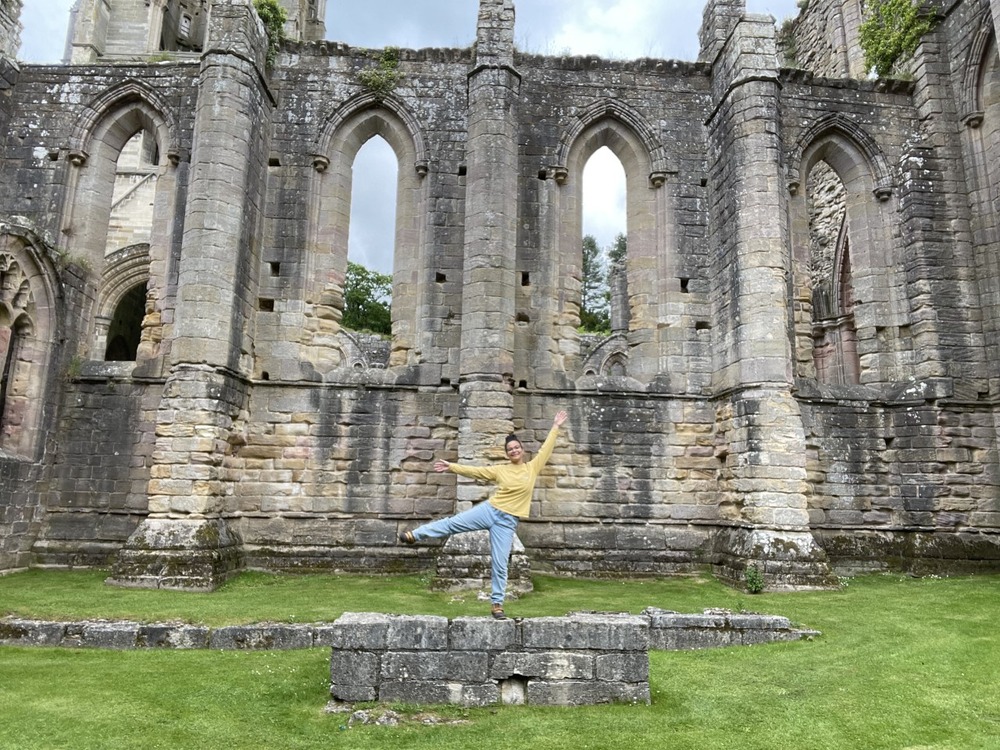
Flouncing about Fountains Abbey (England)

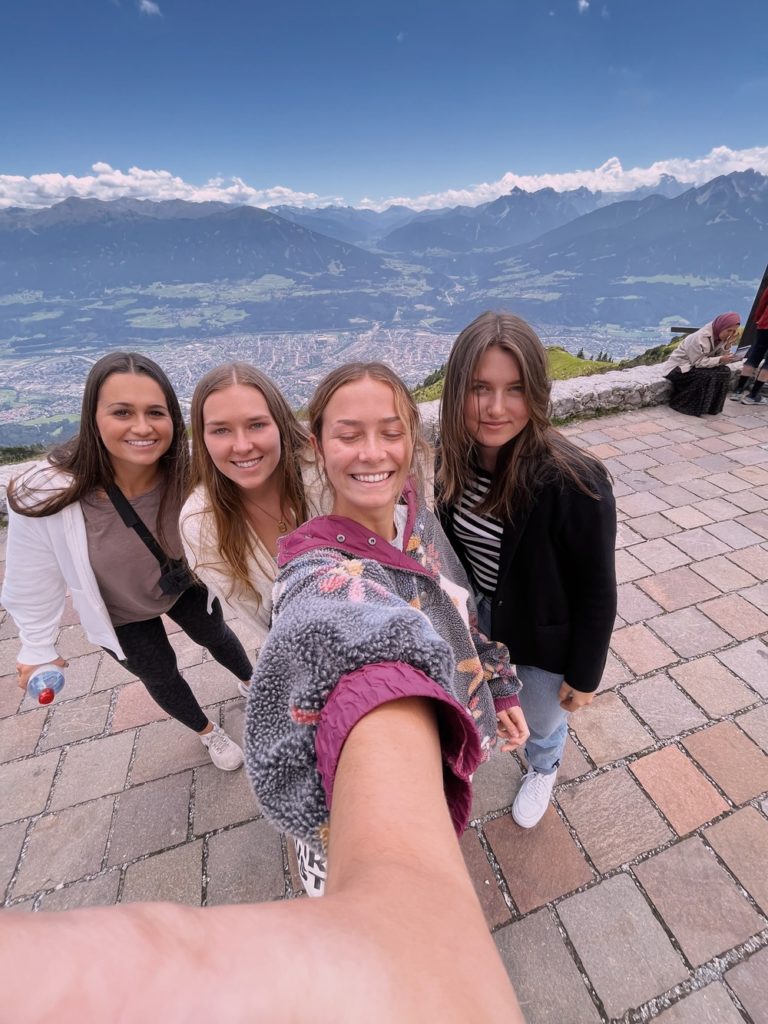
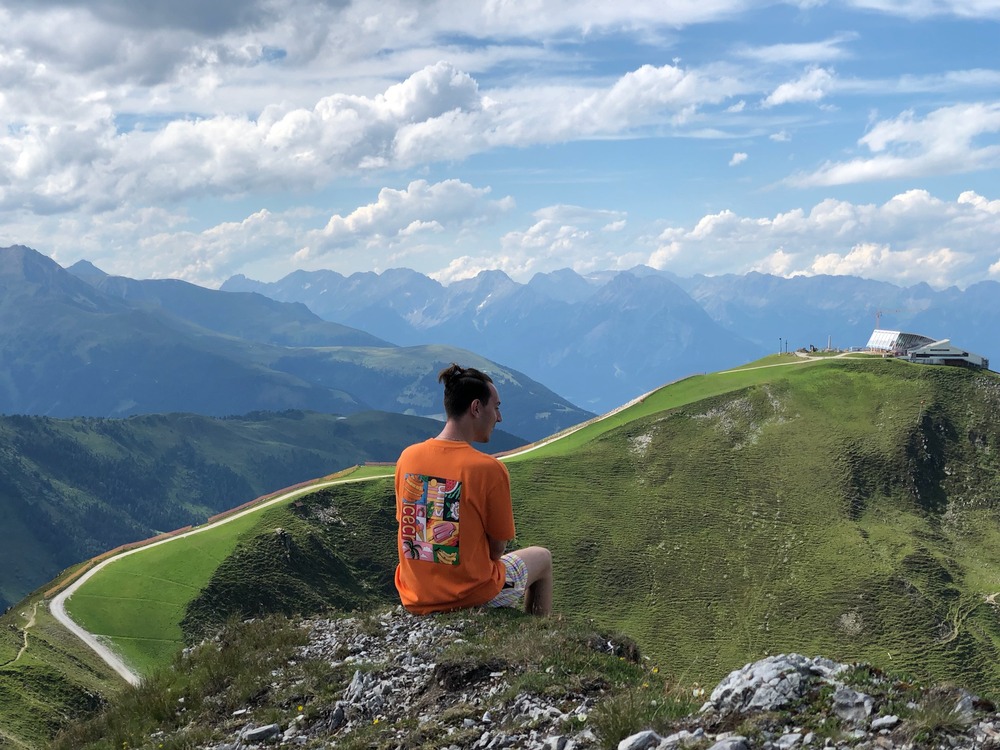
On Top of the World (Austria)

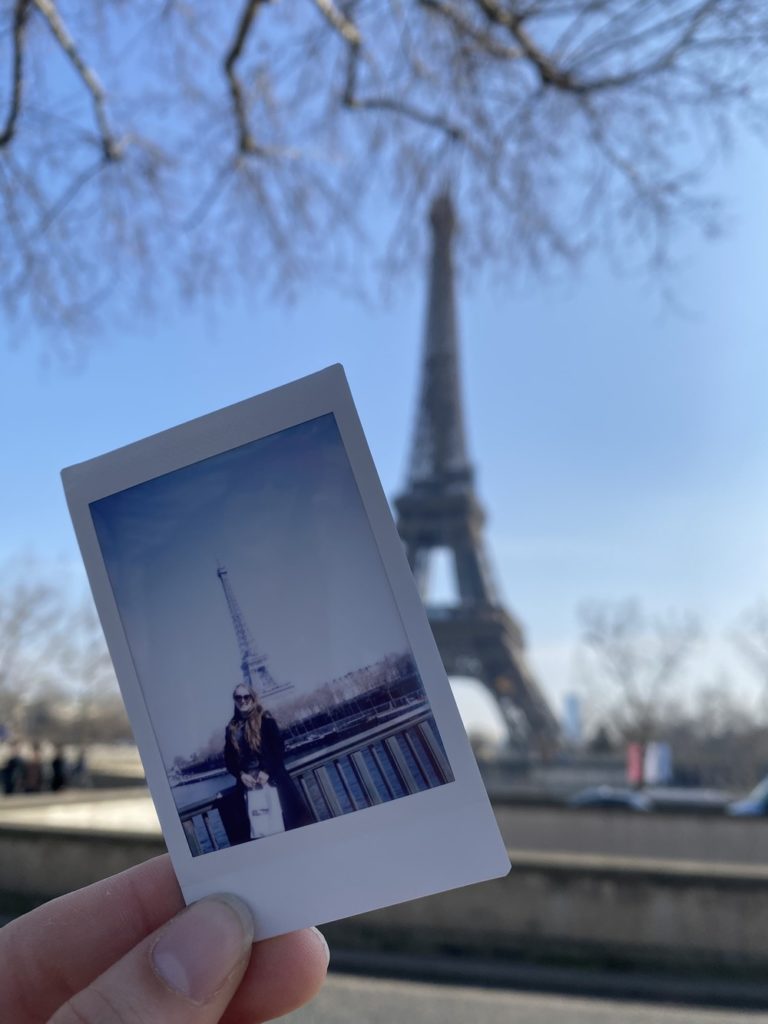
Polaroids (France)

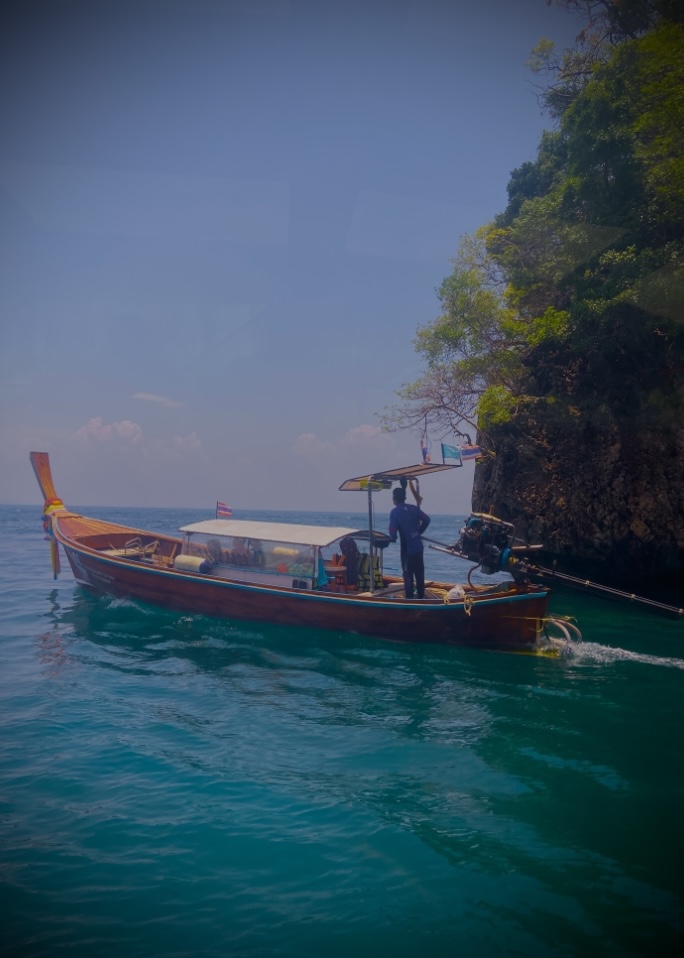
Speedboat Krabi (Thailand)

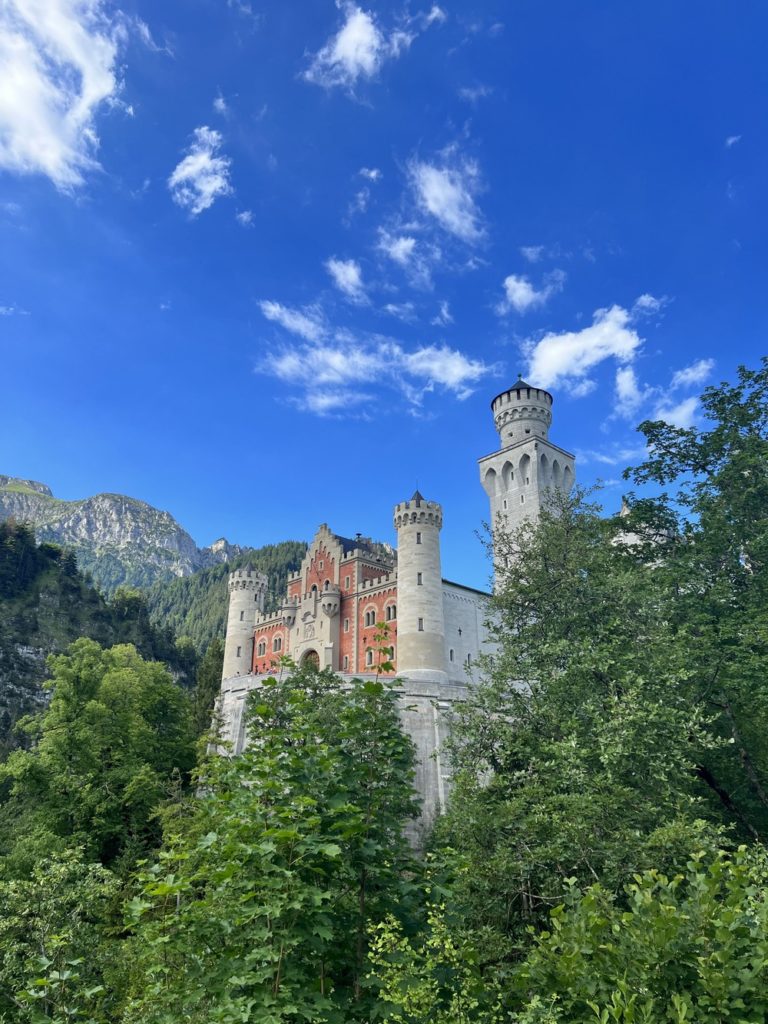
Neuschwanstein Castle (Germany)

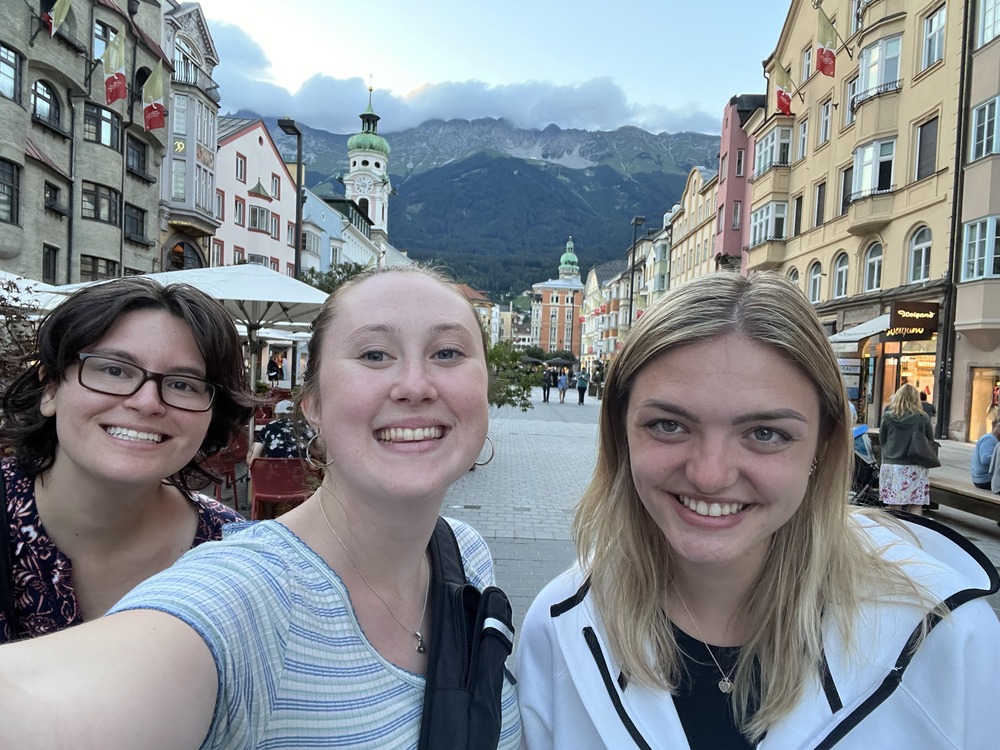
Old Town Innsbruck (Austria)

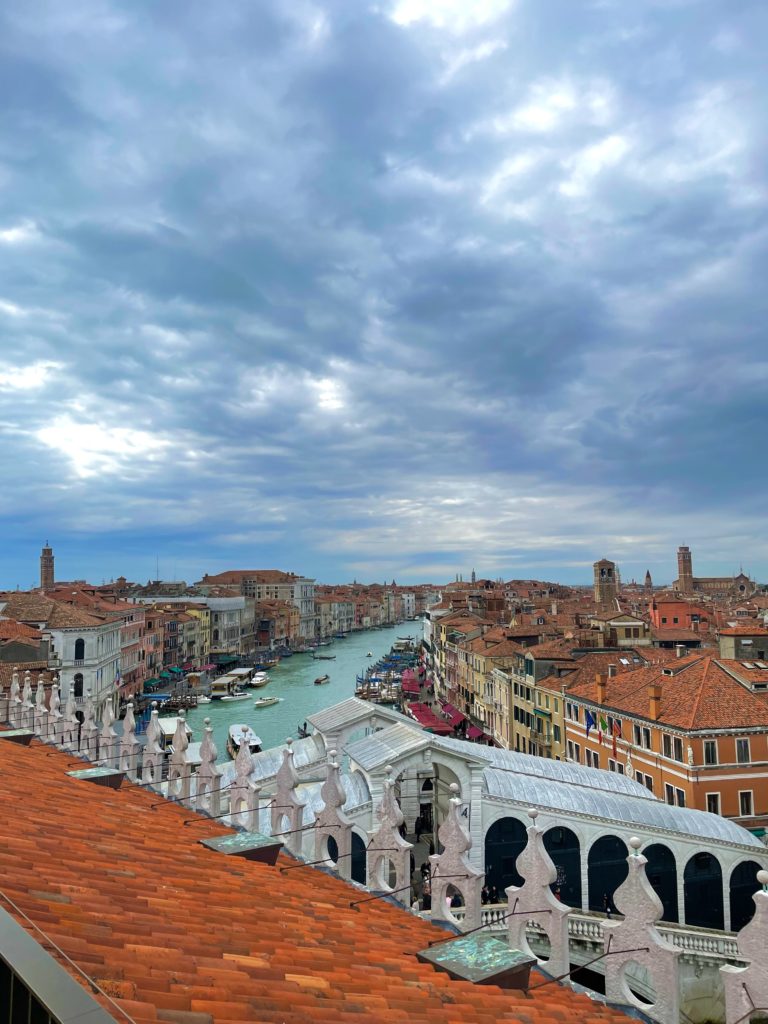
Birds-Eye View of Venice (Italy)

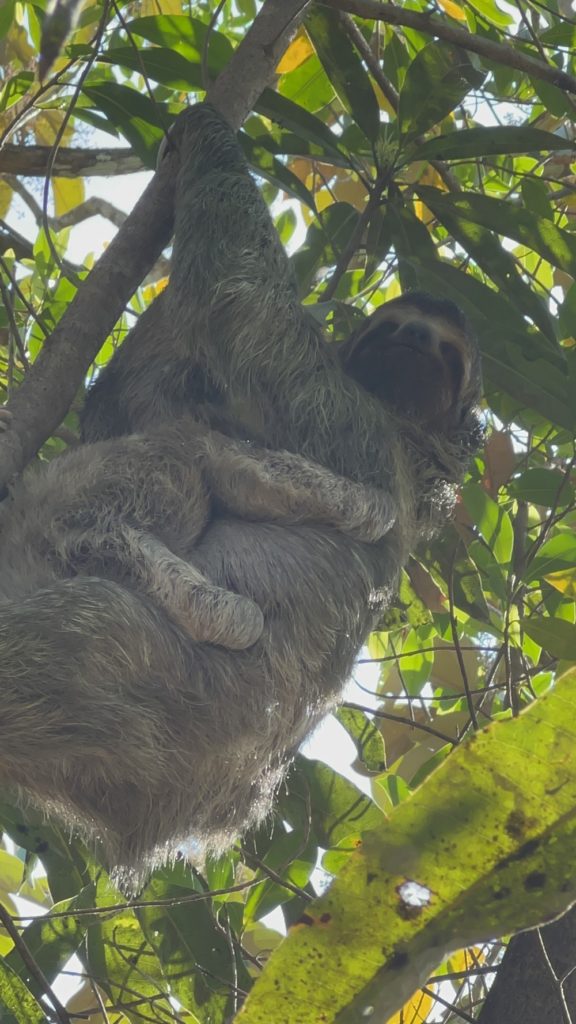
Mother sloth and her baby (Costa Rica)

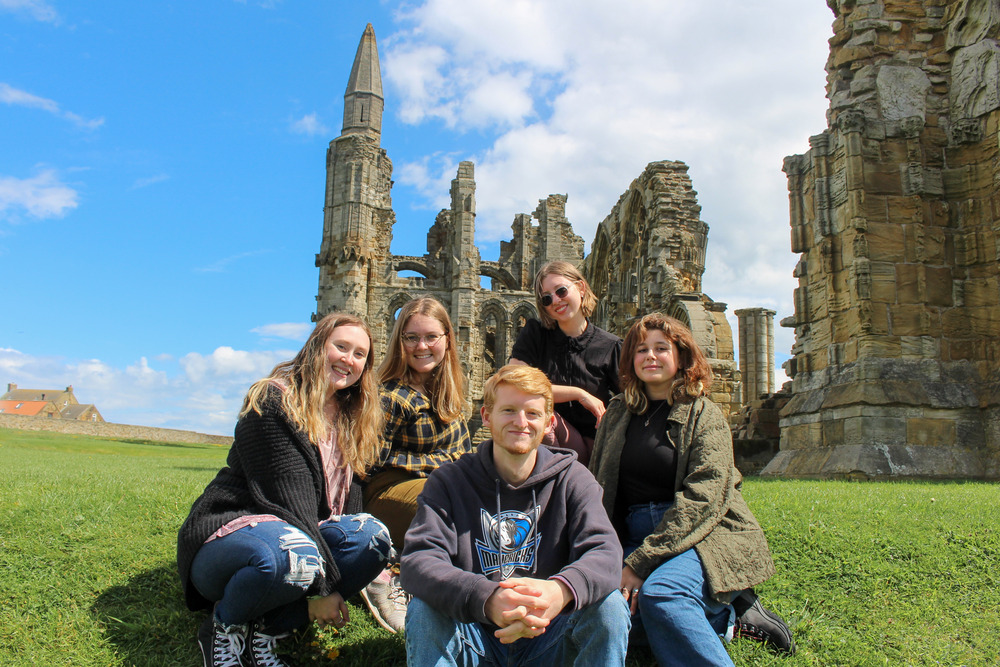
Hatters, Friends, Travelers (UK)

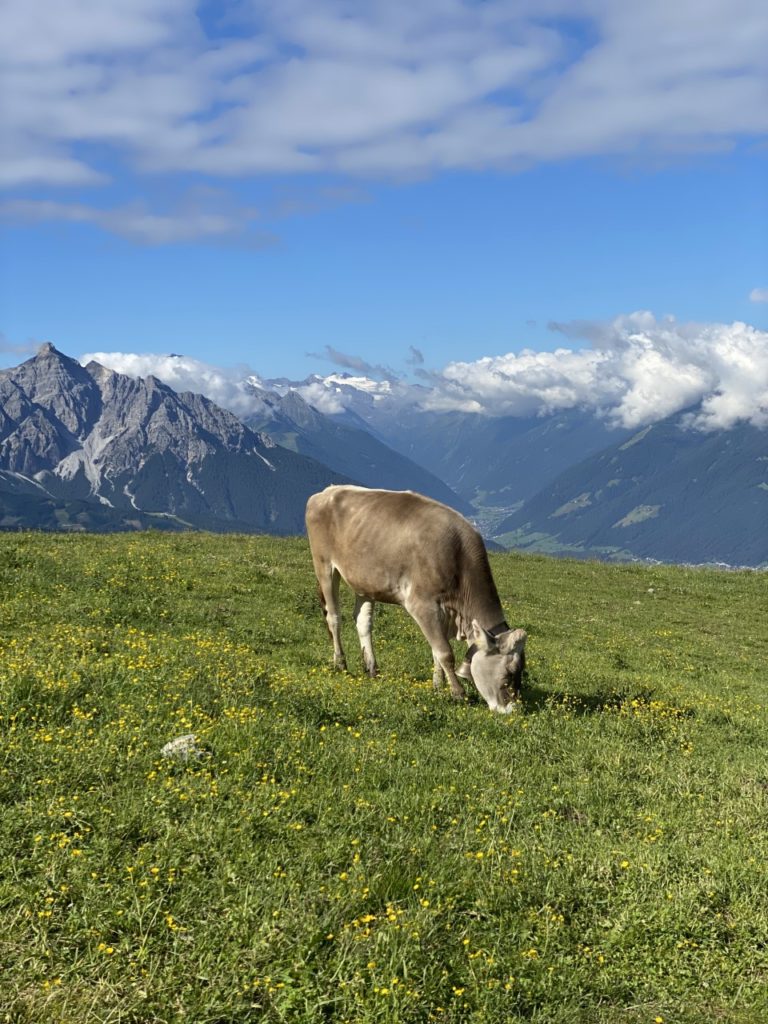
Cow Grazing (Austria)

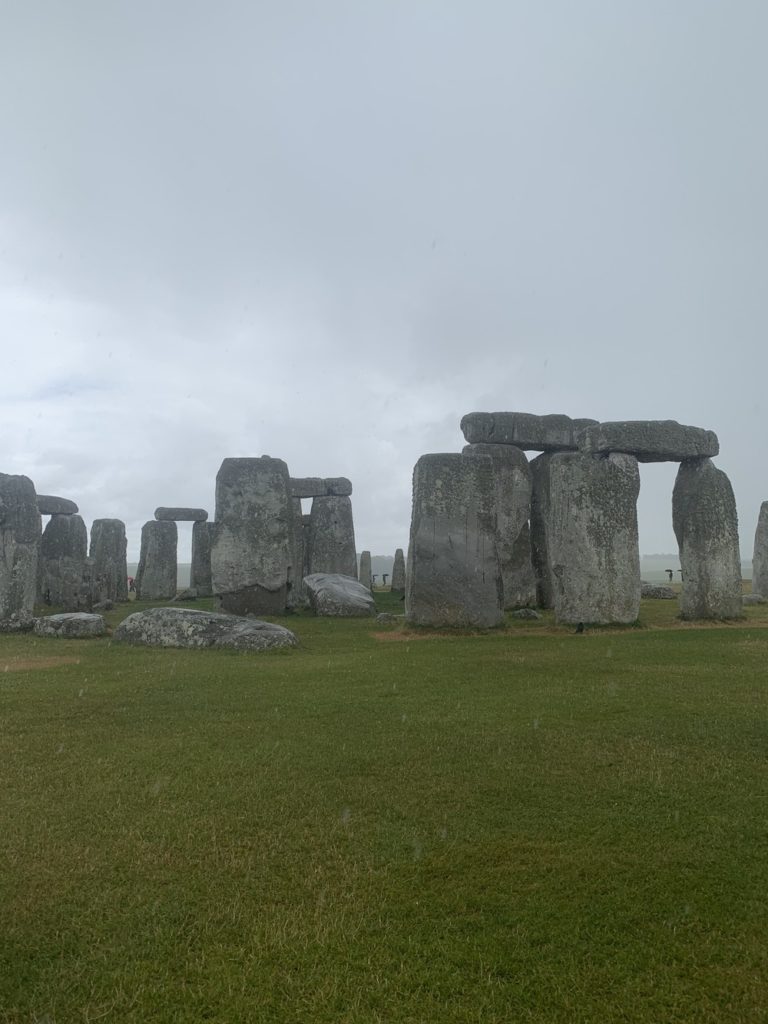
Stonehenge (UK)

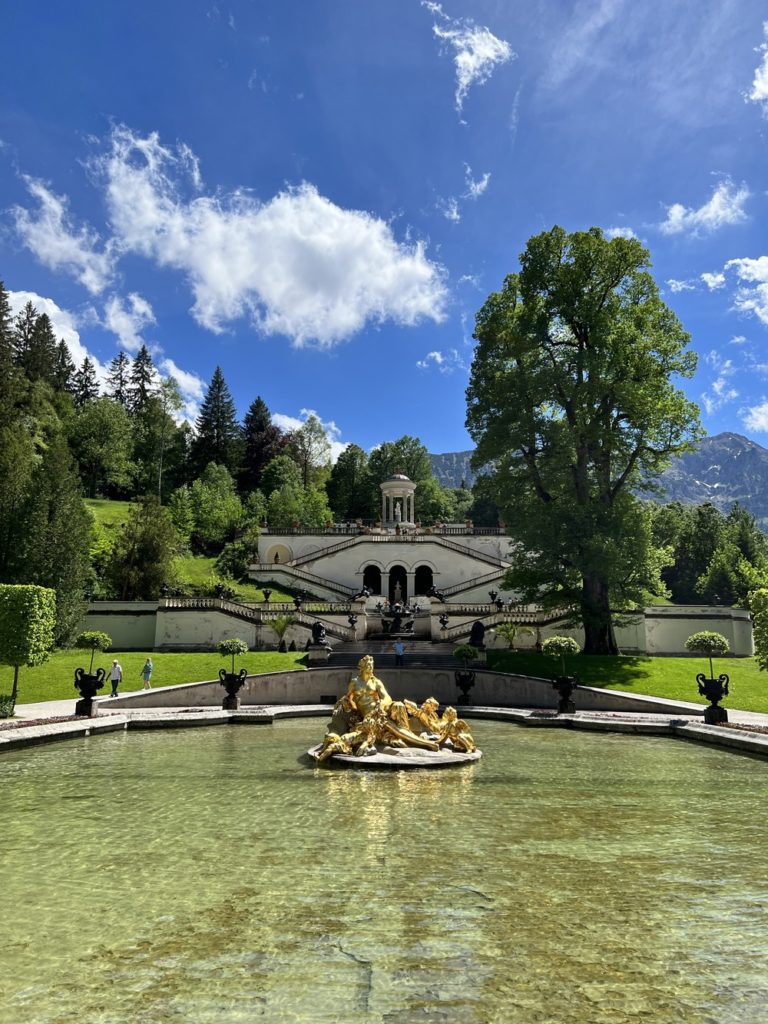
Fountain of Schloss (Germany)

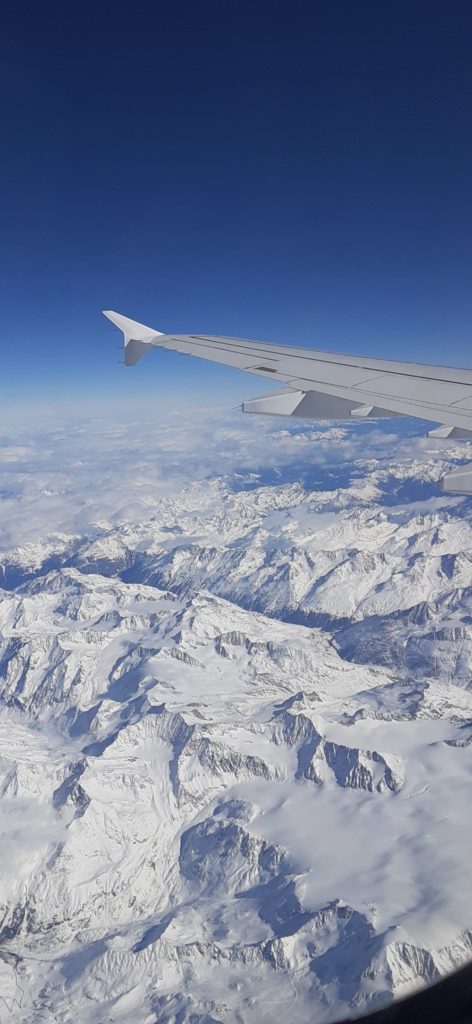
Flight over the Mountains (Italy)

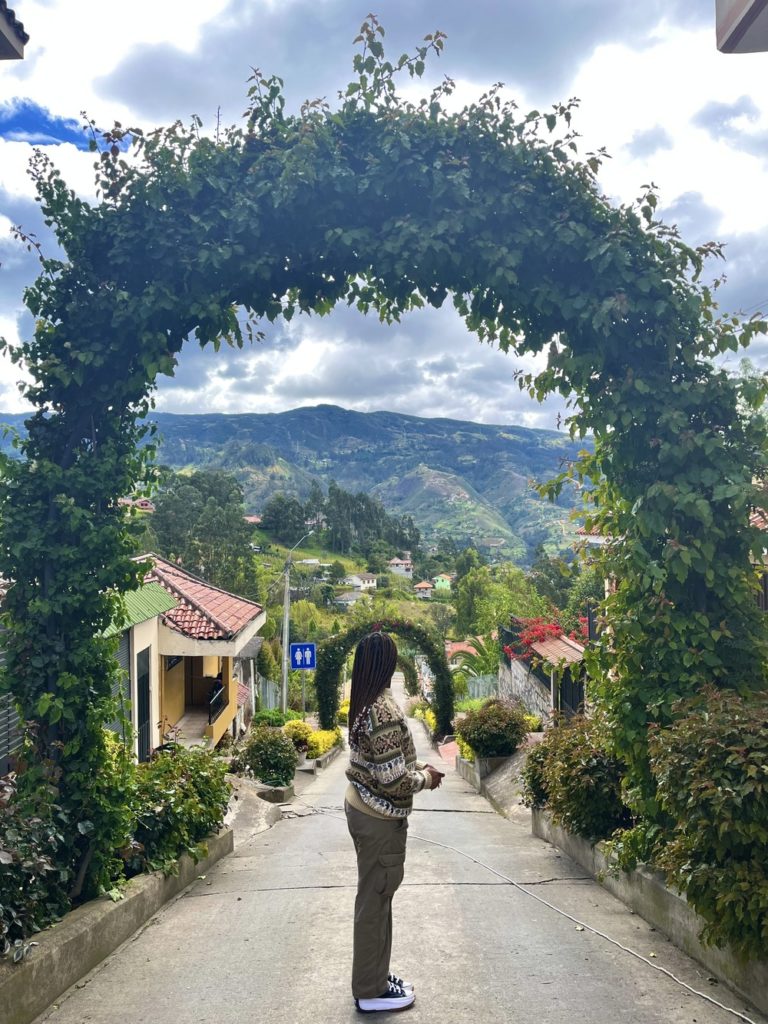
El Jardin del Azuay (Ecuador)

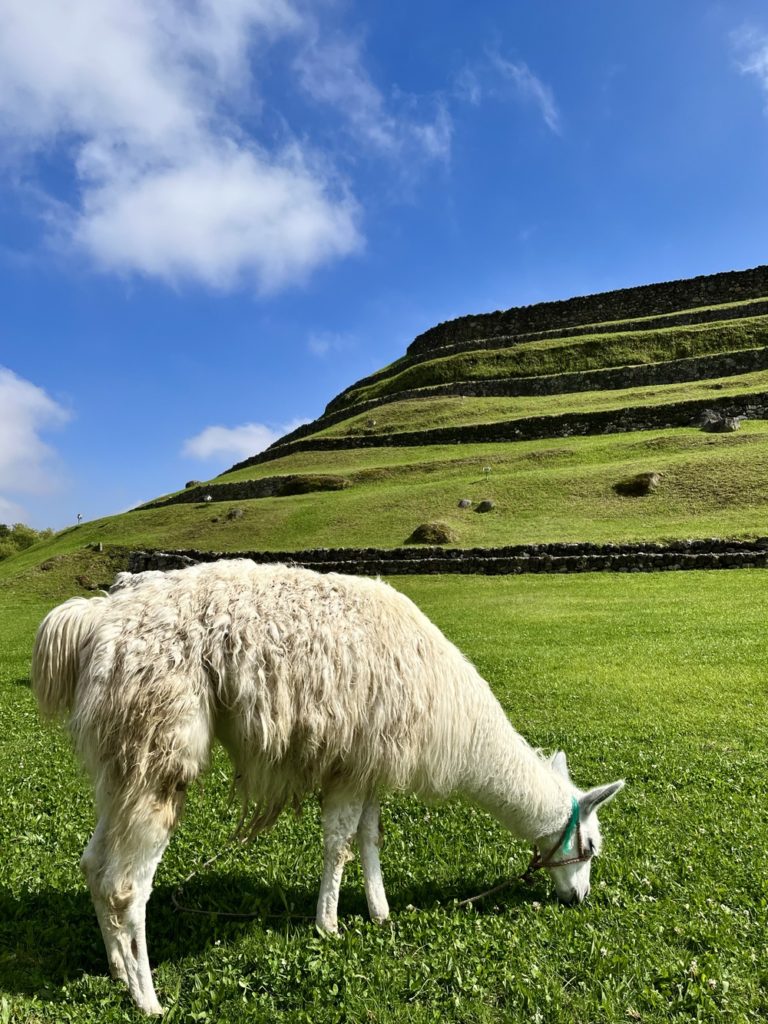
Llama (Ecuador)

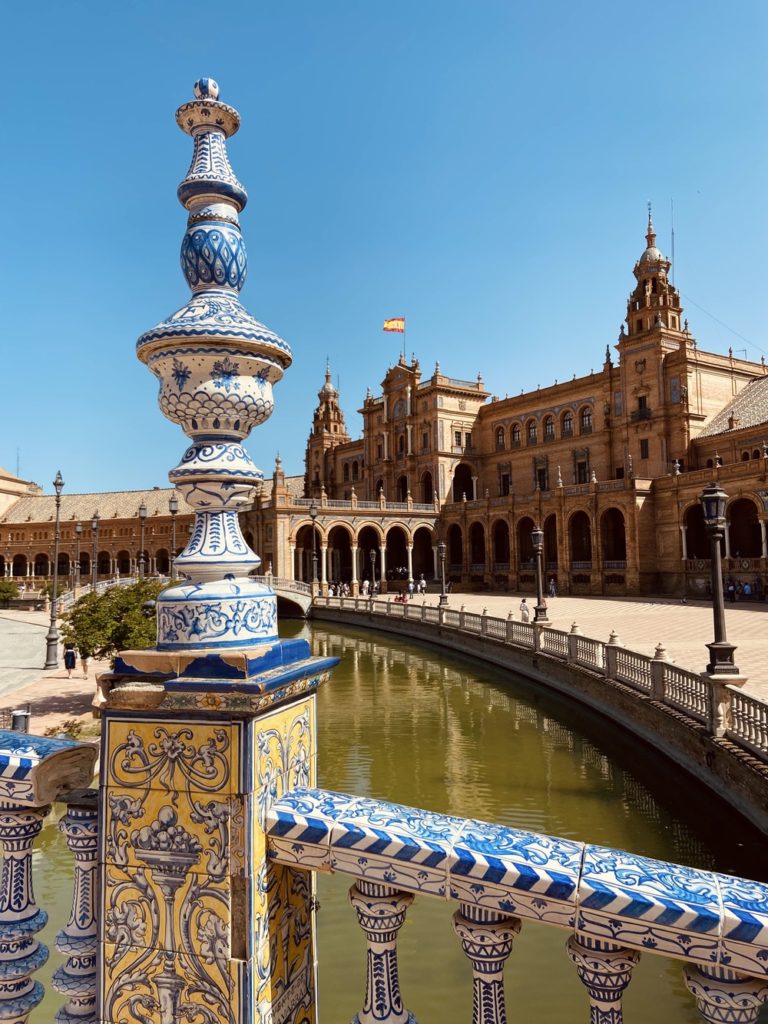
Plaza de Espana (Spain)

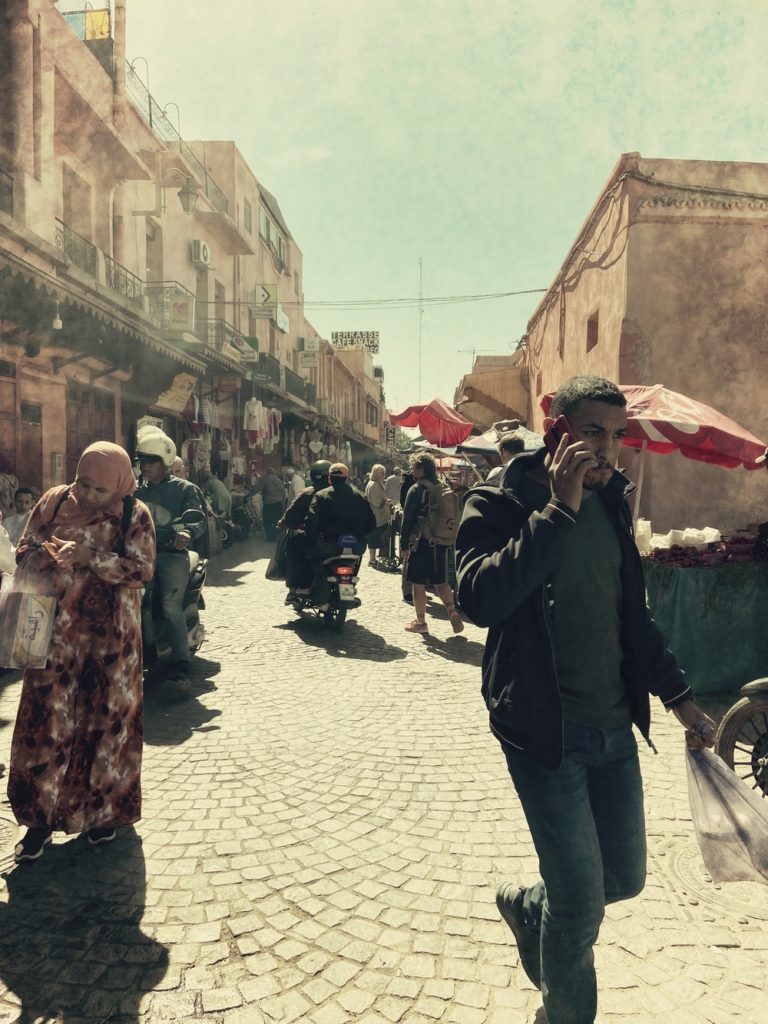
The Pace of Life in Marrakech (Morocco)

Protecting Youth (Costa Rica)

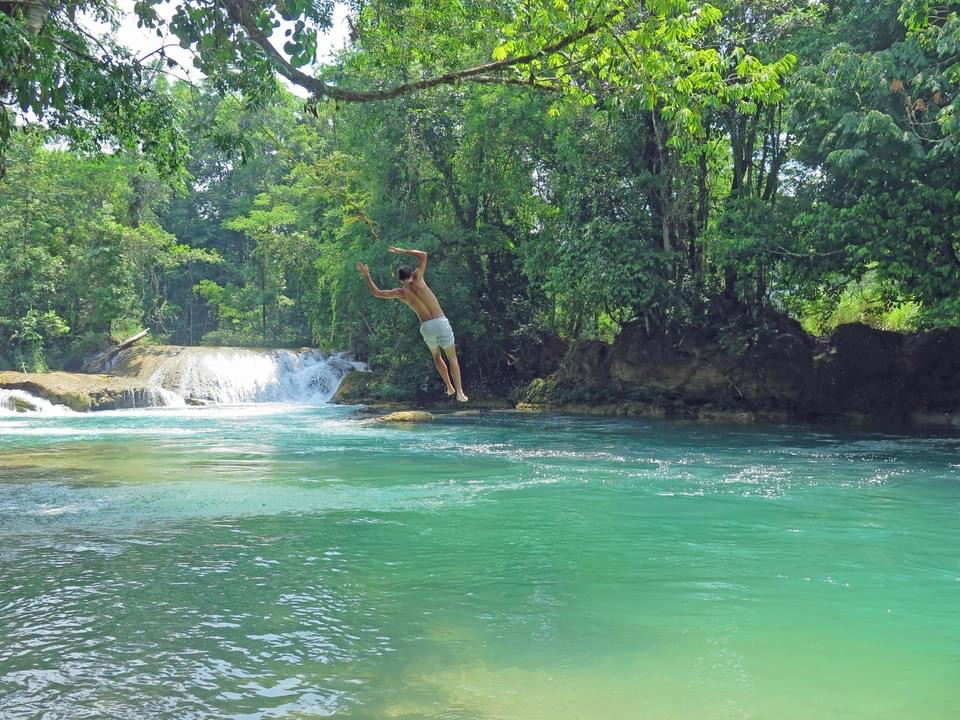
Airborne (Chiapas, Mexico)

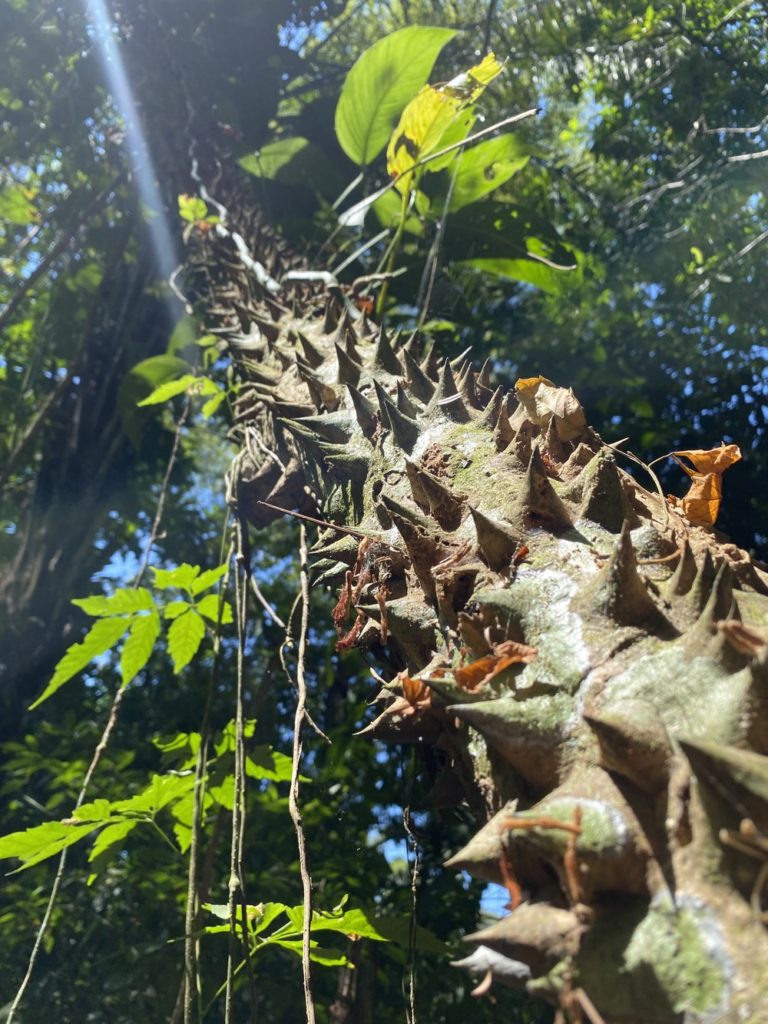
Miniscule (Chiapas, Mexico)

A Hike in Austria

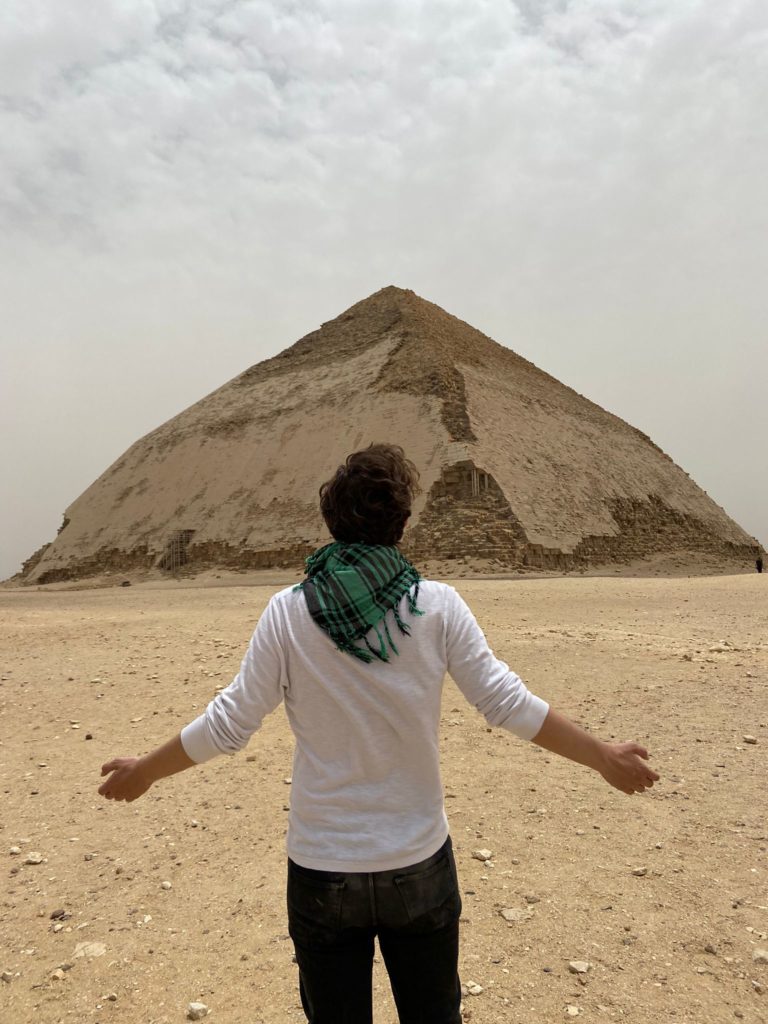
In Front of a Pyramid (Egypt)

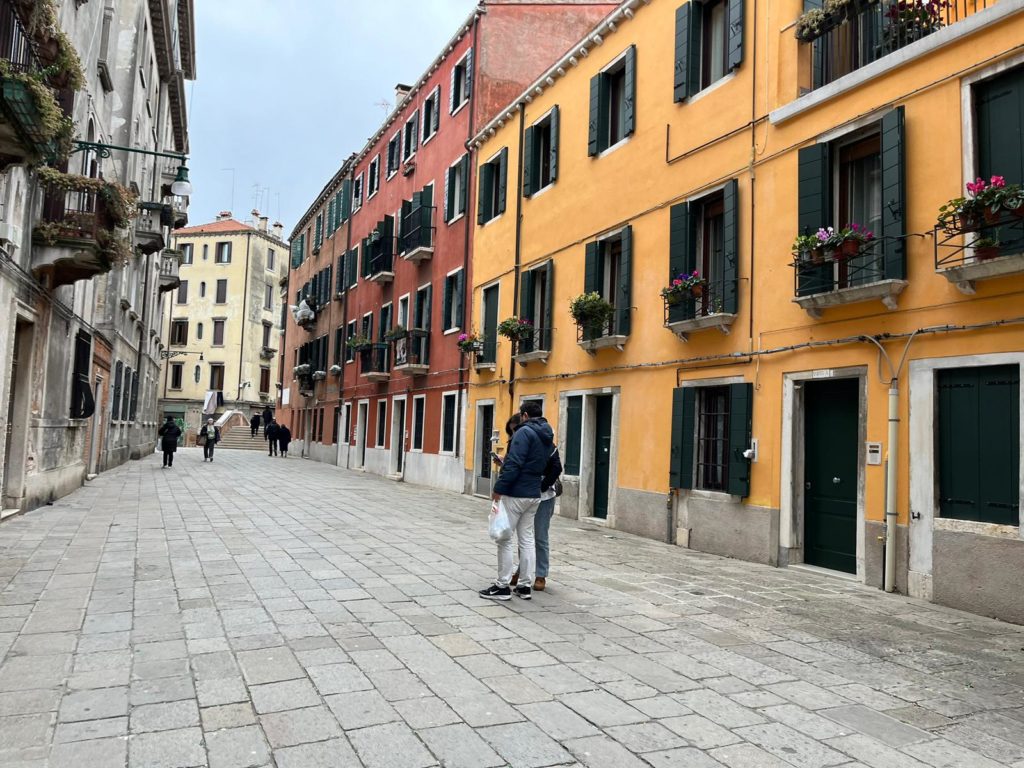
Street of Venice (Italy)

Remember to cast your vote for your favorite three photos by Monday, May 1!

Costa Rica Adventures

2023 Spring Break Study Abroad

by Haleigh Ray, Visiting Assistant Professor of Biology

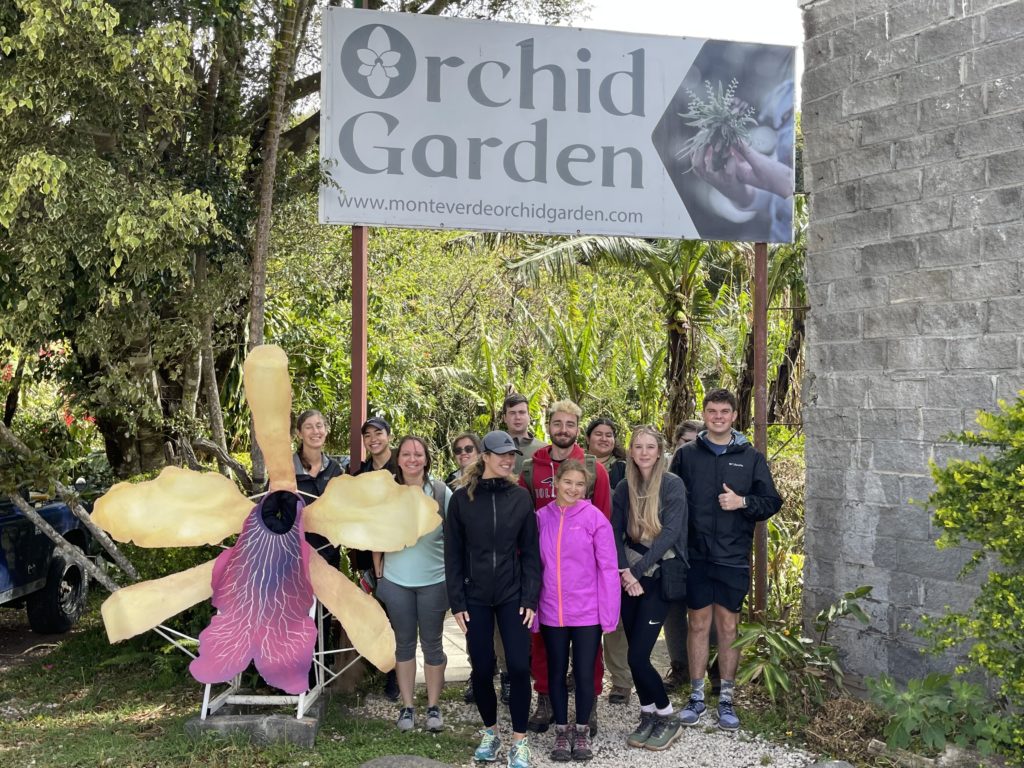
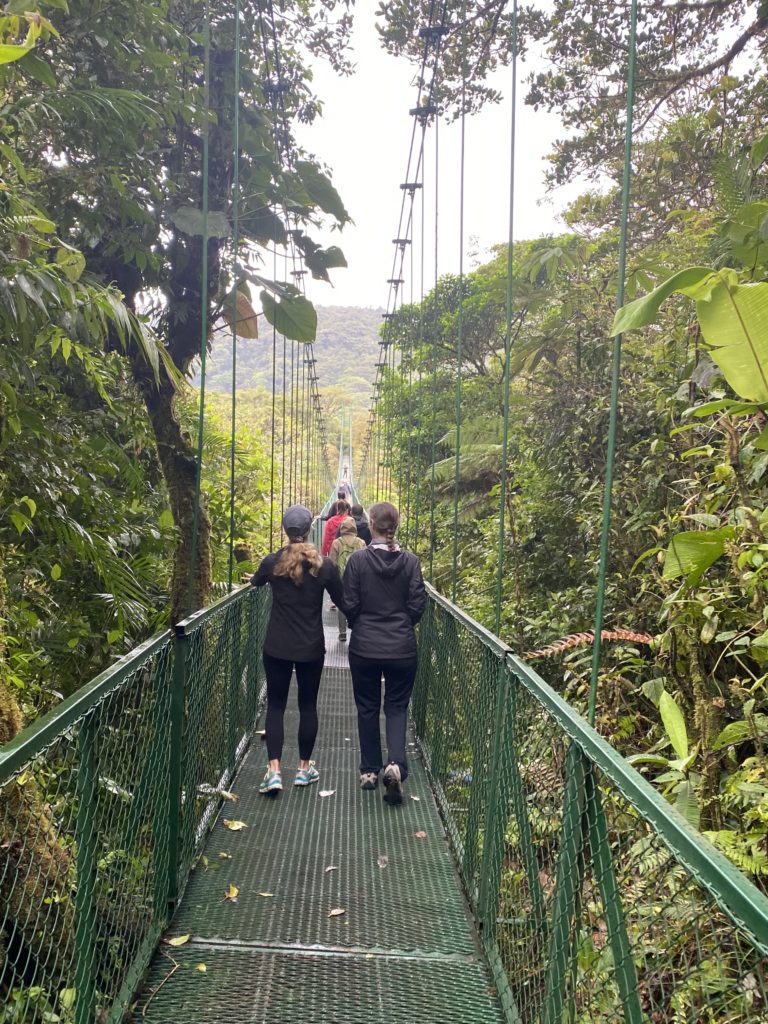
Stetson students and professors spent a glorious week in Costa Rica. We started out in the Monteverde region which included a visit to the Monteverde Orchid Garden and afterwards, a choice of zip-lining or suspension bridge trails!

After these activities, we made our way hiking back to San Gerardo Station, a very remote biological station in the Children’s Eternal Rainforest. We were the only group staying there, so everyone had a great opportunity to be fully surrounded by nature (no wifi at the station, either!)

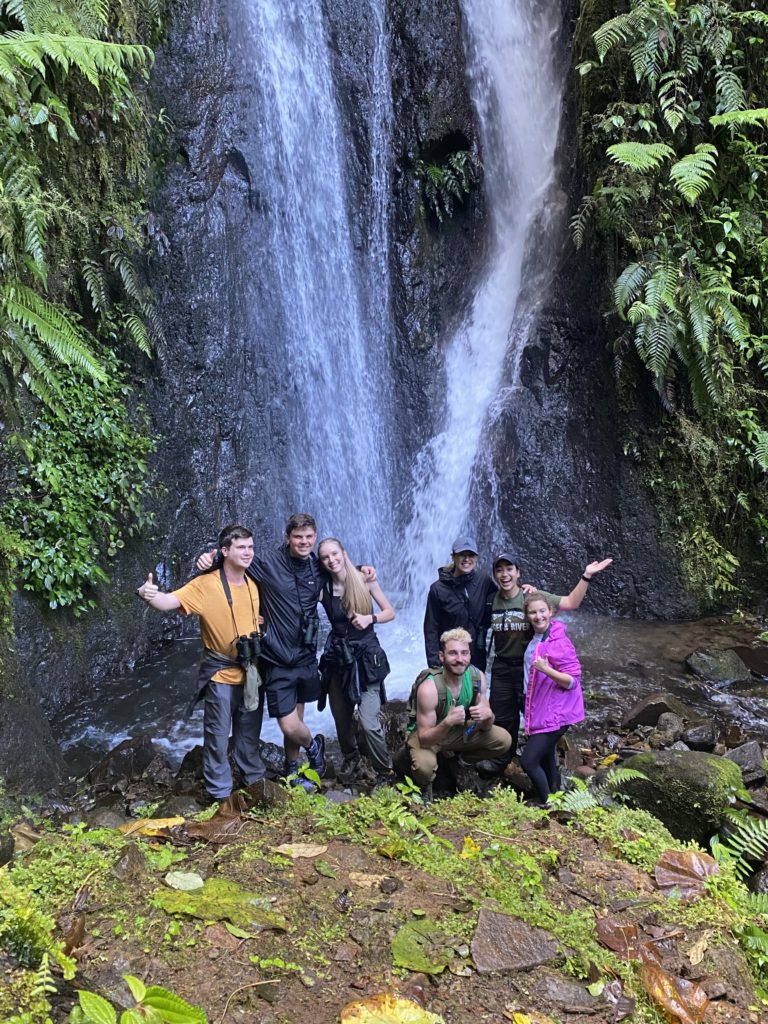
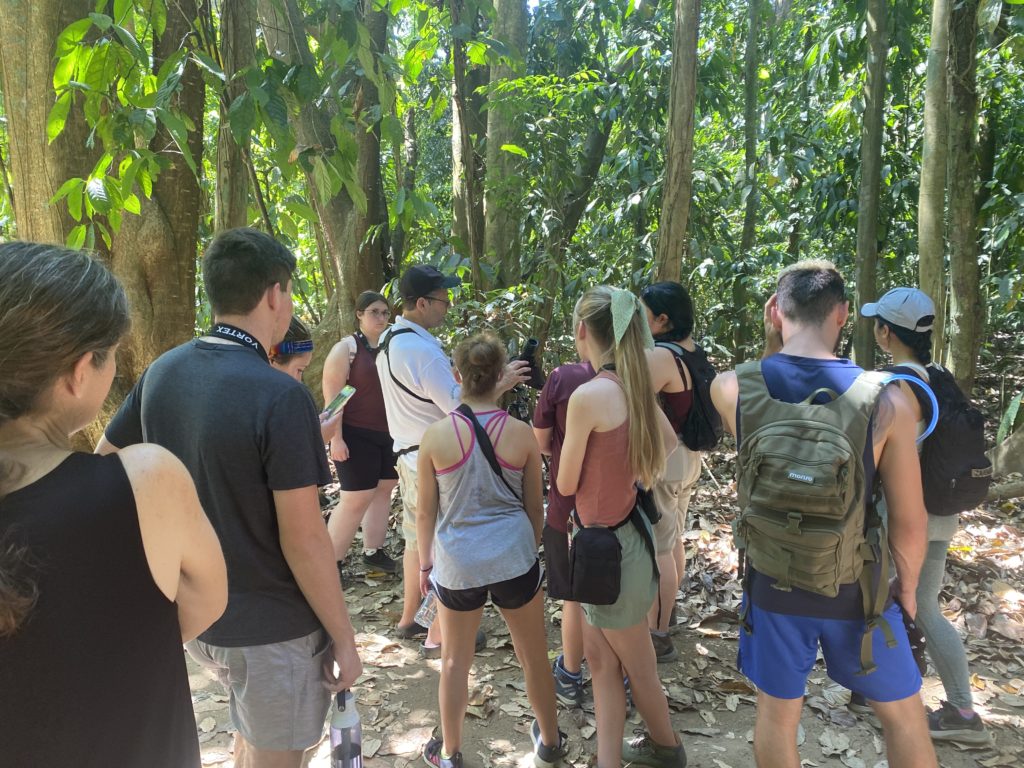
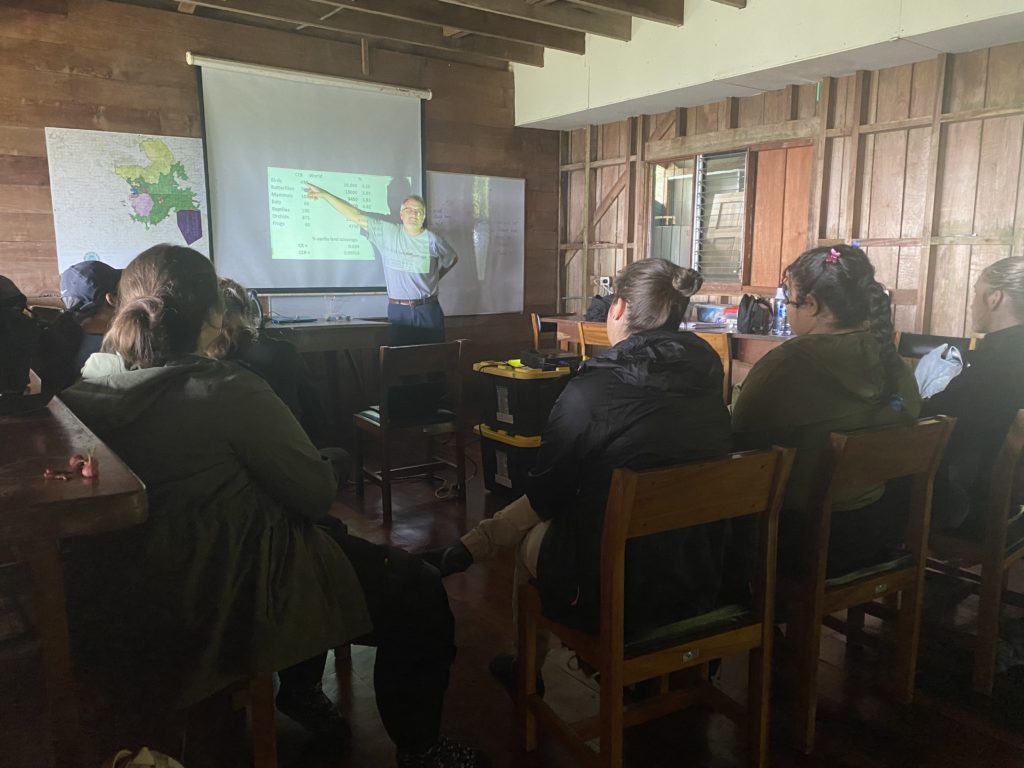
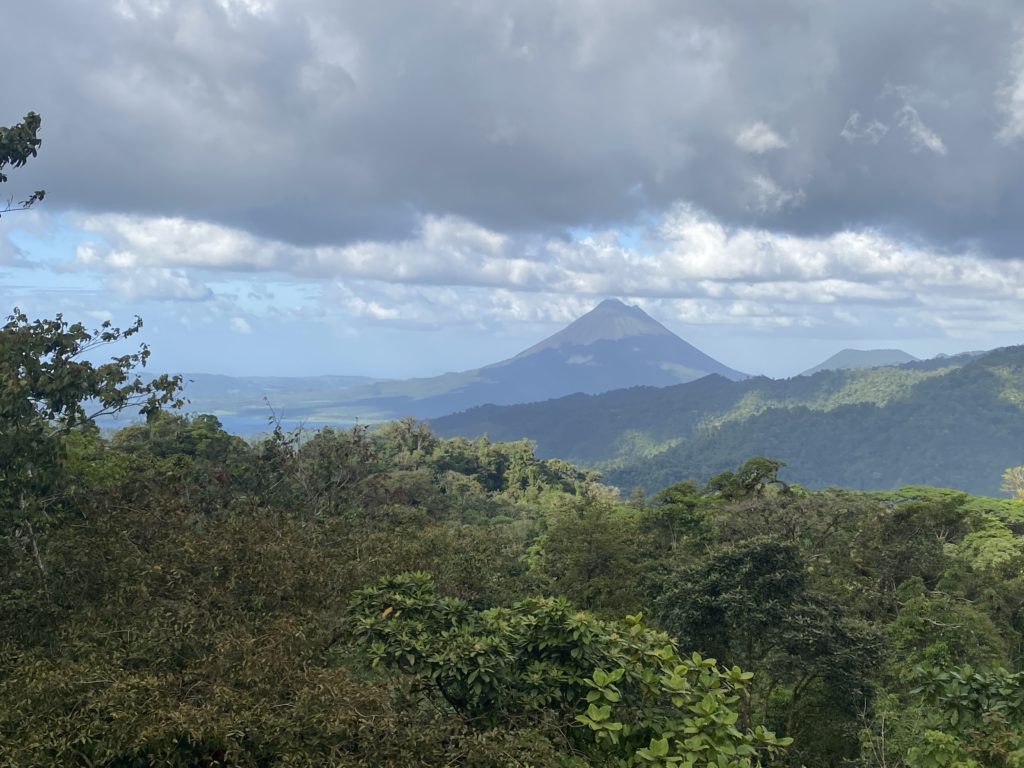
During our time here, everyone did a lot of hiking (including a trail back to a waterfall), birdwatching (some students got up at 4:30 AM to go with our nature guide who was an Ornithologist), and small projects where the students were collecting field data. The station overlooked part of the cloud forest habitat, and had an amazing view of Arenal Volcano.

White-necked Puff bird

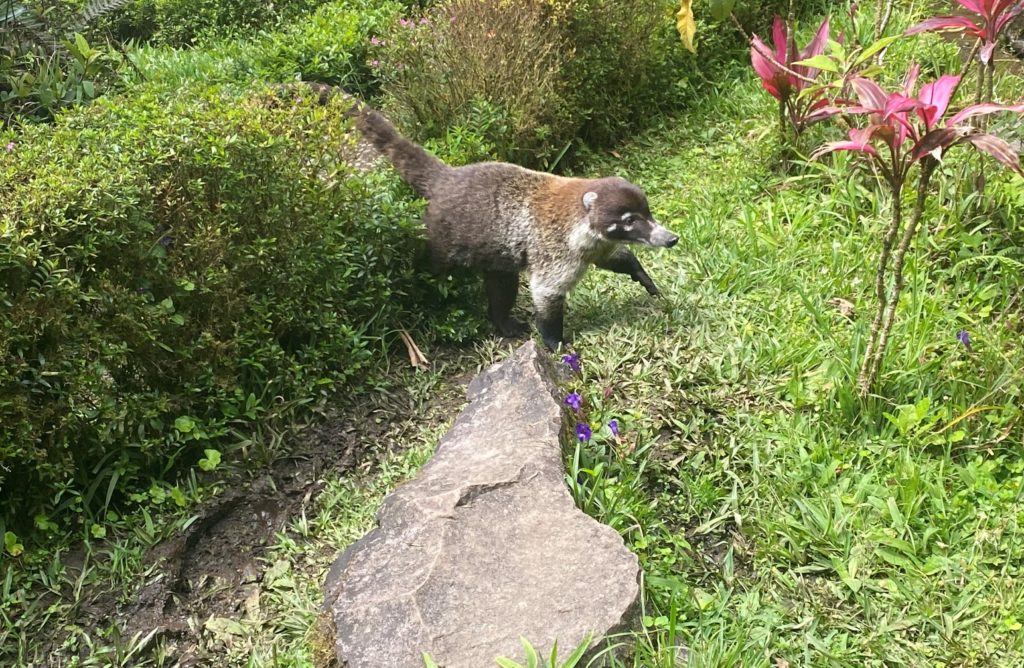
After three days at San Gerardo, we moved to the southwest coast of Costa Rica to a site called Hacienda Barú. Here they saw a lot more animal life, including sloths, coatis, monkeys, birds, and peccaries.

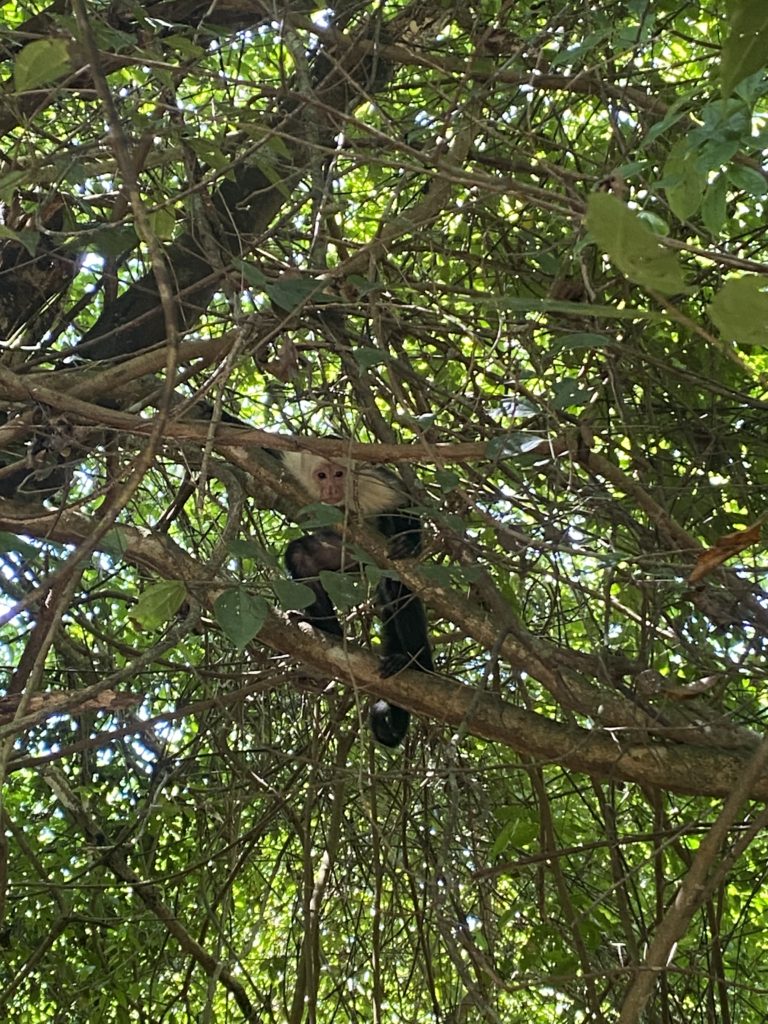
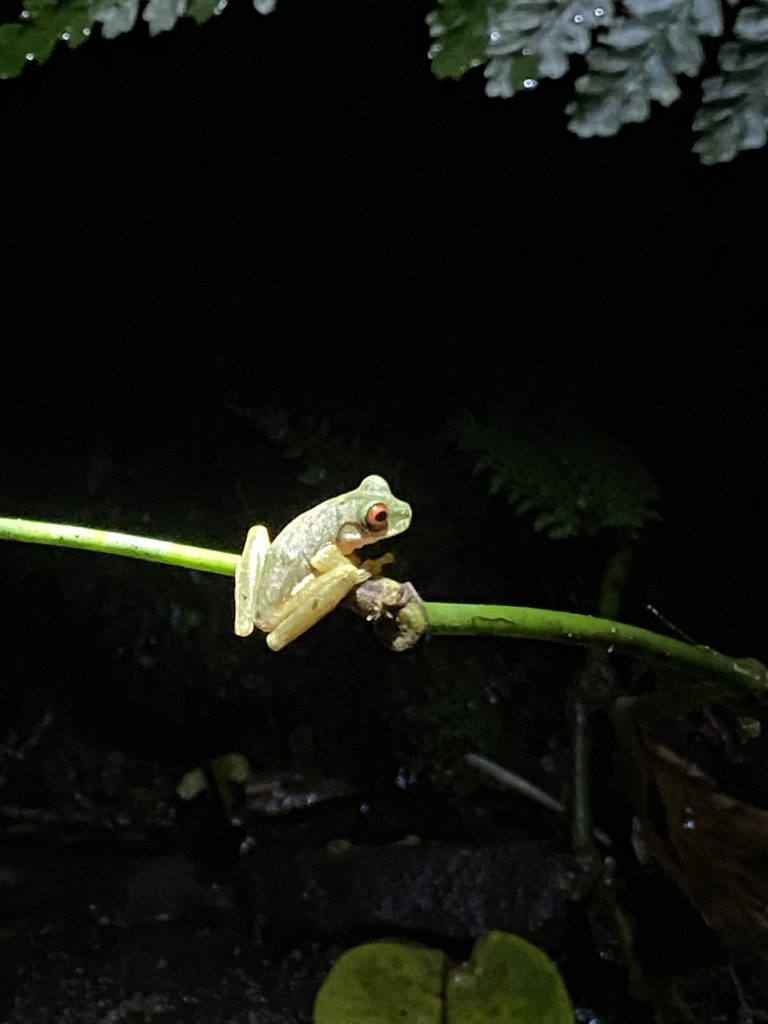
Capuchin Monkey, Coati and Red-eyed Stream Frog

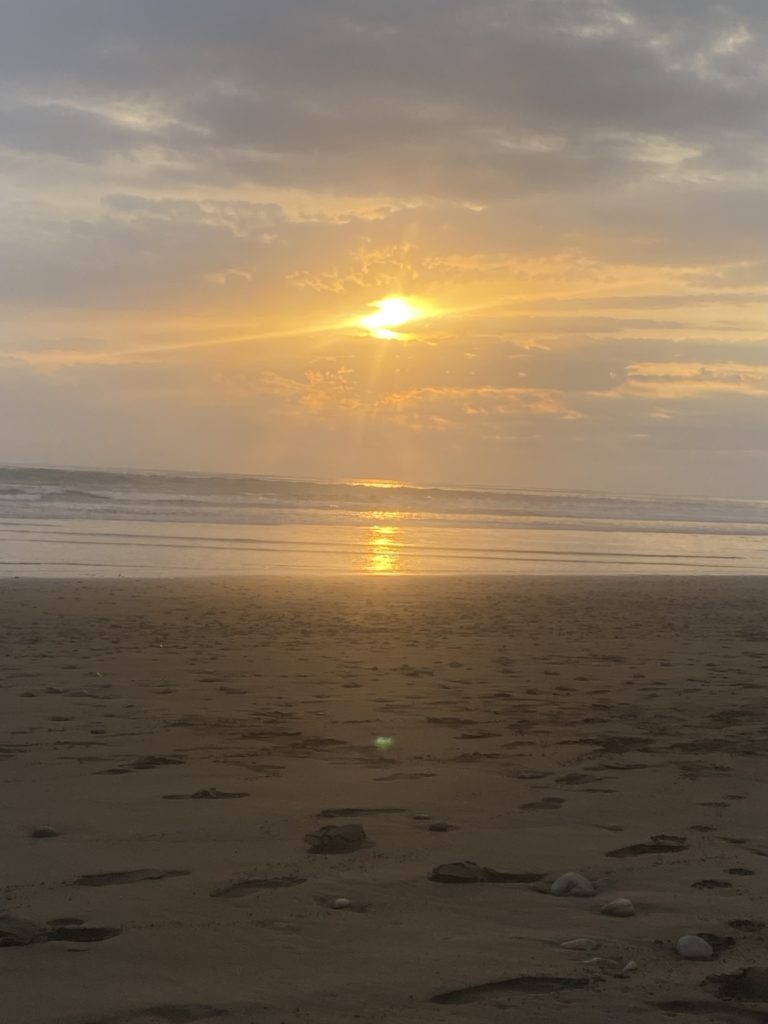
While at Hacienda Barú, the lodge was located directly on the coast, so students were able to hike down to the beach and watch the sunset over the Pacific Ocean.

By the end of the trip many students were saying that they had a new appreciation for tropical biodiversity and rainforest ecosystems, and had stronger views on conservation of these habitats. They felt that they were really able to connect with nature while in Costa Rica, and some of them even said that the experience was life-changing for them!

Stetson University

Rinker Global Scholars Study “The Waters of Venice” during Spring Break

By: Kimberly Reiter, PhD

Stetson’s 2023 Rinker Global Scholars in Venice

This past Spring Break 2023, Dr. Jason Evans (Environmental Science) and Dr. Kimberly Reiter (History) led fifteen students to Venice and north Italy to see first hand the impacts of the Venetian Lagoon on the historic city.  The trip was part of a team taught course called “The Waters of Venice”, an examination of the past and present dialogues between Venice and the waters which created the powerful ‘Stato da Mar’ which dominated Mediterranean trade and politics for centuries in the Middle Ages.  The course was made possible through the generous assistance of the Rinker Foundation, which supports and aids the fifteen Rinker Scholar students who earned a spot in the class.
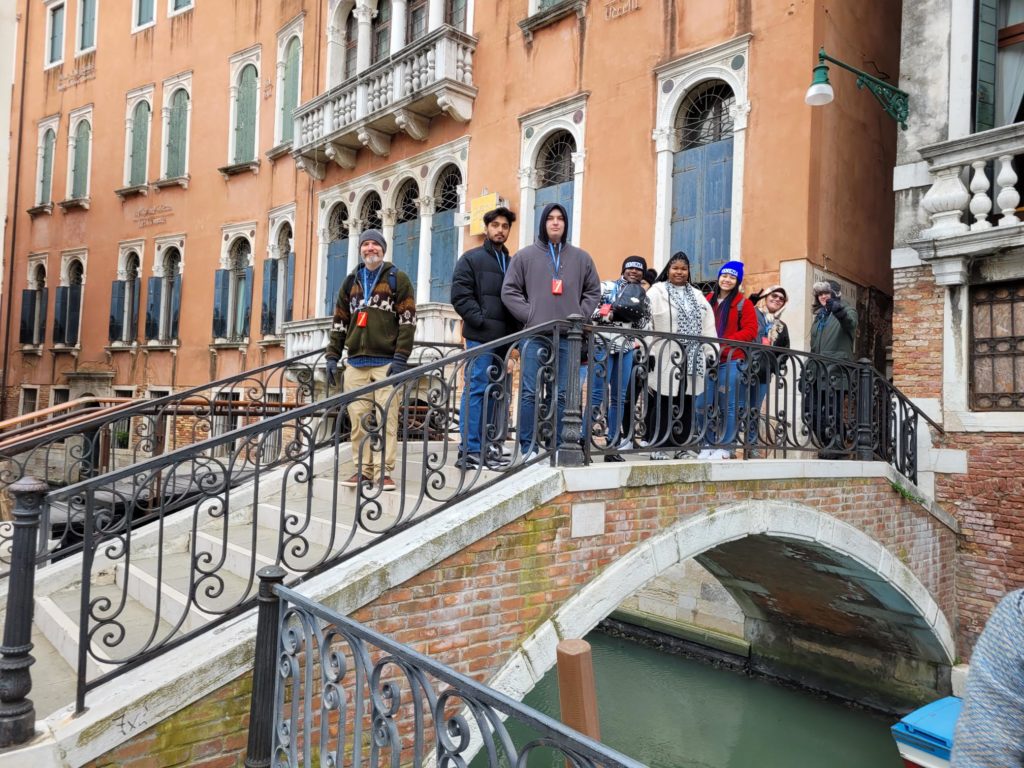
Crossing one of Venice’s many canals

“The Waters of Venice” has required the faculty and students to take a journey back to the Roman period and the rise of Venice through its unique access to the salt pans of North Italy.  They studied the creation of the island state through hundreds of years of careful environmental management of the lagoons and canals that mark the dozens of islands that make up the current city.  The students have studied not only the political and economic history of Venice, but also the environmental regulations that kept the sediments from filling in the lagoon, and mandated the use of the lagoon, wetlands, rivers, forests and aquatic resources of Venice’s broad Italian territories.  They also looked at the consequences of Napoleon’s conquest of Venice on these regulations and the slow deterioration since then, as well as the modern remedies to fix the situation for now and what Venice is doing to try and save the future city.

During Spring Break the students had multiple opportunities with the help of local experts to see for themselves the various water management systems put into place to protect Venice, including the failed Vajont Dam in the Dolomites intended to regulate the lumber and agricultural needs of the Veneto, the MOSE Barrier project that has been created to keep the city from flooding and the significant waterproofing projects to protect the Piazza San Marco and other endangered historical places.  They visited Ravenna, an equally ancient town which had once been like Venice, but which allowed the sediments to fill in their wetlands and now lies several kilometers inland, and Cervia, where perhaps the purest salt in the Mediterranean continues to be created as it has been for centuries.  It is fair to say that the salt shop at the visitor center was effectively cleared of stock after the visit!  The students also learned about the political and economic impediments to the water projects, including the impacts of corruption, over tourism, cruise ships and wetlands loss.

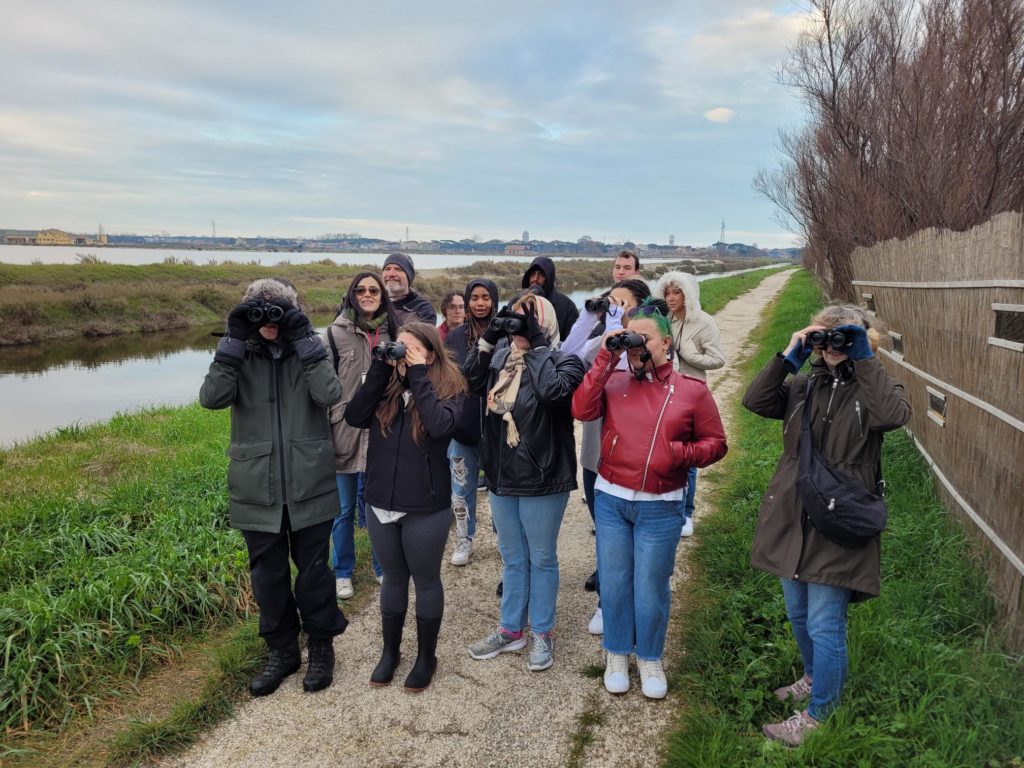
Looking for Flamingos in the Cervia Salt Pans
Dolomite Mountains

In sum, the course has been eye-opening and the visit to Venice, ‘La Serenissima’ was nothing short of amazing.  In their free time students sampled the incredible foods of the region, ate a lot of gelato, visited museums and wandered the streets of one of the most beautiful cities in the world, while learning about the genuine threats to its existence as the very waters that built the Venetian Empire now seem likely to destroy the city itself.

First Annual Lessons from Abroad Conference

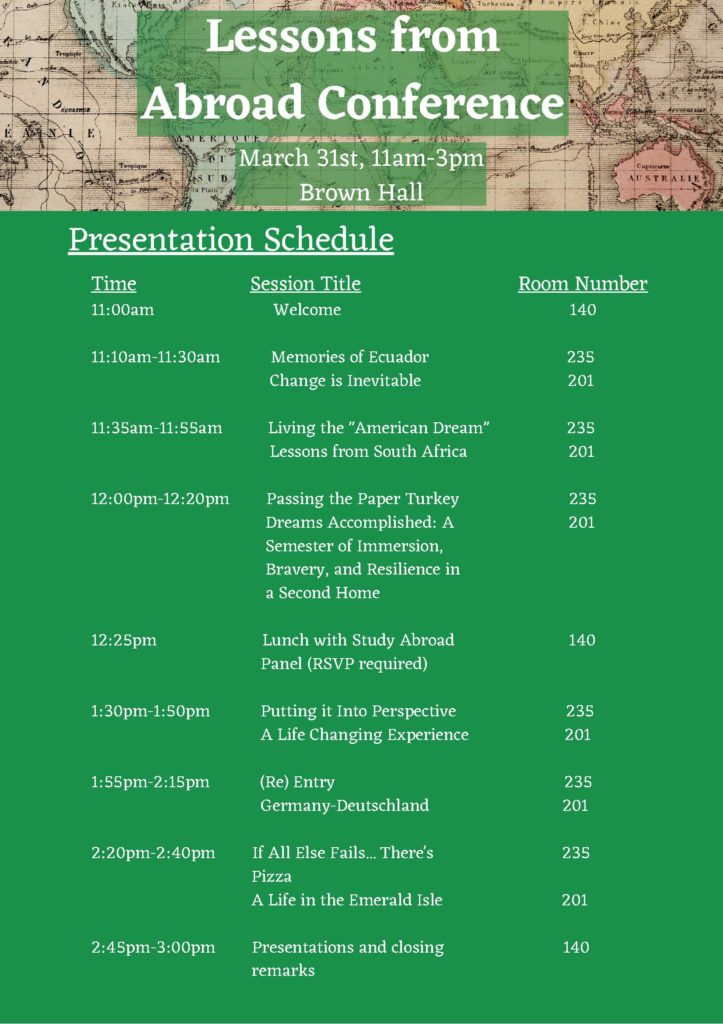
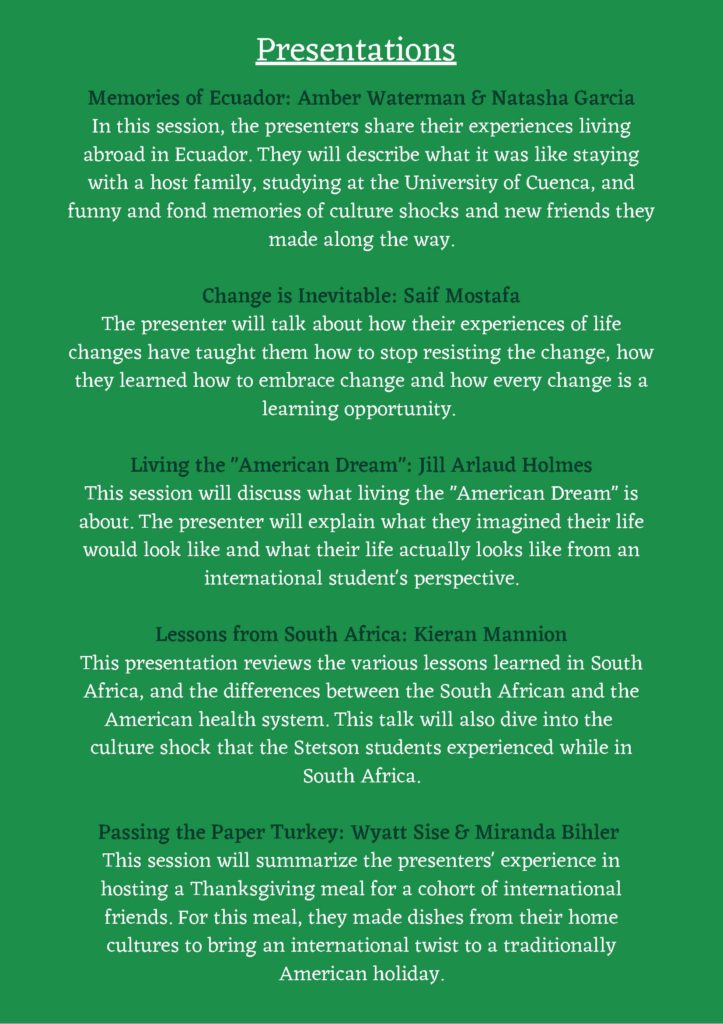
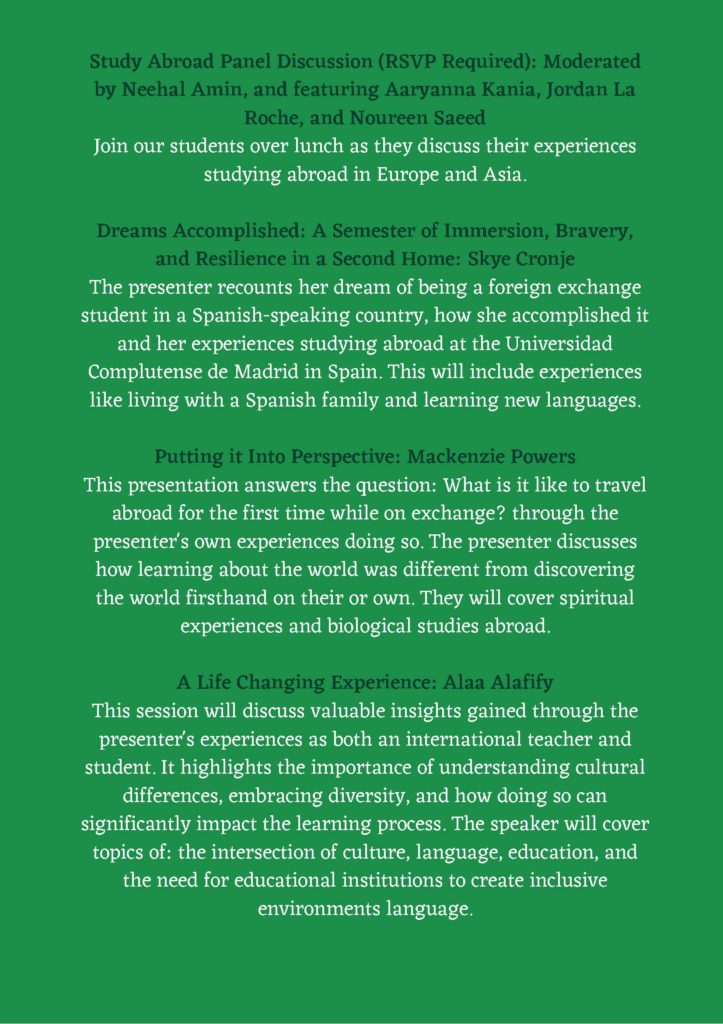
WORLD is excited to host our upcoming Lessons from Abroad Conference on Friday, March 31, 2023 from 11am-3pm in Brown Hall. During this inaugural conference, study abroad and international students will reflect on the impact of learning abroad and global citizenship experiences through engagement with new cultures. Students will present their reflections and invite discussion. We welcome you to join us!

Page 1
Page 2
Page 3
Page 4

Faculty-Led Program: Lunch and Learn

WORLD is now accepting proposals for the upcoming AY 2020/2021 Faculty-Led Study Abroad Programs.  Each year, WORLD invites faculty from all disciplines at Stetson University to step outside of the DeLand campus and explore the possibilities of teaching abroad. 

Last month, Wendy Viggiano, Program Coordinator for International Learning, hosted a Lunch and Learn webinar on leading faculty-led programs abroad. She covered topics such as program types, student considerations, working collaboratively with WORLD, benefits of working with a study abroad provider, and walked through the proposal process.  You can check out each topic in the short videos provided here as well as on our YouTube channel.  We hope these informative videos will clarify the proposal process and encourage faculty to submit proposals. 

Stetson University has seen an increase in faculty-led programs abroad and we hope to continue that trend next year.  Students are eager to study abroad and we look forward to offering students more programs in a variety of disciplines to meet the demands of our students.  No matter the subject or discipline, WORLD can find the right location abroad for your course.  How can a new place enhance your teaching and the student’s understanding of the topic? Feel you don’t have the time to make all the arrangements and organize all the logistics of the program? Not sure even where to begin?  No worries!  WORLD is here to help you every step of the way.

Start your Faculty-Led Study Abroad Proposal and we will help you take care of the rest!

General Study Abroad Information and Benefits of Faculty Led Programs
Types of Faculty Led Program and Things to Consider
Student Concerns: Cost and Curriculum
Working in Collaboration with WORLD and the Benefits of Providers
Faculty Led Proposal Process and Timeline

Stetson Students Participate in Internship with AIR Guatemala

 By Camila Morales Hernandez, ’20

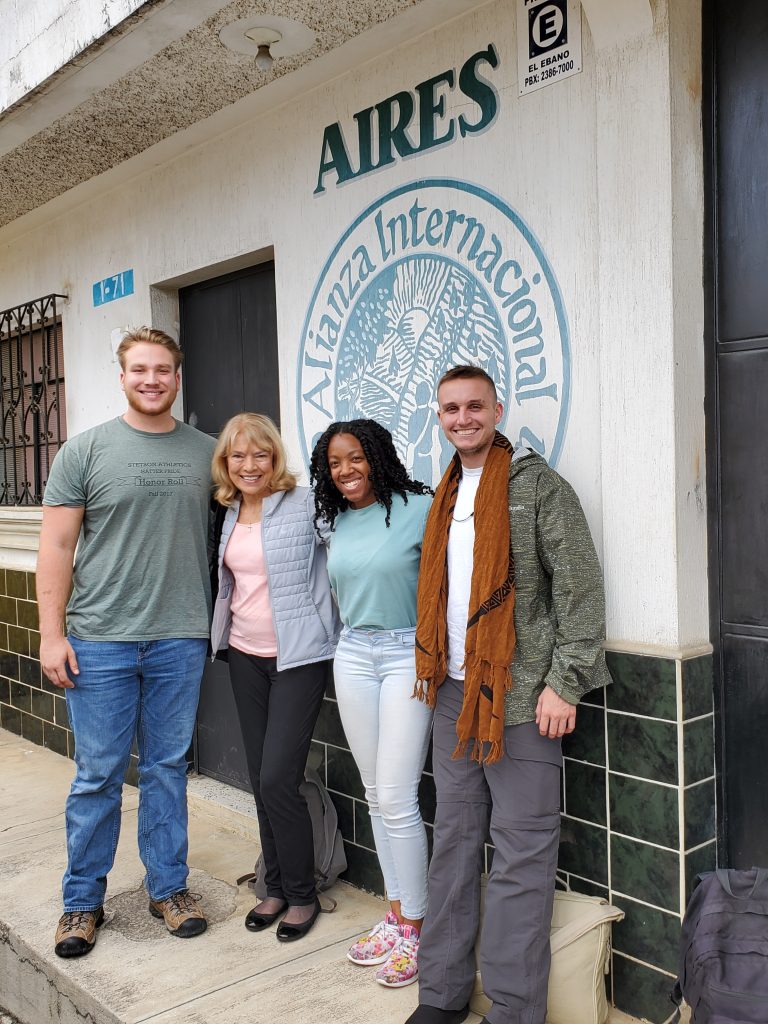
(l-r) Students Sydney Arrington, Peter Greubel, and Matinicus C’Senger pose with AIR Guatemala founder and President (and Stetson Professor Emeritus, ), Dr. Anne Hallum in front of AIR’s Training Center

Over the summer, the Stetson students, Sydney Arrington, a Public Health major/Spanish minor, Peter Gruebel, also a Public Health major; and Matinicus C’Senger, double major in Economics and Philosophy and an Environmental Sustainability Fellow at Stetson, did a summer internship with AIR (Alliance for International Reforestation, Inc) Guatemala. During the experience, the students were able to work closely with local farmers to learn the practice of Regenerative Farming. The students also spoke Spanish during the entire time of the experience.

WHAT IS AIR GUATEMALA?

AIR is a non-profit organization improving human and environmental health in Guatemala.  With operations in Atlanta, Georgia and central Guatemala, AIR has trained over 4,000 farm families and planted almost 6 million native trees in Guatemala.  For over 25 years, AIR has implemented a community-based, five-year approach with great results and success.  AIR is a winner of the 2017 Equator Prize from the UN Environment Programme because of this successful model.  All salaried employees are local professionals, so ninety-two percent of funds and donations go straight to the field to implement projects and programs:  Rural school programs; tree nurseries; farmer training; and efficient, custom stoves.  AIR was founded in 1992 at Stetson University after Dr. Anne Hallum, Stetson University political professor, visited Guatemala for the first time and observed first hand the rural hunger and malnutrition, the barren mountainsides and mudslides, and the strength of the Maya people.

GOALS, PROCESS AND ACADEMIC PURSUITS:

Each year, one to three Stetson students are selected to participate in the AIR Guatemala internship program. All of their program expenses are covered by a generous endowment by Drs. David and Leighan Rinker. The main goal of the internship is for the student to provide tangible benefits to the local residents.  Likewise, the experience is designed to align with the academic pursuits of the students.  

Learning goals for the student interns include:

  • Discover the value and method for farming with trees (“Regenerative farming” aka “agroforestry”) for better anthropological and environmental well-being: The students planted trees where they brought the most benefit for the communities: Acatenango, Xibalbay, Paquixic, and Montellano. 
  • Learn  the effect of working with residents instead of for them. Residents requested help constructing efficient stoves from AIR Guatemala. Students constructed 3 stoves for two days, resulting in transformational lessons since they saw the living styles of the Mayan families, the hazards of breathing smoke all day, how close the families are and how fully their connection was to surrounding nature. 
  • Shadow the president of AIR Guatemala, Dr. Hallum. During the second week, a large group of volunteers arrived from Florida and Georgia, and all three Stetson students were enormously effective in welcoming these volunteers and showing them what they had learned the first week. Dr. Hallum also had all three students accompany her on important meetings with the AIR staff.  The interns were especially helpful in an unforeseen way: Dr. Hallum was prefacing a network technology of registering via GPS the exact location where each tree was planted, and then “selling” the planted trees to a company in Hong Kong for purpose of combating climate change. The staff—and Dr. Hallum—had to learn how to use this technology and naturally, the Stetson students were very comfortable with this fascinating technology and taught the staff the functions of it. 
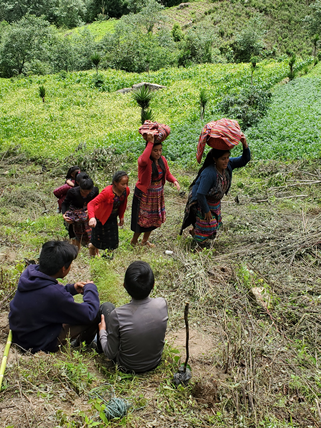
  • Learning about the Mayan and Ladino cultures in Guatemala. An overarching goal is that students learned about the regional cultures while planting trees and building stoves in rural communities. For instance, one day, the women of the communities brought lunch in the field where the students were planting trees —they carried tortillas and hot soup in containers on their heads. The team also participated in two school programs with Mayan dances which the class students had prepared especially for AIR visitors.

FOOTPRINT LEFT IN GUATEMALA

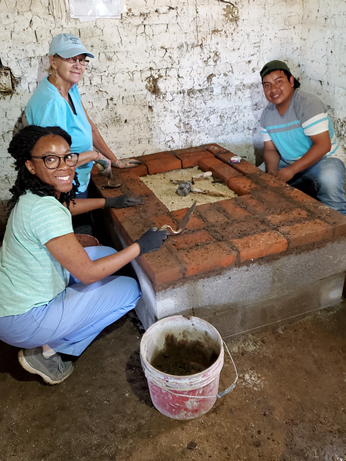
The three students supported the construction of three fuel-efficient stoves which involved mixing cement, soaking and laying bricks—each stove required six-hours of work. The stoves have a chimney to ventilate smoke and prevent lung diseases; they also help to conserve trees.

Sydney Arrington helps build a stove for local residents.

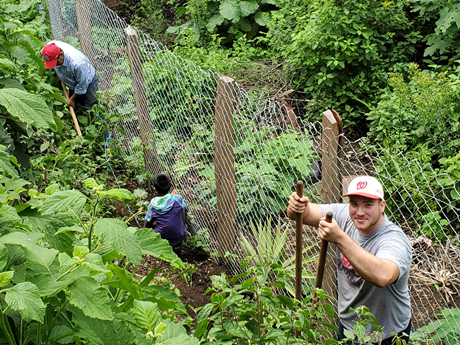
The volunteers this summer—including the three students—planted approximately 2,000 trees. The trees were strategically located to prevent soil erosion and improve crops with nitrogen-fixing roots; prevent mudslides, and to protect water sources. As previously mentioned, the students taught AIR staff members and Dr. Hallum how to use the technology for photographing and syncing each tree. By the end of the two weeks, the team had registered and sold 886 trees to a company in Hong Kong.

Peter Gruebel plants trees in Guatemala

 The three students also participated in two rural school programs—helping to judge environmental contests and playing with children.

THE ADVENTURE DOES NOT STOP THERE!!

Apply to join this journey and work with Guatemalan communities in Summer 2020!!!  Applications are due by February 1, 2020.

This article was written based on Dr. Anne Hallum’s annual Air Guatemala report.

Enrollment in Scottish Experience up 37%

Student enrollment peaked during the fourth annual study abroad Scottish Experience, a collaborative of the University of the Highlands Islands Inverness College, Stetson University, Utah Valley University, and Jacksonville University. A total of 33 students participated in courses taughted by faculty from UVU, Jacksonville, and Stetson.

A centerpiece of the study abroad program is an embedded case study component where groups of students act as consultants to Scottish businesses and organizations to address an issue of pressing need.

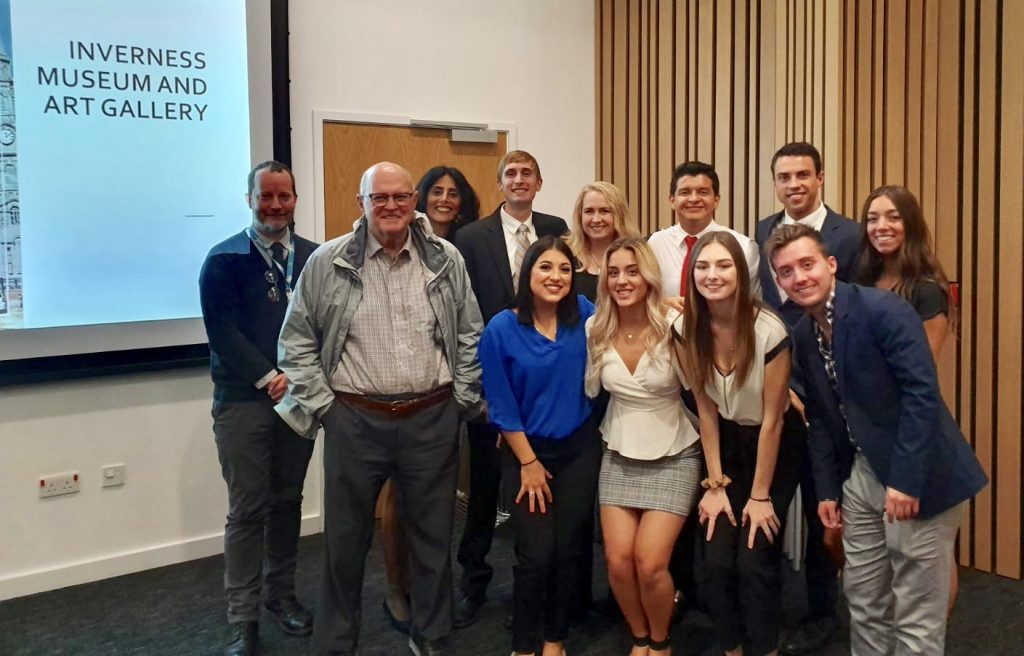
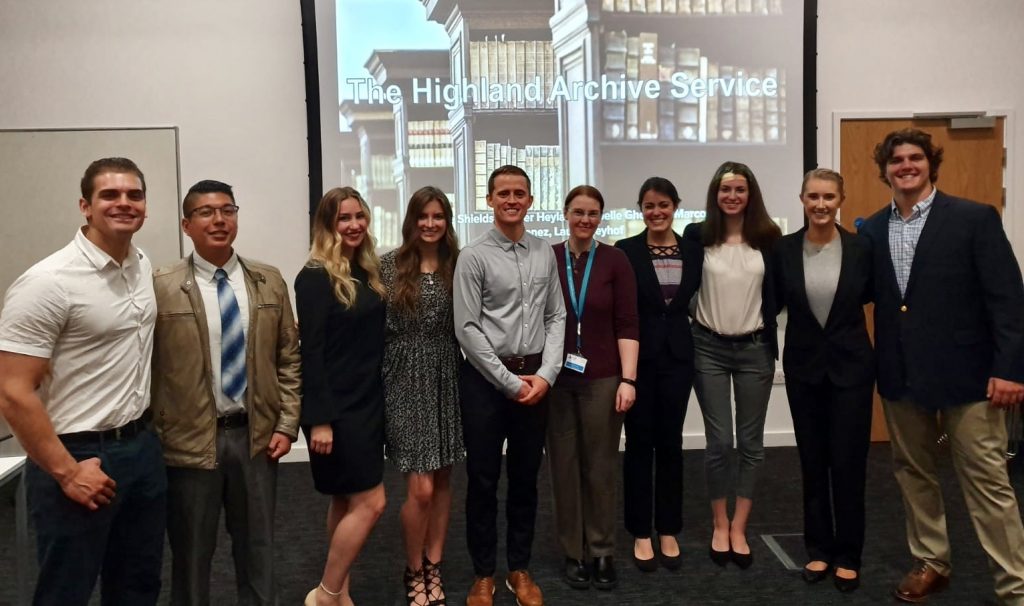
Students and faculty take a quick break after presenting the outcomes of their case studies to business and organizational leaders.